
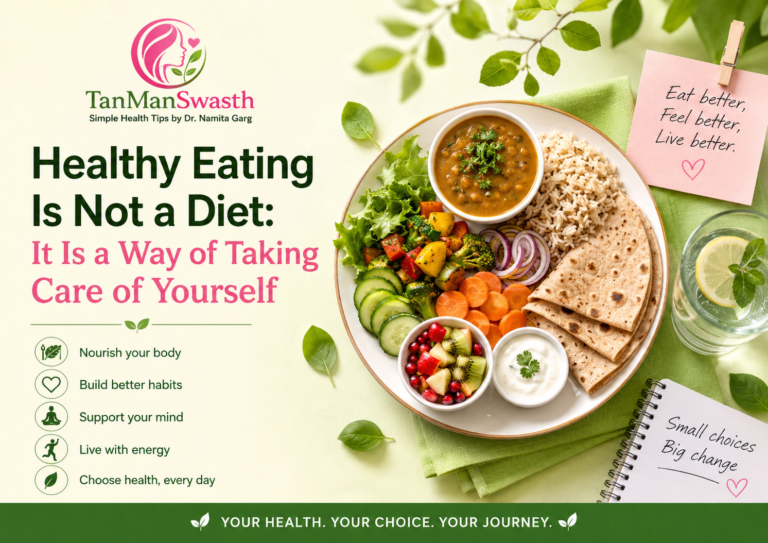
Healthy Eating Is Not a Diet: Healthy eating is not about eating less. It is about eating better.
जब बहुत से लोग ये शब्द सुनते हैं “"पौष्टिक भोजन"”, वे तुरंत इसके बारे में सोचते हैं:
❌ स्वादिष्ट भोजन नहीं
❌ छोटे भाग
❌ लगातार भूख
❌ अपनी पसंद की हर चीज़ को त्यागना
❌ कुछ हफ्तों तक चलने वाला सख्त आहार
लेकिन स्वस्थ खानपान का मतलब इनमें से कोई भी चीज होना जरूरी नहीं है।.
स्वस्थ आहार को सजा नहीं माना जाना चाहिए।.
यह कोई अस्थायी योजना नहीं है जिसका आप कुछ किलोग्राम वजन कम होने तक पालन करें और फिर भूल जाएं।.
इसका मतलब हर दिन परफेक्ट होना नहीं है।.
और इसका मतलब निश्चित रूप से खुद को भूखा रखना नहीं है।.
स्वस्थ खानपान खुद की देखभाल करने का एक तरीका है—एक समय में एक भोजन, एक आदत और एक दिन।.
विश्व स्वास्थ्य संगठन स्वस्थ आहार को चार महत्वपूर्ण सिद्धांतों के आधार पर परिभाषित करता है: पर्याप्तता, संतुलन, संयम और विविधता. एक स्वस्थ आहार पद्धति व्यक्ति की उम्र, जीवनशैली, संस्कृति और स्थानीय रूप से उपलब्ध खाद्य पदार्थों के आधार पर भिन्न हो सकती है।.
भारत में हमारे लिए यह विशेष रूप से महत्वपूर्ण है।.
स्वस्थ भोजन का मतलब यह नहीं है कि वह महंगे आयातित उत्पाद ही हों।.
हमारी रसोई में पहले से ही कई पौष्टिक खाद्य पदार्थ मौजूद हैं:
🥗 सब्जियां
🍎 फल
🌾 साबुत अनाज और बाजरा
🫘 दाल, फलियां और दालें
🥜 मेवे और बीज
🥛 उपयुक्त डेयरी खाद्य पदार्थ
🥚 अंडे और प्रोटीन के अन्य उपयुक्त स्रोत
सवाल यह नहीं है:
“मैं कितना कम खा सकता हूँ?”
इससे बेहतर सवाल यह है:
“मैं अपने शरीर को बेहतर पोषण कैसे दे सकता हूँ?”
हम स्वस्थ खानपान को डाइटिंग क्यों मानते हैं?
शब्द आहार यह भ्रामक हो गया है।.
कई लोगों के लिए इसका मतलब अस्थायी प्रतिबंध है।.
कोई व्यक्ति कह सकता है:
“"मैं परहेज पर हूँ।"”
आमतौर पर, इसका मतलब यह है कि उन्होंने कई खाद्य पदार्थों का सेवन बंद कर दिया है और थोड़े समय के लिए एक सख्त योजना का पालन कर रहे हैं।.
लेकिन आपके शरीर को केवल 30 दिनों के लिए ही स्वस्थ भोजन की आवश्यकता नहीं होती है।.
इसे जीवन भर पोषण की आवश्यकता होती है।.
इसीलिए स्वस्थ खानपान को एक अस्थायी परियोजना के रूप में नहीं देखा जाना चाहिए।.
यह रोजमर्रा की जिंदगी का हिस्सा बन जाना चाहिए।.
दो दृष्टिकोणों की कल्पना कीजिए।.
दृष्टिकोण 1: अस्थायी आहार
आप रातोंरात सब कुछ पूरी तरह बदल देते हैं।.
आप ऐसे खाद्य पदार्थ खाते हैं जो आपको पसंद नहीं हैं।.
तुम भूखे ही रहोगे।.
आप परिवार के साथ भोजन करने से बचते हैं।.
जब भी आप योजना के बाहर कुछ खाते हैं तो आपको अपराधबोध महसूस होता है।.
कुछ हफ्तों के बाद, आप इस दिनचर्या से ऊब जाते हैं।.
फिर आप रुक जाते हैं।.
दूसरा दृष्टिकोण: एक स्वस्थ जीवनशैली
आप छोटे-छोटे सुधार करते हैं।.
आप इसमें और सब्जियां मिला सकते हैं।.
इससे आपके भोजन की गुणवत्ता में सुधार होता है।.
आप अक्सर स्वास्थ्यवर्धक खाना पकाने के तरीकों को चुनते हैं।.
आप अत्यधिक प्रसंस्कृत खाद्य पदार्थों का सेवन कम करते हैं।.
आप ज्यादा पानी पीते हैं।.
आप यह सीखते हैं कि आपकी जीवनशैली के लिए क्या उपयुक्त है।.
आप जारी रखें।.
इनमें से कौन सा तरीका आपके जीवन का हिस्सा बनने की अधिक संभावना रखता है?
अधिकांश लोगों के लिए, दूसरे विकल्प का रखरखाव करना कहीं अधिक आसान है।.
स्वस्थ खानपान का मतलब खुद को भूखा रखना नहीं है।
सबसे बड़ी गलतफहमियों में से एक यह है कि स्वस्थ भोजन का मतलब बहुत कम खाना होता है।.
लेकिन स्वस्थ खानपान और भुखमरी एक ही चीज नहीं हैं।.
आपके शरीर को कार्य करने के लिए ऊर्जा और पोषक तत्वों की आवश्यकता होती है।.
भोजन से प्राप्त होता है:
- ऊर्जा
- प्रोटीन
- आवश्यक वसा
- विटामिन
- खनिज पदार्थ
- आहार फाइबर और अन्य लाभकारी घटक
स्वस्थ खानपान का लक्ष्य अपने शरीर को किसी चीज से वंचित करना नहीं है।.
इसका उद्देश्य उचित पोषण प्रदान करना है, साथ ही उन चीजों के अत्यधिक सेवन से बचना है जो समय के साथ स्वास्थ्य को नुकसान पहुंचा सकती हैं।.
विश्व स्वास्थ्य संगठन (डब्ल्यूएचओ) इस बात पर जोर देता है कि एक स्वस्थ आहार को अतिरिक्त पोषण के बिना पोषण संबंधी जरूरतों को पूरा करना चाहिए और यह इस पर आधारित होना चाहिए। संतुलन और विविधता, जितना हो सके उतना कम खाने के बजाय।.
तो पूछने के बजाय:
“मैं कम खाना कैसे खा सकता हूँ?”
आप यह पूछकर देखें:
“मैं इस भोजन को और अधिक पौष्टिक कैसे बना सकता हूँ?”
वह एक बदलाव भोजन के प्रति आपके सोचने के तरीके को पूरी तरह से बदल सकता है।.
स्वस्थ खानपान का मतलब मात्रा से नहीं, गुणवत्ता से है।
दो ऐसे भोजन की कल्पना करें जिनमें ऊर्जा की मात्रा लगभग समान हो।.
एक भोजन में मुख्य रूप से निम्नलिखित शामिल होते हैं:
- अत्यधिक परिष्कृत खाद्य पदार्थ
- मीठा पानी
- अतिरिक्त नमक
- बहुत कम फाइबर
दूसरे में शामिल है:
- सब्ज़ियाँ
- दालें या अन्य प्रोटीन युक्त खाद्य पदार्थ
- साबुत अनाज या अन्य पौष्टिक मुख्य खाद्य पदार्थ
- फल
- उचित स्वस्थ वसा
हो सकता है कि वे आपके समग्र पोषण को एक ही तरह से प्रभावित न करें।.
इसीलिए भोजन की गिनती केवल एक संख्या के आधार पर करना पर्याप्त नहीं है।.
भोजन की गुणवत्ता मायने रखती है।.
हार्वर्ड हेल्दी ईटिंग प्लेट प्रमुख खाद्य समूहों में खाद्य पदार्थों की गुणवत्ता पर जोर देती है, और संतुलित भोजन के हिस्से के रूप में सब्जियों और फलों, साबुत अनाज और स्वस्थ प्रोटीन स्रोतों को प्रोत्साहित करती है।.
इसका मतलब यह नहीं है कि हर भोजन बिल्कुल एक जैसा दिखना चाहिए।.
भारतीय भोजन स्वास्थ्यवर्धक हो सकता है।.
एक संतुलित भोजन में आपकी संस्कृति, खान-पान की पसंद और जरूरतों के आधार पर विभिन्न संयोजन शामिल हो सकते हैं।.
उदाहरण के लिए:
- रोटी दाल और सब्जी के साथ
- राजमा और सब्जियों के साथ चावल
- सब्जियों और प्रोटीन स्रोतों के साथ बाजरा आधारित भोजन
- उपयुक्त होने पर सब्जियों और दही के साथ खिचड़ी
- इडली सांबर के साथ
- सब्जियों और उपयुक्त मुख्य भोजन के साथ अंडे।
स्वस्थ खानपान के लिए अपनी संस्कृति को त्यागने की आवश्यकता नहीं है।.
इसका अक्सर मतलब होता है कि आप जो खाना पहले से खाते हैं, उसे बनाना सीखना। अधिक संतुलित और पौष्टिक.
आपकी पारंपरिक भारतीय रसोई आपकी सेहत की साथी बन सकती है।
यह धारणा तेजी से फैल रही है कि स्वस्थ भोजन के लिए जटिल नामों वाले महंगे उत्पादों की आवश्यकता होती है।.
यदि ऐसा नहीं होता।.
भारतीय रसोई में परंपरागत रूप से पाए जाने वाले खाद्य पदार्थों पर एक नजर डालें:
🌾 ज्वार
🌾 बाजरा
🌾 रागी
🌾 साबुत गेहूं और अन्य साबुत अनाज
🫘 मूंग
🫘 मसूर
🫘 चना
🫘 राजमा
🥬 पालक और अन्य पत्तेदार सब्जियां
🥕 मौसमी सब्जियां
🍎 मौसमी फल
🥜 मूंगफली और अन्य मेवे
🌻 बीज
इनमें से कई खाद्य पदार्थ एक विविध और पौष्टिक आहार पद्धति में योगदान कर सकते हैं।.
The आईसीएमआर-राष्ट्रीय पोषण संस्थान द्वारा भारतीयों के लिए आहार संबंधी दिशानिर्देश 2024 विभिन्न खाद्य समूहों से विविधता पर जोर दें, साथ ही स्वस्थ आहार संबंधी आदतें, पर्याप्त मात्रा में पानी पीना, शारीरिक गतिविधि और अन्य जीवनशैली संबंधी कारकों पर भी ध्यान दें।.
स्वस्थ खानपान कोई जटिल प्रक्रिया नहीं है।.
कभी-कभी, सबसे स्वास्थ्यवर्धक बदलाव सरल होते हैं:
एक और सब्जी डालें।.
दाल का सेवन अधिक बार करें।.
विभिन्न प्रकार के खाद्य पदार्थों को शामिल करें।.
मीठे पेय पदार्थों का सेवन कम करें।.
अधिक सचेत होकर भोजन करें।.
छोटे बदलाव भी मायने रखते हैं।.
एक स्वस्थ भोजन का एकदम सही होना ज़रूरी नहीं है।
बहुत से लोग पूर्णता प्राप्त करने की कोशिश में हार मान लेते हैं।.
उन्हें लगता है:
“"अगर मैंने एक भी अस्वास्थ्यकर चीज खा ली, तो मैं असफल हो गया।"”
लेकिन यह सोच अनावश्यक है।.
स्वस्थ खानपान का मतलब है... कुल स्वरूप.
एक बार दावत में खाना खाने से आपकी सेहत खराब नहीं होगी।.
एक मिठाई खाने से आपकी पूरी दिनचर्या बिगड़ नहीं जाएगी।.
एक बार रेस्तरां में खाना खाने का मतलब यह नहीं है कि आपको हार मान लेनी चाहिए।.
महत्वपूर्ण यह है कि आप क्या करते हैं। सर्वाधिक समय.
विश्व स्वास्थ्य संगठन (डब्ल्यूएचओ) कम से कम संसाधित और असंसाधित खाद्य पदार्थों की विविधता पर आधारित आहार की सिफारिश करता है, जबकि अस्वास्थ्यकर वसा, मुक्त शर्करा और सोडियम के अत्यधिक सेवन को सीमित करता है।.
एक महत्वपूर्ण बात पर ध्यान दें:
इसका मतलब यह नहीं है कि हर व्यक्ति को बिल्कुल एक जैसा भोजन करना चाहिए।.
एक स्वस्थ आहार को निम्नलिखित के अनुसार अनुकूलित किया जा सकता है:
- संस्कृति
- स्थानीय खाद्य उपलब्धता
- पारिवारिक प्राथमिकताएँ
- जीवन शैली
- आयु
- शारीरिक गतिविधि
- व्यक्तिगत स्वास्थ्य आवश्यकताएँ
इससे स्वस्थ खानपान अधिक व्यावहारिक हो जाता है।.
डर से ज्यादा संतुलन महत्वपूर्ण है।
आजकल लोग अक्सर खाने से डरते हैं।.
एक दिन उन्हें यह खबर सुनाई देती है:
“कार्बोहाइड्रेट का सेवन न करें।”
किसी और दिन:
“सभी प्रकार के वसा से परहेज करें।”
किसी और दिन:
“कभी फल मत खाओ।”
किसी और दिन:
“यह एक सुपरफूड आपकी सारी समस्याओं का समाधान कर देगा।”
पोषण इतना सरल नहीं होता।.
विश्व स्वास्थ्य संगठन (डब्ल्यूएचओ) का कहना है कि स्वस्थ आहार निम्नलिखित सिद्धांतों पर आधारित होते हैं: पर्याप्तता, संतुलन, संयम और विविधता.
आपके शरीर को अलग-अलग पोषक तत्वों की आवश्यकता होती है।.
लक्ष्य यह होना चाहिए कि आप अपने आहार की समग्र गुणवत्ता और संतुलन में सुधार करें - न कि हर खाद्य समूह से डरने लगें।.
उदाहरण के लिए, कार्बोहाइड्रेट ऊर्जा का एक महत्वपूर्ण स्रोत है। कार्बोहाइड्रेट की गुणवत्ता और स्रोत मायने रखते हैं, और विश्व स्वास्थ्य संगठन (WHO) के दिशानिर्देश साबुत अनाज, सब्जियां, फल और दालों जैसे खाद्य पदार्थों को कार्बोहाइड्रेट के महत्वपूर्ण स्रोतों के रूप में महत्व देते हैं।.
इसलिए स्वचालित रूप से पूछने के बजाय:
“"क्या मुझे इसे खाना पूरी तरह बंद कर देना चाहिए?"”
पूछना:
“इस भोजन की गुणवत्ता कैसी है, मैं कितनी मात्रा में खा रहा हूँ, और यह मेरे समग्र आहार में कैसे फिट बैठता है?”
मधुमेह या गुर्दे की बीमारी जैसी स्वास्थ्य समस्याओं से ग्रस्त लोगों के लिए, व्यक्तिगत आहार संबंधी सलाह भिन्न हो सकती है और इस पर किसी योग्य स्वास्थ्य देखभाल पेशेवर से चर्चा की जानी चाहिए।.
स्वस्थ खानपान का मतलब किसी एक "सुपरफूड" से नहीं है।“
ऐसा कोई जादुई भोजन नहीं है जो अस्वस्थ जीवनशैली का विकल्प बन सके।.
कोई भी जूस हर बुरी आदत को ठीक नहीं कर सकता।.
कोई भी बीज संतुलित आहार का विकल्प नहीं हो सकता।.
कोई भी पाउडर सब्जियों का विकल्प नहीं हो सकता।.
कोई भी सप्लीमेंट लगातार खराब खान-पान की आदत की भरपाई अपने आप नहीं कर सकता।.
अच्छा स्वास्थ्य आमतौर पर इसके माध्यम से बनता है पैटर्न.
विश्व स्वास्थ्य संगठन (डब्ल्यूएचओ) स्वस्थ आहार के आधारों में से एक के रूप में विविधता पर जोर देता है।.
इसका मतलब है कि विविधता मायने रखती है।.
विभिन्न खाद्य पदार्थ अलग-अलग पोषक तत्व प्रदान करते हैं।.
इसीलिए किसी एक प्रचलित व्यंजन पर निर्भर रहने की तुलना में रंगीन और विविधतापूर्ण व्यंजन वाली थाली अधिक उपयोगी हो सकती है।.
खोजने के बजाय:
“एक संपूर्ण और परिपूर्ण भोजन क्या है?”
इसे बनाने का प्रयास करें:
“"एक बेहतर समग्र खान-पान की आदत।"”
अधिक सचेत होकर खाएं
स्वस्थ खानपान का मतलब सिर्फ इतना ही नहीं है क्या तुम खाते हो।.
कभी-कभी यह इसके बारे में भी होता है कैसे तुम खाते हो।.
आधुनिक जीवन व्यस्त है।.
बहुत से लोग खाते हैं:
📱 फ़ोन का उपयोग करते समय
💻 काम करते समय
📺 टेलीविजन देखते समय
🚗 यात्रा के दौरान
⏱️ जितनी जल्दी हो सके
कभी-कभी हम खाना खाते-खाते ध्यान दिए बिना ही खाना खत्म कर देते हैं।.
सचेत होकर खाने का मतलब यह नहीं है कि अवास्तविक रूप से लंबे समय तक धीरे-धीरे खाना या हर निवाले के प्रति जुनूनी हो जाना।.
इसका सीधा सा मतलब अधिक ध्यान देना हो सकता है।.
खुद से यह सवाल पूछकर देखें:
- क्या मुझे सचमुच भूख लगी है?
- क्या मैं बहुत जल्दी-जल्दी खाना खा रहा हूँ?
- क्या मैं अपने भोजन का आनंद ले रहा हूँ?
- क्या मुझे अभी भी भूख लग रही है, या मैं अपने आप ही खा रहा हूँ?
- क्या मैं तनाव या ऊब के कारण खा रहा हूँ?
अपनी खान-पान की आदतों को समझना आपको बेहतर विकल्प चुनने में मदद कर सकता है।.
स्वस्थ खानपान को वास्तविक जीवन में समाहित होना चाहिए।
एक अच्छी स्वास्थ्य योजना में निम्नलिखित बातों पर ध्यान देना आवश्यक है:
- व्यस्त कार्यदिवस
- पारिवारिक अवसर
- समारोह
- यात्रा के दिन
- रेस्तरां भ्रमण
- कठिन सप्ताह
यदि कोई योजना केवल तभी कारगर होती है जब जीवन परिपूर्ण हो, तो वह टिकाऊ नहीं हो सकती।.
आपको इनमें से किसी एक को चुनने की आवश्यकता नहीं है:
“उत्तम भोजन”
और
“मुझे अब कोई फर्क नहीं पड़ता।”
एक मध्य मार्ग है।.
आप जीवन का आनंद ले सकते हैं और साथ ही अपने स्वास्थ्य का भी ख्याल रख सकते हैं।.
उदाहरण के लिए:
यदि आप किसी समारोह में शामिल होते हैं, तो उस अवसर का आनंद लें।.
आपको बाद में खुद को दंडित करने की जरूरत नहीं है।.
बस अपनी सामान्य दिनचर्या पर लौट आएं।.
यह दीर्घकालिक स्वास्थ्य के लिए सबसे शक्तिशाली आदतों में से एक है:
असफलता के बाद हार मानने के बजाय स्वस्थ आदतों को फिर से अपनाएं।.
छोटे बदलाव भी दीर्घकालिक बड़े परिणाम ला सकते हैं।
बहुत से लोग "परफेक्ट सोमवार" का इंतजार करते हैं।“
कहते हैं:
“"अगले सप्ताह से मैं अपनी जिंदगी पूरी तरह बदल दूंगा।"”
लेकिन नाटकीय परिवर्तनों को बनाए रखना अक्सर मुश्किल होता है।.
इसके बजाय, किसी छोटी चीज से शुरुआत करें।.
इस सप्ताह आप ये कर सकते हैं:
🥗 अपने भोजन में एक और सब्जी शामिल करें।.
🍎 फलों को अपनी दिनचर्या में शामिल करें।.
🥤 मीठे पेय पदार्थों का सेवन कम करें।.
💧 ज़्यादा पानी पिएं।.
🫘 दालें या प्रोटीन का कोई अन्य उपयुक्त स्रोत शामिल करें।.
🍽️ बिना किसी व्यवधान के एक बार भोजन करें।.
🚶 अपने दिनचर्या में नियमित रूप से शारीरिक गतिविधि को शामिल करें।.
आपको आज ही सब कुछ बदलने की जरूरत नहीं है।.
आपको बस कहीं से शुरुआत करनी होगी।.
लगातार दोहराए जाने वाले छोटे-छोटे बदलाव आदत बन सकते हैं।.
और आदतें आपकी जीवनशैली का हिस्सा बन सकती हैं।.
स्वस्थ खानपान और शारीरिक गतिविधि एक साथ मिलकर काम करते हैं।
भोजन महत्वपूर्ण है।.
लेकिन स्वास्थ्य सिर्फ भोजन से कहीं अधिक महत्वपूर्ण है।.
एक स्वस्थ जीवनशैली में शारीरिक गतिविधि भी शामिल होती है।.
विश्व स्वास्थ्य संगठन (डब्ल्यूएचओ) और अन्य स्वास्थ्य प्राधिकरण शारीरिक गतिविधि को स्वास्थ्य बनाए रखने और कई पुरानी बीमारियों के जोखिम को कम करने के एक महत्वपूर्ण हिस्से के रूप में मान्यता देते हैं।.
आपको महंगे जिम की सदस्यता लेने की आवश्यकता नहीं है।.
आपकी उम्र और स्वास्थ्य के आधार पर, उपयुक्त गतिविधियों में निम्नलिखित शामिल हो सकते हैं:
🚶 पैदल चलना
🚴 साइकिल चलाना
🧘 योग या अन्य उपयुक्त शारीरिक गतिविधि
🏊 तैराकी
🏋️ शक्ति प्रशिक्षण
💃 नृत्य
सबसे अच्छी गतिविधि अक्सर वही होती है जिसे आप जारी रखने के लिए पर्याप्त रूप से पसंद करते हैं।.
स्वस्थ भोजन से शारीरिक गतिविधि में सहायता मिलती है।.
गतिविधि शारीरिक स्वास्थ्य को बढ़ावा देती है।.
साथ मिलकर, वे एक स्वस्थ जीवनशैली का हिस्सा बन सकते हैं।.
नींद और तनाव को न भूलें
आप पौष्टिक भोजन कर सकते हैं और फिर भी आपकी समग्र जीवनशैली अस्वस्थ हो सकती है।.
नींद और तनाव हमारे महसूस करने के तरीके और स्वस्थ आदतों का पालन करने की हमारी नियमितता को प्रभावित कर सकते हैं।.
इसीलिए तनमानस्वस्थ का मानना है कि स्वास्थ्य को केवल इन बातों तक सीमित नहीं किया जाना चाहिए:
“"आज क्या खाया?"”
स्वास्थ्य एक व्यापक विषय है।.
इसमें शामिल है:
🌙 नींद
🧘 तनाव प्रबंधन
🍎 भोजन की गुणवत्ता
🚶 शारीरिक गतिविधि
💧 जलयोजन
❤️ मानसिक स्वास्थ्य
🩺 आवश्यकता पड़ने पर उचित चिकित्सा देखभाल
स्वस्थ खानपान सेहत का एक अहम हिस्सा है।.
लेकिन यह एक स्वस्थ जीवनशैली के हिस्से के रूप में सबसे अच्छा काम करता है।.
स्वस्थ खानपान को आदत कैसे बनाएं
यहां कुछ व्यावहारिक तरीके दिए गए हैं जिनसे आप शुरुआत कर सकते हैं।.
1. केवल प्रतिबंध लगाने से नहीं, जोड़ से शुरुआत करें
हमेशा यह कहने के बजाय:
“मुझे इसे खाना बंद करना होगा।”
कोशिश करना:
“मैं इसमें कौन-कौन से स्वास्थ्यवर्धक खाद्य पदार्थ शामिल कर सकता हूँ?”
सब्जियां डालें।.
फल डालें।.
दालें डालें।.
विविधता लाएं।.
स्वस्थ खानपान की शुरुआत पोषक तत्वों को शामिल करने से हो सकती है।.
2. एक बार में एक भोजन में सुधार करें
आपको एक ही दिन में नाश्ता, दोपहर का भोजन और रात का खाना बदलने की जरूरत नहीं है।.
एक ही भोजन से शुरुआत करें।.
उदाहरण के लिए:
नाश्ता: इसमें पौष्टिक प्रोटीन का स्रोत मिलाएं।.
दिन का खाना: और सब्जियां डालें।.
शाम: मीठे पेय के स्थान पर पानी या कोई अन्य स्वास्थ्यवर्धक विकल्प चुनें।.
रात का खाना: संतुलन और मात्रा के प्रति जागरूकता में सुधार करें।.
छोटे-मोटे सुधारों को जारी रखना आसान होता है।.
3. विविधता चुनें
हर दिन कुछ चुनिंदा खाद्य पदार्थों पर निर्भर न रहने की कोशिश करें।.
विभिन्न खाद्य पदार्थ अलग-अलग पोषक तत्व प्रदान करते हैं।.
अपनी सब्जियों को बारी-बारी से उगाएं।.
अलग-अलग तरह की दालें आजमाएं।.
मौसमी खाद्य पदार्थों को शामिल करें।.
पौष्टिक पारंपरिक व्यंजनों के बारे में जानें।.
भारतीय आहार मंत्रालय (आईसीएमआर-एनआईएन) के भारतीय आहार संबंधी दिशानिर्देश आहार में विविधता और विभिन्न खाद्य समूहों के विभिन्न प्रकार के खाद्य पदार्थों को शामिल करने को प्रोत्साहित करते हैं।.
4. अपने घर के वातावरण को स्वस्थ बनाएं
आपके आसपास का भोजन आपके विकल्पों को प्रभावित करता है।.
स्वास्थ्यवर्धक विकल्पों को आसानी से उपलब्ध रखें।.
उदाहरण के लिए:
🍎 फलों को दिखाई देने योग्य रखें।.
🥜 उपयुक्त मेवे उपलब्ध रखें।.
🥗 यदि संभव हो तो सब्जियों को पहले से तैयार करके रखें।.
💧 पानी हमेशा पास रखें।.
जब स्वास्थ्यवर्धक विकल्प सुविधाजनक होते हैं, तो वे आसान हो जाते हैं।.
5. अपनी जीवनशैली को पढ़ना सीखें
किसी और का परफेक्ट डाइट प्लान आपके लिए पूरी तरह से कारगर साबित नहीं हो सकता है।.
अपनी दिनचर्या पर ध्यान दें।.
पूछना:
- मुझे आमतौर पर किस समय भूख लगती है?
- मुझे किन खाद्य पदार्थों से संतुष्टि मिलती है?
- मैं कब कम स्वास्थ्यवर्धक विकल्प चुनता हूँ?
- किन परिस्थितियों में अधिक खाने की प्रवृत्ति उत्पन्न होती है?
- मैं बेहतर तैयारी कैसे कर सकता हूँ?
किसी और की दिनचर्या की अंधाधुंध नकल करने की तुलना में अपनी खुद की आदतों को समझना कहीं अधिक उपयोगी है।.
स्वस्थ भोजन करना आत्मसम्मान का प्रतीक है।
शायद सबसे महत्वपूर्ण बदलाव भोजन के बारे में आपके सोचने के तरीके में आता है।.
स्वस्थ खानपान की प्रवृत्ति आत्म-घृणा से उत्पन्न नहीं होनी चाहिए।.
आपको यह कहने की आवश्यकता नहीं है:
“मुझे अपने शरीर से नफरत है, इसलिए मुझे बिल्कुल सही खान-पान अपनाना होगा।”
इसके बजाय, आप कह सकते हैं:
“मेरा शरीर हर दिन मेरे लिए काम करता है। मैं इसकी बेहतर देखभाल करना चाहता हूँ।”
यह एक बेहतर शुरुआत है।.
आप पौष्टिक भोजन इसलिए खाते हैं क्योंकि आपके शरीर को पोषण की आवश्यकता है।.
आप पानी इसलिए पीते हैं क्योंकि आपके शरीर को हाइड्रेशन की आवश्यकता होती है।.
आप इसलिए हिलते-डुलते हैं क्योंकि आपके शरीर को हिलने-डुलने से फायदा होता है।.
आप सोते हैं क्योंकि आराम जरूरी है।.
यह सजा नहीं है।.
यही तो देखभाल है।.
स्वस्थ रहने के लिए आपको परिपूर्ण होने की आवश्यकता नहीं है
आप लोग जश्न मनाएंगे।.
आप कभी-कभी ऐसे खाद्य पदार्थ खाएंगे जो आपकी सामान्य दिनचर्या का हिस्सा नहीं हैं।.
आपके दिन काफी व्यस्त रहेंगे।.
आप कभी-कभी ऐसे निर्णय ले सकते हैं जिन्हें आप सुधारना चाहेंगे।.
यह सामान्य बात है।.
लक्ष्य पूर्णता प्राप्त करना नहीं है।.
लक्ष्य प्रगति है।.
याद करना:
एक पौष्टिक भोजन से आपका जीवन रातोंरात नहीं बदल जाएगा।.
लेकिन एक स्वस्थ विकल्प को बार-बार दोहराने से वह धीरे-धीरे एक स्वस्थ जीवनशैली का हिस्सा बन सकता है।.
और इसी प्रकार:
एक कम पौष्टिक भोजन से आपकी पूरी यात्रा बर्बाद नहीं हो जाती।.
बस वापस कर दो।.
अपनी दिनचर्या पर लौट आइए।.
अपनी स्वस्थ आदतों पर वापस लौटें।.
खुद की देखभाल करना फिर से शुरू करें।.
अंतिम संदेश: स्वस्थ खानपान एक यात्रा है, कोई अस्थायी चुनौती नहीं।
आपको हर सोमवार को एक नया "डाइट" शुरू करने की जरूरत नहीं है।.
आपको भूख से खुद को दंडित करने की जरूरत नहीं है।.
आपको किसी और की आहार योजना की नकल करने की आवश्यकता नहीं है।.
अपनी सेहत का ख्याल रखने के लिए आपको महंगे खाद्य पदार्थ खाने की जरूरत नहीं है।.
आपके पास जो भोजन उपलब्ध है, उससे शुरुआत करें।.
अधिक वैरायटी चुनें।.
खाद्य गुणवत्ता में सुधार करें।.
संतुलित आहार लें।.
संयम बरतें।.
स्तिर रहो।.
और याद रखें कि एक स्वस्थ जीवनशैली धीरे-धीरे विकसित होती है।.
स्वस्थ खानपान का मतलब परिपूर्ण बनना नहीं है।.
इसका मतलब है बार-बार बेहतर विकल्प चुनना।.
क्योंकि भोजन केवल ऐसी चीज नहीं है जिसे आपको नियंत्रित करना होगा।.
भोजन पोषण का भी साधन है।.
भोजन ही संस्कृति है।.
भोजन ही परिवार है।.
भोजन ऊर्जा है।.
और जब भोजन का चुनाव समझदारी से किया जाता है, तो यह आपके स्वयं की देखभाल करने के तरीकों में से एक हो सकता है।.
इसलिए मत पूछो:
“मुझे इस डाइट को कितने समय तक फॉलो करना होगा?”
पूछना:
“मैं किस प्रकार स्वस्थ तरीके से भोजन कर सकता हूँ जिससे मुझे आनंद मिले और मैं इसे जीवन भर जारी रख सकूँ?”
यहीं से स्वास्थ्य की वास्तविक यात्रा शुरू होती है।.
संदर्भ
1. विश्व स्वास्थ्य संगठन (WHO) - स्वस्थ आहार
विश्व स्वास्थ्य संगठन (डब्ल्यूएचओ) ने स्वस्थ आहार के प्रमुख सिद्धांतों की रूपरेखा तैयार की है, जिसमें पर्याप्तता, संतुलन, संयम और विविधता शामिल हैं, और कम से कम संसाधित और असंसाधित खाद्य पदार्थों की विविधता पर जोर दिया है।.
विश्व स्वास्थ्य संगठन — स्वस्थ आहार
2. आईसीएमआर – राष्ट्रीय पोषण संस्थान – भारतीयों के लिए आहार संबंधी दिशानिर्देश 2024
भारत के लिए विशेष दिशानिर्देश जो आहार विविधता, स्वस्थ खान-पान की आदतों, पर्याप्त जलयोजन, शारीरिक गतिविधि और आहार संबंधी बीमारियों की रोकथाम को बढ़ावा देते हैं।.
भारतीय आहार संबंधी दिशानिर्देश 2024 (ICMR-NIN)
3. हार्वर्ड टीएच चान स्कूल ऑफ पब्लिक हेल्थ — हेल्दी ईटिंग प्लेट
सब्जियों और फलों, साबुत अनाज, स्वस्थ प्रोटीन स्रोतों और समग्र आहार गुणवत्ता पर जोर देने वाली साक्ष्य-आधारित दृश्य मार्गदर्शिका।.
हार्वर्ड हेल्दी ईटिंग प्लेट
🌱 आपका स्वास्थ्य। आपकी पसंद। आपकी यात्रा।.
अस्वीकरण: यह लेख सामान्य स्वास्थ्य शिक्षा के लिए है और व्यक्तिगत चिकित्सा या आहार संबंधी सलाह का विकल्प नहीं है। मधुमेह, गुर्दे की बीमारी, पाचन संबंधी विकार, खाद्य एलर्जी या अन्य स्वास्थ्य समस्याओं से ग्रस्त लोगों को अपने आहार में कोई भी महत्वपूर्ण बदलाव करने से पहले किसी योग्य स्वास्थ्य पेशेवर से सलाह लेनी चाहिए।.