
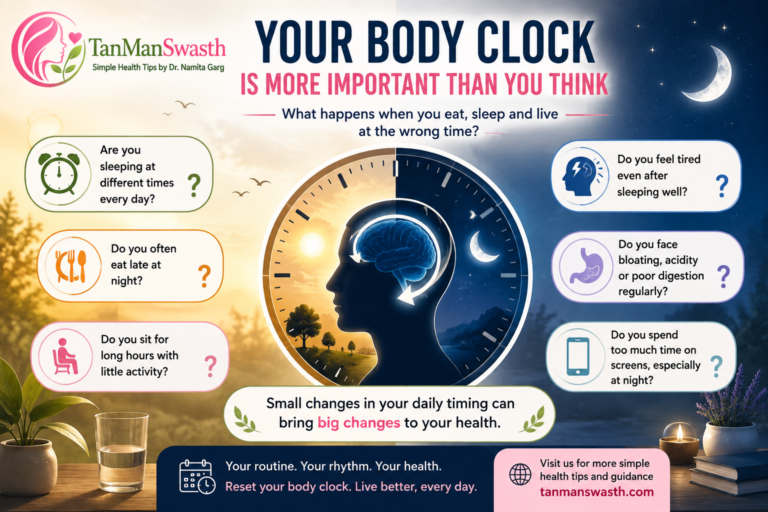
गलत समय पर खाने, सोने और जीने से क्या होता है?
Your body clock plays an important role in your sleep, eating pattern and daily health.
आपके शरीर की प्राकृतिक लय, दैनिक दिनचर्या और बेहतर स्वास्थ्य के लिए एक व्यावहारिक मार्गदर्शिका
क्या आपने कभी सोचा है कि आपको थकान, असामान्य समय पर भूख लगना, ठीक से नींद न आना या देर से खाना खाने के बाद असहज महसूस क्यों होता है—भले ही आपको लगता हो कि आप बाकी सब कुछ सही कर रहे हैं?
स्वास्थ्य केवल इन्हीं चीजों से प्रभावित नहीं होता है हम क्या खाते हैं या हम कितना सोते हैं. बढ़ते शोध से पता चलता है कि जब हम सोते हैं, खाते हैं और सक्रिय रहते हैं यह भी मायने रखता है।.
हमारा शरीर एक आंतरिक समय प्रणाली के अनुसार कार्य करता है जिसे कहा जाता है सर्कैडियन लयइसे अक्सर शरीर की जैविक घड़ी के रूप में वर्णित किया जाता है। यह लगभग 24 घंटे चलने वाली प्रणाली नींद और जागने की अवस्था, हार्मोन की गतिविधि, शरीर के तापमान, भूख, पाचन और चयापचय को नियंत्रित करने में मदद करती है।.
आयुर्वेद के दृष्टिकोण से, नियमित दैनिक दिनचर्या का पालन करने का महत्व पारंपरिक अवधारणा में भी परिलक्षित होता है। दिनाचार्य. हालांकि, आयुर्वेद के पारंपरिक सिद्धांतों और आधुनिक नैदानिक प्रमाणों को स्वतः समतुल्य नहीं माना जाना चाहिए। व्यावहारिक लक्ष्य एक ही है: एक अधिक नियमित, टिकाऊ दिनचर्या बनाना जो स्वास्थ्य को बढ़ावा दे।.
आपकी बॉडी क्लॉक क्या है?
आपके शरीर में एक प्राकृतिक आंतरिक समय प्रणाली होती है जो विभिन्न जैविक प्रक्रियाओं के समन्वय में मदद करती है।.
उदाहरण के लिए, आपके शरीर को यह जानने की आवश्यकता है:
- जब सोने का समय हो 😴
- जब जागने का समय हो ☀️
- हार्मोन में बदलाव कब होना चाहिए
- जब पाचन और चयापचय सक्रिय होते हैं
- जब शरीर का तापमान स्वाभाविक रूप से बढ़ता और घटता है
प्रकाश और अंधेरा उन महत्वपूर्ण संकेतों में से हैं जो हमारी आंतरिक घड़ी को सिंक्रनाइज़ करने में मदद करते हैं। आधुनिक जीवनशैली—जिसमें रात में कृत्रिम प्रकाश, अनियमित नींद और शिफ्ट में काम करना शामिल है—कभी-कभी हमारी आंतरिक घड़ी के समय और हमारे दैनिक व्यवहार के बीच असंतुलन पैदा कर सकती है।.
1. हर दिन अलग-अलग समय पर सोने से क्या होता है?
बहुत से लोग केवल अपने सोने के घंटों की संख्या पर ही ध्यान केंद्रित करते हैं।.
लेकिन ज़रा सोचिए:
सोमवार: रात 10:30 बजे सोएं
मंगलवार: रात 1:30 बजे सोएं
बुधवार: रात 11 बजे सोएं
सप्ताहांत: सुबह 3 बजे तक सोएं
भले ही कुल घंटों की संख्या कभी-कभी पर्याप्त प्रतीत हो, लेकिन यह अनियमित पैटर्न शरीर की सामान्य लय को बाधित कर सकता है।.
92,000 से अधिक प्रतिभागियों पर किए गए 41 अध्ययनों की एक व्यवस्थित समीक्षा में पाया गया कि देर से सोने का समय और नींद के पैटर्न में अधिक परिवर्तनशीलता आमतौर पर कम अनुकूल स्वास्थ्य परिणामों से जुड़ी होती है। हालांकि, शोधकर्ताओं ने यह भी बताया कि साक्ष्य की गुणवत्ता अलग-अलग थी और सभी के लिए सटीक "कट-ऑफ समय" परिभाषित नहीं किया जा सकता है।.
व्यावहारिक दृष्टिकोण
कोशिश करें कि:
- आपका जागने का समय काफी हद तक नियमित है।
- आपका सोने का समय काफी हद तक नियमित है।
- जहां तक संभव हो, सप्ताहांत में होने वाले बड़े बदलावों को सीमित रखा गया है।
आप कर नहीं हर दिन ठीक उसी समय सारिणी का पालन करना आवश्यक है। लक्ष्य यह है कि उचित नियमितता, पूर्णता नहीं।.
2. क्या अनियमित नींद हृदय स्वास्थ्य को प्रभावित कर सकती है?
शोध में नींद के अत्यधिक अनियमित पैटर्न को लेकर चिंताएं जताई गई हैं।.
एनआईएच द्वारा समर्थित एक अध्ययन में बताया गया है कि जिन प्रतिभागियों की नींद का चक्र सबसे अनियमित था, उनमें नियमित चक्र वाले प्रतिभागियों की तुलना में हृदय रोग विकसित होने का जोखिम अधिक था। इस प्रकार का शोध दर्शाता है कि... संगठन, यह इस बात का प्रमाण नहीं है कि अनियमित नींद ही सीधे तौर पर हृदय रोग का कारण बनती है।.
यह एक महत्वपूर्ण अंतर है।.
हम जिम्मेदारीपूर्वक क्या कह सकते हैं:
✅ नियमित नींद का पैटर्न आमतौर पर बेहतर स्वास्थ्य से जुड़ा होता है।.
हमें क्या दावा नहीं करना चाहिए:
❌ “एक रात देर से सोने से हृदय रोग हो सकता है।”
स्वास्थ्य कई कारकों से प्रभावित होता है, जिनमें शामिल हैं:
- आहार
- शारीरिक गतिविधि
- धूम्रपान
- रक्तचाप
- मधुमेह
- तनाव
- नींद की अवधि और गुणवत्ता
- आनुवंशिकी
3. क्या खाने का समय वाकई मायने रखता है?
यह एक उभरता हुआ क्षेत्र है जिसे कहा जाता है क्रोनोन्यूट्रिशनभोजन के समय का सर्कैडियन लय और स्वास्थ्य के साथ परस्पर संबंध का अध्ययन।.
शोधकर्ता इस बात का अध्ययन करने में तेजी से जुट रहे हैं कि क्या नियमित रूप से बहुत देर से भोजन करना या भोजन के समय में अत्यधिक अनियमितता होना चयापचय और स्वास्थ्य के अन्य पहलुओं को प्रभावित करता है।.
एक नियंत्रित नैदानिक अध्ययन में पाया गया:
देर रात का खाना खाने का संबंध निम्नलिखित से था:
- भोजन के बाद ग्लूकोज का स्तर अधिक होना
- लिपिड चयापचय में परिवर्तन
- वसा ऑक्सीकरण में कमी
- अध्ययन स्थल में कोर्टिसोल का उच्च स्तर
इन निष्कर्षों से पता चलता है कि सोने के ठीक पहले बार-बार अधिक मात्रा में भोजन करने से चयापचय पर पहले भोजन करने की तुलना में अलग तरह से प्रभाव पड़ सकता है।.
हालांकि, एक अध्ययन का यह मतलब नहीं है कि हर व्यक्ति को ठीक एक ही समय पर रात का खाना खाना चाहिए।.
आपका कार्यक्रम निम्नलिखित बातों पर निर्भर कर सकता है:
- काम
- संस्कृति
- पारिवारिक दिनचर्या
- चिकित्सा दशाएं
- व्यायाम कार्यक्रम
- नींद का समय
व्यावहारिक सिद्धांत यह है:
🌿 जहां तक संभव हो, देर रात भारी भोजन करने की आदत को न बनाएं।.
4. क्या सोने से पहले रात का खाना खाना चाहिए?
बहुत से लोगों के लिए, लेटने से ठीक पहले भारी भोजन समाप्त करना आरामदायक नहीं हो सकता है।.
एक व्यावहारिक तरीका यह है कि जब भी संभव हो, भारी भोजन और सोने के बीच कुछ समय का अंतराल रखा जाए।.
यह उन लोगों के लिए विशेष रूप से उपयोगी हो सकता है जो निम्नलिखित समस्याओं का सामना करते हैं:
- पेट में जलन
- एसिड रिफ्लक्स के लक्षण
- सूजन
- खाने के बाद बेचैनी
यदि आपको लगातार एसिड रिफ्लक्स या पाचन संबंधी लक्षण हैं, तो यह न मानें कि यह भोजन के समय के कारण होता है—चिकित्सकीय सलाह लें।.
5. नाश्ते के बारे में क्या?
नाश्ता एक बेहद व्यक्तिगत विषय है।.
कुछ लोग भूखे उठते हैं। अन्य लोग शायद भूखे न उठें।.
महत्वपूर्ण प्रश्न केवल यह नहीं है:
“"क्या आप नाश्ता करते हैं?"”
लेकिन:
“आपकी समग्र खानपान की आदत क्या है?”
भोजन के समय को लेकर शोध अभी भी जारी है, और वर्तमान प्रमाण हर व्यक्ति के लिए एक समान समय सारिणी का समर्थन नहीं करते हैं। 2024 के एक व्यवस्थित समीक्षा में पाया गया कि भोजन के समय और अनियमित खान-पान की आदतों का नींद के स्वास्थ्य पर क्या प्रभाव पड़ता है, इस बारे में बढ़ते हुए, लेकिन अभी भी अपूर्ण प्रमाण मौजूद हैं।.
व्यावहारिक मार्गदर्शन
जब आप वास्तव में अस्वस्थ या मतली महसूस कर रहे हों तो खुद को अधिक भोजन करने के लिए मजबूर करने से बचें।.
इसके बजाय, ऐसी खान-पान की शैली अपनाने का लक्ष्य रखें जो इस प्रकार हो:
- पोषक तत्वों से संतुलित
- आपकी चिकित्सा आवश्यकताओं के लिए उपयुक्त
- अपेक्षाकृत नियमित
- टिकाऊ
मधुमेह से पीड़ित लोगों या ग्लूकोज कम करने वाली दवाएं लेने वाले लोगों को अपनी दवाइयों के शेड्यूल पर विचार किए बिना भोजन के समय में बदलाव करने के बारे में विशेष रूप से सावधान रहना चाहिए।.
6. "सामाजिक जेट लैग" की समस्या“
क्या आप कामकाजी दिनों में जल्दी सोते हैं लेकिन सप्ताहांत में बहुत देर से सोते हैं?
उदाहरण के लिए:
कार्यदिवस: रात 10:30 बजे से सुबह 6:30 बजे तक
सप्ताहांत: सुबह 2:30 बजे से 11 बजे तक
इस बड़े अंतर को कभी-कभी इस प्रकार वर्णित किया जाता है सामाजिक जेट लैग.
आपका कार्यक्रम बार-बार दो अलग-अलग दिनचर्याओं के बीच बदलता रहता है।.
नींद के समय पर किए गए व्यवस्थित अध्ययन में पाया गया कि सामाजिक जेट लैग का संबंध स्वास्थ्य पर प्रतिकूल प्रभावों से है, हालांकि साक्ष्य की गुणवत्ता और मजबूती में भिन्नता है।.
एक बेहतर रणनीति
आपको अपने सप्ताहांत का आनंद लेने से बचने की आवश्यकता नहीं है।.
लेकिन हर हफ्ते अपने सोने के शेड्यूल को पूरी तरह से उलटने की कोशिश न करें।.
7. सबसे व्यावहारिक उपाय: अपने दिन में कुछ निश्चित बिंदु बनाएं।
किसी जटिल स्वास्थ्य दिनचर्या का पालन करने की कोशिश करने के बजाय, कुछ सरल दिनचर्या बनाएं। दैनिक एंकर.
☀️ मॉर्निंग एंकर
कोशिश करें कि ज्यादातर दिनों में लगभग एक ही समय पर उठें।.
सुबह की रोशनी आपकी सर्कैडियन प्रणाली के लिए एक महत्वपूर्ण पर्यावरणीय संकेत है।.
व्यावहारिक कदम:
- जागने के बाद पर्दे खोल दें
- जब संभव हो, तो दिन के उजाले का लाभ उठाएं।
- लंबे समय तक बिस्तर पर तुरंत वापस जाने से बचें
🍽️ भोजन समय निर्धारण एंकर
अपने मुख्य भोजन को काफी हद तक नियमित रखने का प्रयास करें।.
यह करता है नहीं इसका मतलब है कि प्रतिदिन ठीक सुबह 8:00 बजे, दोपहर 1:00 बजे और शाम 7:00 बजे भोजन करना।.
इसका मतलब है कि जहां तक संभव हो, भोजन के समय को पूरी तरह से अव्यवस्थित होने से बचाना।.
🚶 गतिविधि एंकर
नियमित शारीरिक गतिविधि समग्र स्वास्थ्य को बढ़ावा देती है।.
अपनी उम्र और स्वास्थ्य के अनुरूप गतिविधि चुनें:
- चलना
- योग
- साइकिल चलाना
- तैरना
- मज़बूती की ट्रेनिंग
यदि आपको कोई स्वास्थ्य समस्या है, तो अपने स्वास्थ्य सेवा पेशेवर से उचित व्यायाम के बारे में चर्चा करें।.
🌙 रात्रि लंगर
सोने से पहले आराम करने की एक नियमित दिनचर्या बनाएं।.
आप शायद:
- सोने से पहले तेज रोशनी कम करें।
- सोने से ठीक पहले उत्तेजक गतिविधियों से बचें।
- अपने सोने के वातावरण को आरामदायक रखें।
- सोने का समय नियमित रखने की कोशिश करें।
कुछ निदानित सर्केडियन रिदम विकारों के लिए, चिकित्सक विशिष्ट उपचारों का उपयोग कर सकते हैं, जैसे कि सावधानीपूर्वक समयबद्ध प्रकाश चिकित्सा या मेलाटोनिन। ये सभी के लिए सार्वभौमिक "स्व-उपचार" के रूप में उपयुक्त नहीं हैं।.
एक सरल दैनिक दिनचर्या जिसका आप वास्तव में पालन कर सकते हैं
यह एक व्यावहारिक उदाहरण है—कोई कठोर चिकित्सीय नुस्खा नहीं:
🌅 सुबह
✔ लगभग नियमित समय पर जागना
✔ दिन के उजाले के संपर्क में रहें
✔ अपने दिन की शुरुआत शांतिपूर्वक करें
🍽️ दिन के दौरान
✔ संतुलित भोजन करें
✔ भोजन का समय नियमित रखें
✔ खूब पानी पिएं
✔ शारीरिक गतिविधि को शामिल करें
🌆 शाम
✔ देर रात भारी भोजन करने की आदत न डालें।
✔ सोने से पहले धीरे-धीरे गति कम करना शुरू करें
🌙 रात
✔ सोने का नियमित और नियमित समय सारिणी बनाए रखें
✔ सोने के वातावरण को आरामदायक और अंधेरा रखें
आयुर्वेदीय दृष्टिकोण: दिनचर्या
आयुर्वेद परंपरागत रूप से जोर देता है दिनाचार्य, यानी एक व्यवस्थित दैनिक दिनचर्या।.
परंपरागत प्रथाओं में निम्नलिखित के लिए नियमित समय निर्धारित करना शामिल हो सकता है:
- जागने
- व्यक्तिगत स्वच्छता
- भोजन
- शारीरिक गतिविधि
- आराम करो और सो जाओ
यह अवधारणा दिलचस्प है क्योंकि आधुनिक सर्कैडियन विज्ञान भी जैविक लय और नियमित समय के संभावित महत्व पर जोर देता है।.
हालांकि, स्वास्थ्य संचार का एक महत्वपूर्ण बिंदु यह है:
पारंपरिक ज्ञान को ईमानदारी से पारंपरिक मार्गदर्शन के रूप में प्रस्तुत किया जाना चाहिए, जबकि चिकित्सा संबंधी दावे उचित वैज्ञानिक प्रमाणों पर आधारित होने चाहिए।.
किसी व्यक्ति को निर्धारित उपचार बंद नहीं करना चाहिए या केवल नियमित उपचार से चिकित्सा देखभाल को प्रतिस्थापित नहीं करना चाहिए।.
जब आपकी "शरीर की घड़ी की समस्या" के लिए वास्तव में चिकित्सीय ध्यान की आवश्यकता हो सकती है
यह न मानें कि हर लक्षण खराब दिनचर्या के कारण होता है।.
यदि आपको निम्नलिखित लक्षण हैं तो कृपया चिकित्सकीय सलाह लें:
⚠️ लगातार गंभीर थकान
⚠️ दीर्घकालिक अनिद्रा
⚠️ सोते समय तेज खर्राटे लेना या सांस रुक जाना
⚠️ दिन में अत्यधिक नींद आना
⚠️ वजन में अस्पष्ट परिवर्तन
⚠️ लगातार पाचन संबंधी समस्याएं
⚠️ बार-बार चक्कर आना या कमजोरी महसूस होना
⚠️ आपके दैनिक जीवन को प्रभावित करने वाले लक्षण
चिकित्सा जांच की आवश्यकता हो सकती है क्योंकि थकान या नींद की कमी जैसे लक्षणों के कई कारण हो सकते हैं।.
अंतिम संदेश
आपको एक आदर्श जीवनशैली की आवश्यकता नहीं है।.
आपको ठीक सुबह 5 बजे उठने की जरूरत नहीं है।.
आपको हर बार एक ही समय पर भोजन करने की आवश्यकता नहीं है।.
लेकिन आपके शरीर को इससे फायदा हो सकता है अधिक स्थिरता.
🌿 नियमित रूप से सोएं।.
🌿 सोच-समझकर भोजन करें और जहां तक संभव हो अनियमित खान-पान की आदतों से बचें।.
🌿 शारीरिक रूप से सक्रिय रहें।.
🌿 आपको आराम करने की आवश्यकता है, इसका सम्मान करें।.
🌿 लक्षण बने रहने पर चिकित्सकीय सलाह लें।.
आपके शरीर की एक लय होती है।.
कभी-कभी, स्वास्थ्य में सुधार किसी काम को करने से शुरू नहीं होता। और भी चीजें, लेकिन महत्वपूर्ण काम करके अधिक निरंतरता से.
संदर्भ:
- राष्ट्रीय स्वास्थ्य संस्थान (एनआईएच) — सर्कैडियन रिदम विकार और उनका उपचार।.
- चैपुट जेपी एट अल. वयस्कों में नींद का समय, नींद की नियमितता और स्वास्थ्य: एक व्यवस्थित समीक्षा।. अनुप्रयुक्त शरीर क्रिया विज्ञान, पोषण और चयापचय, 2020।.
- एनआईएच अनुसंधान मायने रखता है अनियमित नींद के पैटर्न और हृदय रोग का खतरा।.
- एनएचएलबीआई/एनआईएच — क्रोनोन्यूट्रिशन: स्वास्थ्य के लिए भोजन का समय महत्वपूर्ण है।.
- गु सी एट अल. स्वस्थ स्वयंसेवकों में देर से भोजन करने के चयापचय संबंधी प्रभाव: एक यादृच्छिक क्रॉसओवर नैदानिक परीक्षण।. जर्नल ऑफ क्लिनिकल एंडोक्रिनोलॉजी एंड मेटाबॉलिज्म।.
- सैदी ओ एट अल. समय-आधारित पोषण और नींद: मानव अध्ययनों में खाने के पैटर्न की अस्थायी विशेषता से सीखे गए सबक।. स्लीप मेडिसिन रिव्यूज, 2024।.