
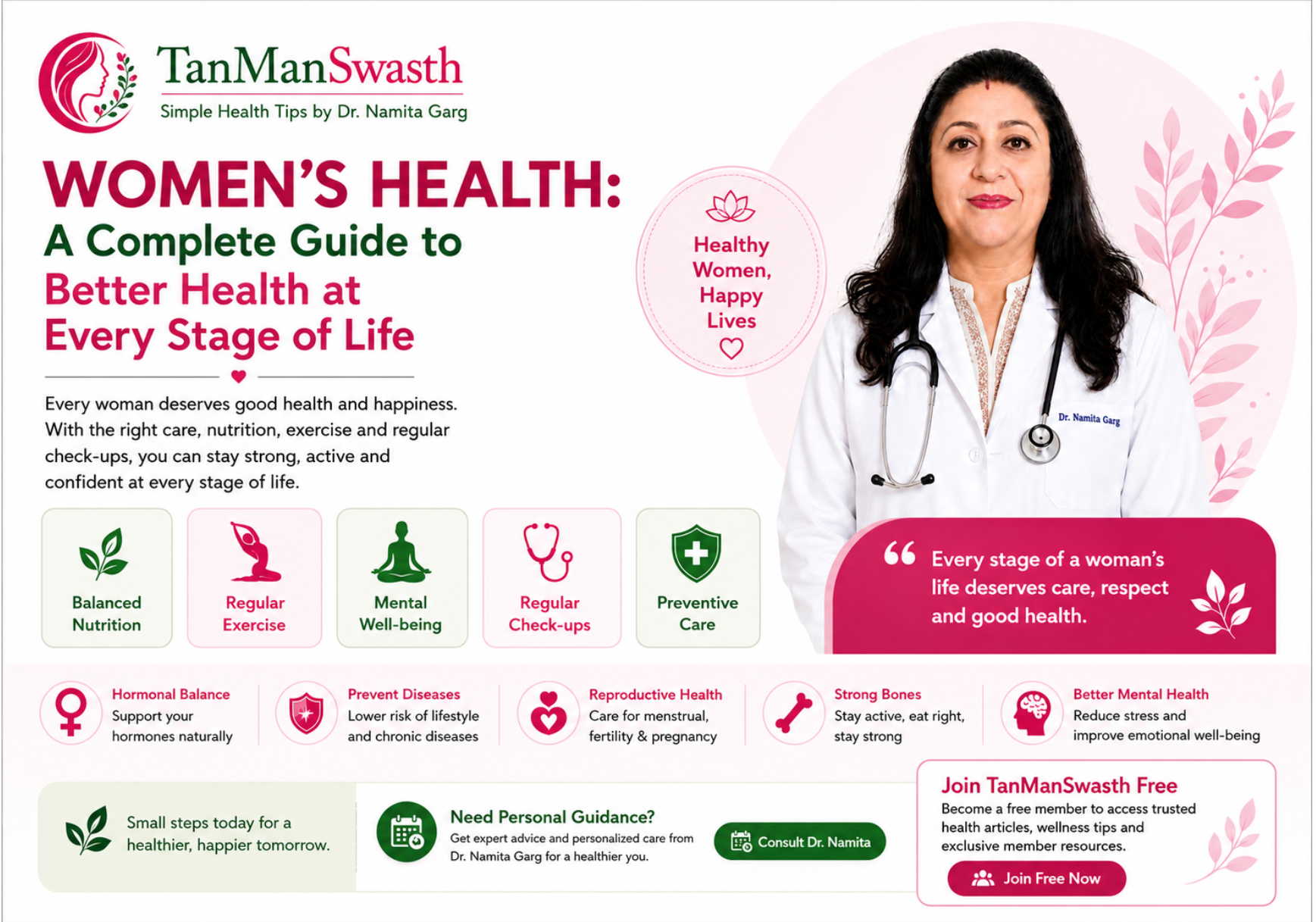
महिलाओं का स्वास्थ्य: जीवन के हर चरण में बेहतर स्वास्थ्य के लिए एक संपूर्ण मार्गदर्शिका
किशोरावस्था और प्रजनन काल से लेकर गर्भावस्था, रजोनिवृत्ति और स्वस्थ वृद्धावस्था तक, महिलाओं की स्वास्थ्य संबंधी ज़रूरतें जीवन भर बदलती रहती हैं। नियमित स्वास्थ्य जांच, संतुलित पोषण, शारीरिक गतिविधि और समय पर चिकित्सा देखभाल महिलाओं को स्वस्थ रहने और कई स्वास्थ्य समस्याओं से बचाव में मदद कर सकती है।.
तनमानस्वस्थ में, डॉ. नमिता गर्ग महिलाओं और उनके परिवारों को स्वास्थ्य संबंधी सूचित निर्णय लेने और स्वस्थ जीवन जीने में मदद करने के लिए सरल भाषा में व्यावहारिक, साक्ष्य-आधारित मार्गदर्शन साझा करती हैं।.
महिलाओं का स्वास्थ्य क्यों महत्वपूर्ण है?
आज अपने स्वास्थ्य का ध्यान रखने से भविष्य में आपके जीवन की गुणवत्ता बेहतर हो सकती है। शारीरिक, मानसिक और भावनात्मक स्वास्थ्य पर ध्यान देने से महिलाएं जीवन के हर चरण में सक्रिय और स्वस्थ रह सकती हैं।.
फ़ायदे
- बेहतर समग्र स्वास्थ्य और ऊर्जा
- स्वस्थ हार्मोनल संतुलन
- प्रजनन स्वास्थ्य में सुधार
- जीवनशैली से जुड़ी बीमारियों का खतरा कम
- मजबूत हड्डियाँ और जोड़
- बेहतर मानसिक स्वास्थ्य
- स्वस्थ बुढ़ापा
महिलाओं की स्वास्थ्य संबंधी सामान्य चिंताएँ
- अनियमित मासिक धर्म चक्र
- पॉलीसिस्टिक ओवरी सिंड्रोम (पीसीओएस)
- थायरॉइड विकार
- एनीमिया (कम हीमोग्लोबिन)
- गर्भावस्था और प्रसवोत्तर देखभाल
- रजोनिवृत्ति के लक्षण
- ऑस्टियोपोरोसिस (कमजोर हड्डियां)
- मूत्र मार्ग संक्रमण (UTIs)
- वज़न प्रबंधन
- तनाव और चिंता
महिलाओं के स्वास्थ्य के लिए स्वस्थ आदतें
अच्छी सेहत छोटी-छोटी दैनिक आदतों से बनती है। संतुलित जीवनशैली महिलाओं को ऊर्जावान बनाए रखने, हार्मोनल स्वास्थ्य को बेहतर बनाने और कई बीमारियों के खतरे को कम करने में मदद कर सकती है।.
संतुलित आहार लें
ताजी सब्जियां, फल, साबुत अनाज, दालें, पौष्टिक वसा और प्रोटीन युक्त खाद्य पदार्थ शामिल करें। आयरन, कैल्शियम, विटामिन डी और अन्य आवश्यक पोषक तत्वों का पर्याप्त सेवन सुनिश्चित करें।.
शारीरिक रूप से सक्रिय रहें
अधिकांश दिनों में कम से कम 30 मिनट की शारीरिक गतिविधि का लक्ष्य रखें। पैदल चलना, योग, साइकिल चलाना या स्ट्रेंथ ट्रेनिंग से फिटनेस, मूड और हड्डियों का स्वास्थ्य बेहतर हो सकता है।.
मानसिक स्वास्थ्य को प्राथमिकता दें
तनाव को कम करने के लिए विश्राम तकनीकों, शौक, प्रियजनों के साथ समय बिताने और पर्याप्त नींद लेने का सहारा लें। जरूरत पड़ने पर पेशेवर मदद लेने में संकोच न करें।.
नियमित स्वास्थ्य जांच का समय निर्धारित करें
नियमित जांच और स्वास्थ्य परीक्षण से समस्याओं का जल्द पता लगाने में मदद मिल सकती है, जिससे उपचार अधिक प्रभावी हो जाता है।.
अच्छी व्यक्तिगत स्वच्छता बनाए रखें
मासिक धर्म के दौरान अच्छी स्वच्छता, अंतरंग स्वच्छता और निवारक स्वास्थ्य देखभाल पद्धतियां संक्रमण के जोखिम को कम करने और समग्र स्वास्थ्य को बढ़ावा देने में मदद करती हैं।.
महिलाओं के स्वास्थ्य से जुड़े आम मिथक
मिथक 1: महिलाओं को केवल बीमार होने पर ही डॉक्टर के पास जाने की आवश्यकता होती है।.
तथ्य: अच्छे स्वास्थ्य को बनाए रखने और समस्याओं का शीघ्र पता लगाने के लिए नियमित निवारक जांच आवश्यक है।.
मिथक 2: रजोनिवृत्ति एक बीमारी है।.
तथ्य: रजोनिवृत्ति जीवन का एक प्राकृतिक चरण है। हालांकि इसके लक्षण चुनौतीपूर्ण हो सकते हैं, लेकिन जीवनशैली में बदलाव और चिकित्सकीय मार्गदर्शन से अक्सर इन्हें नियंत्रित किया जा सकता है।.
मिथक 3: अनियमित मासिक धर्म हमेशा सामान्य नहीं होते।.
तथ्य: हालांकि कभी-कभार बदलाव हो सकते हैं, लेकिन लगातार अनियमित मासिक धर्म की स्थिति में किसी स्वास्थ्य पेशेवर से परामर्श लेना चाहिए।.
मिथक 4: हड्डियों की कमजोरी केवल बुजुर्ग महिलाओं को ही प्रभावित करती है।.
तथ्य: हड्डियों का स्वास्थ्य जीवन भर उचित पोषण, व्यायाम और पर्याप्त कैल्शियम और विटामिन डी के सेवन से बनाए रखना चाहिए।.
आपको डॉक्टर से कब परामर्श लेना चाहिए?
यदि आपको निम्नलिखित लक्षण महसूस हों तो आपको चिकित्सकीय सलाह लेनी चाहिए:
- लगातार अनियमित मासिक धर्म
- भारी मासिक धर्म रक्तस्राव
- मासिक धर्म में तीव्र दर्द
- गर्भधारण में कठिनाई
- स्तन में गांठें या स्तन में असामान्य परिवर्तन
- लगातार श्रोणि में दर्द
- रजोनिवृत्ति के लक्षण दैनिक जीवन को प्रभावित करते हैं
- बार-बार मूत्र संक्रमण
- अस्पष्टीकृत वजन परिवर्तन
- लगातार थकान या कमजोरी
डॉ. नमिता गर्ग जीवन के हर चरण में महिलाओं को व्यक्तिगत मार्गदर्शन प्रदान करती हैं, जिससे आपको अपनी स्वास्थ्य संबंधी चिंताओं को समझने और दीर्घकालिक स्वास्थ्य के लिए सोच-समझकर निर्णय लेने में मदद मिलती है।.
अक्सर पूछे जाने वाले प्रश्न (FAQs)
1. महिलाओं को कितनी बार स्वास्थ्य जांच करानी चाहिए?
अधिकांश महिलाओं को साल में एक बार नियमित स्वास्थ्य जांच करानी चाहिए, हालांकि इसकी आवृत्ति उम्र, चिकित्सा इतिहास और व्यक्तिगत स्वास्थ्य आवश्यकताओं के आधार पर भिन्न हो सकती है।.
2. हार्मोनल असंतुलन के शुरुआती लक्षण क्या हैं?
सामान्य लक्षणों में अनियमित मासिक धर्म, मुंहासे, वजन में बदलाव, अत्यधिक बाल झड़ना, मनोदशा में उतार-चढ़ाव, थकान और नींद आने में कठिनाई शामिल हैं।.
3. मैं अपनी हड्डियों को स्वस्थ कैसे रख सकता हूँ?
कैल्शियम से भरपूर खाद्य पदार्थ खाएं, पर्याप्त मात्रा में विटामिन डी लें, नियमित रूप से व्यायाम करें (विशेषकर वजन उठाने वाली गतिविधियाँ), और धूम्रपान और अत्यधिक शराब से बचें।.
4. क्या रजोनिवृत्ति उम्र बढ़ने का एक सामान्य हिस्सा है?
जी हाँ। रजोनिवृत्ति एक महिला के जीवन का प्राकृतिक चरण है। हालाँकि इसके लक्षण अलग-अलग हो सकते हैं, लेकिन कई लक्षणों को स्वस्थ जीवनशैली में बदलाव और उचित चिकित्सा मार्गदर्शन से नियंत्रित किया जा सकता है।.
5. महिलाओं के स्वास्थ्य के लिए कौन से खाद्य पदार्थ महत्वपूर्ण हैं?
फलों, सब्जियों, साबुत अनाज, दालों, कम वसा वाले प्रोटीन, स्वस्थ वसा, आयरन युक्त खाद्य पदार्थ, कैल्शियम और विटामिन डी से भरपूर संतुलित आहार समग्र स्वास्थ्य को बढ़ावा देता है।.
6. मासिक धर्म संबंधी समस्याओं के लिए मुझे चिकित्सकीय सलाह कब लेनी चाहिए?
यदि आपको बहुत अधिक रक्तस्राव, गंभीर दर्द, मासिक धर्म का न आना (जब आप गर्भवती न हों), मासिक धर्म के बीच रक्तस्राव, या लगातार अनियमित चक्र जैसी समस्याएँ हों, तो किसी स्वास्थ्य पेशेवर से परामर्श लें।.
संबंधित स्वास्थ्य लेख
क्या आपको व्यक्तिगत मार्गदर्शन की आवश्यकता है?
हर महिला की स्वास्थ्य संबंधी ज़रूरतें अलग-अलग होती हैं। चाहे आप गर्भावस्था की योजना बना रही हों, पीसीओएस से जूझ रही हों, रजोनिवृत्ति का सामना कर रही हों, या बस अपने समग्र स्वास्थ्य में सुधार करना चाहती हों, डॉ. नमिता गर्ग आपको सूचित और स्वस्थ विकल्प चुनने में मदद करने के लिए व्यक्तिगत मार्गदर्शन प्रदान करती हैं।.
तनमानस्वस्थ से निःशुल्क जुड़ें
विश्वसनीय स्वास्थ्य लेखों, सेहत संबंधी सुझावों और सदस्यों के लिए विशेष संसाधनों तक पहुँच प्राप्त करने के लिए निःशुल्क सदस्य बनें। स्वस्थ जीवन की ओर अपनी यात्रा आज ही शुरू करें।.