
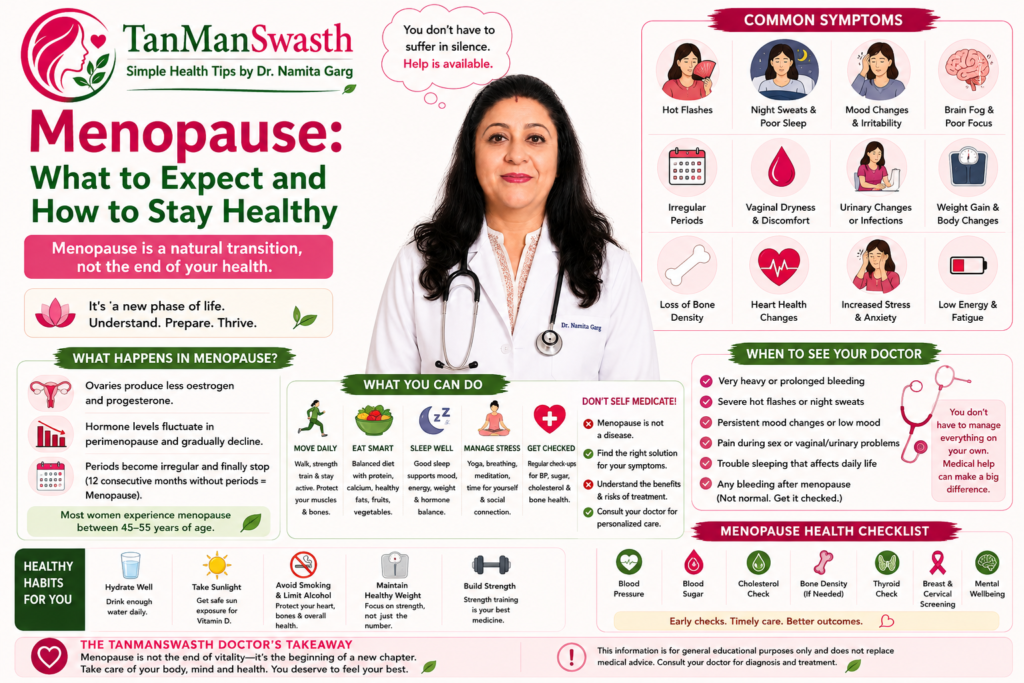
गर्माहट के दौरे। अनियमित मासिक धर्म। वजन में बदलाव। नींद की कमी। मनोदशा में उतार-चढ़ाव।.
यदि आपकी उम्र 40 या 50 वर्ष के आसपास है और आपको अचानक महसूस होता है कि आपका शरीर अलग तरह से व्यवहार कर रहा है, तो आप वृद्धावस्था में प्रवेश कर रहे होंगे। पेरिमेनोपॉज़— रजोनिवृत्ति की ओर ले जाने वाला संक्रमण काल.
कई महिलाएं इस बात से हैरान होती हैं कि इस अवस्था के दौरान कितने बदलाव हो सकते हैं।.
कुछ लोगों में केवल हल्के लक्षण दिखाई देते हैं।.
कुछ अन्य लोगों को नींद की समस्या, हॉट फ्लैशेस, चिंता, योनि में सूखापन, मासिक धर्म में बदलाव और वजन को नियंत्रित करने में कठिनाई जैसी समस्याओं का सामना करना पड़ता है।.
लेकिन एक महत्वपूर्ण संदेश है जो मैं हर महिला को बताना चाहती हूं:
रजोनिवृत्ति कोई बीमारी नहीं है।.
यह जीवन की एक प्राकृतिक जैविक अवस्था है।.
साथ ही, यह आपके स्वास्थ्य का पुनर्मूल्यांकन करने और आने वाले वर्षों में अपनी हड्डियों, हृदय, मांसपेशियों और समग्र स्वास्थ्य की रक्षा के लिए कदम उठाने का एक उत्कृष्ट अवसर है।.
रजोनिवृत्ति वास्तव में क्या है?
रजोनिवृत्ति वह अवस्था है जब एक महिला की उम्र बढ़ जाती है। लगातार 12 महीनों तक मासिक धर्म न आना, जब पूर्णविराम न होने का कोई अन्य स्पष्ट कारण न हो।.
प्राकृतिक रजोनिवृत्ति आमतौर पर इस अवधि के बीच होती है। 45 और 55 वर्ष की आयु.
लेकिन रजोनिवृत्ति आमतौर पर रातोंरात नहीं होती है।.
एक संक्रमणकालीन अवधि होती है जिसे कहा जाता है perimenopause.
रजोनिवृत्ति के आसपास के समय में, अंडाशय में हार्मोन का स्तर—विशेष रूप से एस्ट्रोजन—में उतार-चढ़ाव होता है और धीरे-धीरे कम हो जाता है।.
इससे मासिक धर्म चक्र अनियमित हो सकता है।.
आप शायद ध्यान देंगे:
- माहवारी जल्दी या देर से शुरू हो सकती है
- भारी अवधि
- हल्के मासिक धर्म
- मासिक धर्म का अनियमित होना
- मासिक धर्म के दिनों की संख्या में परिवर्तन
- लक्षण प्रकट होना और गायब होना
अंततः, मासिक धर्म बंद हो जाता है।.
रजोनिवृत्ति से पहले और रजोनिवृत्ति के दौरान क्या अंतर है?
इसमें भ्रम होना आसान है।.
perimenopause
रजोनिवृत्ति की ओर ले जाने वाला संक्रमण काल।.
मासिक धर्म अनियमित हो सकता है और लक्षण शुरू हो सकते हैं।.
रजोनिवृत्ति
पुष्टि होने के बाद 12 महीने तक मासिक धर्म न आना जब कोई और स्पष्टीकरण न हो।.
रजोनिवृत्ति के बाद
रजोनिवृत्ति के बाद के वर्ष।.
यह अंतर महत्वपूर्ण है क्योंकि लक्षण शुरू हो सकते हैं अंतिम मासिक धर्म से कई साल पहले.
आपको सबसे पहले जो संकेत नज़र आ सकते हैं
कई महिलाओं के लिए, पहला संकेत हॉट फ्लैश नहीं होता है।.
यह बस इतना हो सकता है:
“"मेरे मासिक धर्म अचानक अनियमित हो गए हैं।"”
आप शायद गौर करें कि आपका मासिक धर्म चक्र, जो पहले नियमित था, अब छोटा, लंबा, अधिक मात्रा में या कम मात्रा में हो गया है।.
यह अक्सर रजोनिवृत्ति के संक्रमण के शुरुआती संकेतों में से एक होता है।.
अन्य लक्षण धीरे-धीरे प्रकट हो सकते हैं।.
1. हॉट फ्लैशेस
हॉट फ्लैश अचानक गर्मी का एहसास है, जो अक्सर चेहरे, गर्दन और शरीर के ऊपरी हिस्से को प्रभावित करता है।.
आपको अचानक ऐसा महसूस हो सकता है:
“मुझे इतनी गर्मी क्यों लग रही है?”
आपको पसीना आ सकता है, असहज महसूस हो सकता है या आपके दिल की धड़कन तेज हो सकती है।.
कुछ महिलाओं को कभी-कभी हॉट फ्लैशेस का अनुभव होता है।.
कुछ लोगों को ये अनुभव दिन में कई बार होते हैं।.
नींद के दौरान भी हॉट फ्लैशेस हो सकते हैं और ये और भी गंभीर हो सकते हैं। रात का पसीना, जिससे आपकी नींद बार-बार टूट सकती है।.
2. रात में पसीना आना और नींद न आना
आप जाग सकते हैं:
- पसीना आना
- गर्मी लग रही है
- कंबल हटाते हुए
- कपड़े बदलना
- दोबारा नींद आने में कठिनाई हो रही है
समय के साथ, खराब नींद निम्नलिखित को प्रभावित कर सकती है:
- एकाग्रता
- याद
- मनोदशा
- भूख
- ऊर्जा
- शारीरिक गतिविधि
इसीलिए रजोनिवृत्ति के दौरान नींद की समस्याओं को "सामान्य उम्र बढ़ने" के रूप में खारिज नहीं किया जाना चाहिए।“
यदि लक्षण आपके जीवन की गुणवत्ता को प्रभावित कर रहे हैं, तो उपचार के विकल्प उपलब्ध हैं।.
3. मनोदशा में परिवर्तन
कुछ महिलाओं को निम्नलिखित अनुभव होते हैं:
- चिड़चिड़ापन
- चिंता
- हल्का माहौल
- भावनात्मक रूप से अभिभूत महसूस करना
- तनाव में वृद्धि
- मिजाज
हार्मोनल परिवर्तन इसमें योगदान दे सकते हैं, लेकिन रजोनिवृत्ति का मतलब यह नहीं है कि हर भावनात्मक परिवर्तन स्वचालित रूप से हार्मोन के कारण होता है।.
जीवन की परिस्थितियाँ भी मायने रखती हैं।.
मध्य आयु की कई महिलाएं एक साथ कई कार्यों को संभाल रही हैं:
- काम
- बच्चे
- वृद्ध माता-पिता
- रिश्ते
- वित्तीय जिम्मेदारियां
- उनके स्वास्थ्य में परिवर्तन
इसलिए हर चीज के लिए रजोनिवृत्ति को दोष न दें।.
यदि लगातार चिंता या अवसाद आपके दैनिक जीवन को प्रभावित कर रहा है, तो किसी स्वास्थ्य पेशेवर से बात करें।.
आपके मानसिक स्वास्थ्य पर उचित ध्यान देना आवश्यक है।.
4. मस्तिष्क में धुंधलापन और एकाग्रता संबंधी समस्याएं
आप शायद यह सोच रहे होंगे:
“मैं इस कमरे में क्यों आया?”
या:
“मुझे उस व्यक्ति का नाम तो पता है, लेकिन मुझे याद नहीं आ रहा!”
कुछ महिलाओं ने रजोनिवृत्ति के दौरान ध्यान केंद्रित करने में कठिनाई, भूलने की बीमारी और मानसिक रूप से सुस्त महसूस करने की शिकायत की है।.
अपर्याप्त नींद और तनाव इन समस्याओं को और भी बदतर बना सकते हैं।.
कभी-कभार भूल जाना जरूरी नहीं कि किसी गंभीर बीमारी का संकेत हो।.
लेकिन अचानक, गंभीर या धीरे-धीरे बिगड़ती संज्ञानात्मक समस्याओं के लिए केवल रजोनिवृत्ति को ही दोषी नहीं ठहराया जाना चाहिए।.
5. योनि में सूखापन
एस्ट्रोजन के स्तर में कमी से योनि के ऊतकों में परिवर्तन हो सकते हैं।.
कुछ महिलाओं को निम्नलिखित अनुभव होते हैं:
- योनि में सूखापन
- जलन या खुजली
- सेक्स के दौरान दर्द
- आराम में कमी
- मूत्र संबंधी लक्षण
इन लक्षणों के बारे में बात करना शर्मनाक हो सकता है।.
लेकिन वे हैं चिकित्सीय लक्षण—ये ऐसी चीज़ें नहीं हैं जिन्हें आपको बस सहन करना पड़े।.
कुछ महिलाओं के लिए योनि मॉइस्चराइजर और लुब्रिकेंट मददगार हो सकते हैं, और अन्य महिलाओं के लिए उनके चिकित्सीय इतिहास के आधार पर स्थानीय योनि एस्ट्रोजन उपयुक्त हो सकता है।.
6. पेशाब में बदलाव
कुछ महिलाओं को यह बात ध्यान में आती है:
- बार-बार पेशाब आना
- तात्कालिकता
- योनि या मूत्र संबंधी असुविधा
- बार-बार होने वाले मूत्र मार्ग संक्रमण
एस्ट्रोजन का स्तर गिरने पर योनि और मूत्रमार्ग के आसपास के ऊतक पतले और शुष्क हो सकते हैं।.
यदि आपको पेशाब करते समय जलन, पेशाब में खून, बुखार या लगातार मूत्र संबंधी लक्षण हैं, तो यह न मानें कि यह केवल रजोनिवृत्ति के लक्षण हैं।.
अपना मूल्यांकन करवाएं।.
7. वजन बढ़ना और शरीर के आकार में बदलाव
यह उन सबसे बड़ी चिंताओं में से एक है जो महिलाएं मध्य आयु के दौरान उठाती हैं।.
आप कह सकते हैं:
“मैं लगभग वही खाना खा रहा हूँ, लेकिन मेरी कमर बढ़ती जा रही है।”
रजोनिवृत्ति के साथ-साथ शरीर की संरचना और वसा वितरण में भी परिवर्तन हो सकते हैं।.
लेकिन हमें हर किलोग्राम के लिए हार्मोन को दोष नहीं देना चाहिए।.
बढ़ती उम्र, शारीरिक गतिविधि में कमी, मांसपेशियों में कमी, नींद की समस्या, खानपान की आदतें और ऊर्जा व्यय में परिवर्तन, ये सभी कारक इसमें योगदान करते हैं।.
इसलिए इसका समाधान यह नहीं है:
“"कम खाओ और खुद को भूखा रखो।"”
इसके बजाय, मध्य आयु वह समय है जब हमें इन चीजों के बारे में अधिक सचेत होना चाहिए:
प्रोटीन + मांसपेशियां + व्यायाम + भोजन की मात्रा पर नियंत्रण + नींद।.
8. मांसपेशियों का नुकसान अधिक महत्वपूर्ण हो जाता है
जैसे-जैसे हमारी उम्र बढ़ती है, मांसपेशियों को बनाए रखना और भी महत्वपूर्ण हो जाता है।.
मांसपेशियां निम्नलिखित कार्यों में सहायक होती हैं:
- ताकत
- गतिशीलता
- संतुलन
- ग्लूकोज चयापचय
- स्वतंत्रता
- स्वस्थ बुढ़ापा
इसीलिए मैं आपकी दीर्घकालिक सेहत के लिए केवल पैदल चलने पर निर्भर रहने की सलाह नहीं दूंगा।.
पैदल चलना बहुत अच्छा है।.
लेकिन जोड़ें मज़बूती की ट्रेनिंग आपकी क्षमता के अनुरूप।.
इसमें निम्नलिखित शामिल हो सकते हैं:
- प्रतिरोध संघों
- हल्के वजन
- स्क्वाट या बैठने से खड़े होने के व्यायाम
- दीवार के सहारे पुश-अप्स
- अन्य प्रतिरोध व्यायाम
यदि आपको कोई स्वास्थ्य संबंधी या जोड़ों की समस्या है, तो कोई भी नया व्यायाम कार्यक्रम शुरू करने से पहले उचित सलाह लें।.
9. रजोनिवृत्ति के बाद आपकी हड्डियों को अधिक देखभाल की आवश्यकता होती है
यह स्वास्थ्य से जुड़े उन सबसे महत्वपूर्ण मुद्दों में से एक है जिन्हें महिलाओं को समझना चाहिए।.
एस्ट्रोजन हड्डियों की रक्षा करने में मदद करता है।.
रजोनिवृत्ति के बाद, हड्डियों का क्षय तेजी से हो सकता है, खासकर रजोनिवृत्ति के बाद के शुरुआती वर्षों में। इससे जोखिम बढ़ सकता है। ऑस्टियोपोरोसिस और फ्रैक्चर.
इसलिए रजोनिवृत्ति के दौरान यह सवाल पूछना अच्छा रहता है:
क्या मुझे पर्याप्त कैल्शियम मिल रहा है?
क्या मुझे पर्याप्त मात्रा में विटामिन डी मिल रहा है?
क्या मैं वजन उठाने वाले और ताकत बढ़ाने वाले व्यायाम कर रहा हूँ?
क्या मुझमें ऑस्टियोपोरोसिस के जोखिम कारक मौजूद हैं?
आपकी उम्र और जोखिम कारकों के आधार पर, आपका डॉक्टर अस्थि घनत्व परीक्षण कराने की सलाह दे सकता है।.
10. हृदय स्वास्थ्य अधिक महत्वपूर्ण हो जाता है
रजोनिवृत्ति से पहले, महिलाओं में आमतौर पर समान उम्र के पुरुषों की तुलना में हृदय रोग का जोखिम कम होता है।.
लेकिन उम्र बढ़ने और एस्ट्रोजन के स्तर में गिरावट आने के साथ यह लाभ कम स्पष्ट हो जाता है।.
साथ ही, मध्य आयु में ये चीजें भी हो सकती हैं:
- उच्च रक्तचाप
- उच्च कोलेस्ट्रॉल
- कम शारीरिक गतिविधि
- भार बढ़ना
- रक्त शर्करा का स्तर बढ़ना
ये सभी कारक मिलकर हृदय संबंधी जोखिम को बढ़ा सकते हैं।.
इसलिए रजोनिवृत्ति के बाद, केवल हॉट फ्लैशेस पर ही ध्यान केंद्रित न करें।.
अपने बारे में जानें:
रक्तचाप + कोलेस्ट्रॉल + रक्त शर्करा + कमर की परिधि + समग्र फिटनेस।.
रजोनिवृत्ति और मधुमेह का जोखिम
यह विशेष रूप से प्रासंगिक है तनमनस्वस्थ श्रोता।.
मध्य आयु में वजन बढ़ना, शारीरिक गतिविधि में कमी और पेट की चर्बी का बढ़ना इंसुलिन प्रतिरोध और मधुमेह के खतरे में योगदान कर सकता है।.
यदि आपके पास पहले से ही है:
- prediabetes
- मधुमेह का पारिवारिक इतिहास
- कमर की परिधि में वृद्धि
- उच्च रक्तचाप
- असामान्य कोलेस्ट्रॉल
- पहले की गर्भकालीन मधुमेह
इसलिए रजोनिवृत्ति चयापचय स्वास्थ्य के प्रति सक्रिय होने का विशेष रूप से अच्छा समय है।.
अपने डॉक्टर से पूछें कि क्या आपको उचित ग्लूकोज स्क्रीनिंग की आवश्यकता है।.
मधुमेह के लक्षणों का इंतजार न करें।.
क्या रजोनिवृत्ति का निदान करने के लिए हार्मोन परीक्षण करवाना चाहिए?
45 वर्ष से अधिक उम्र की कई महिलाओं में, जिनमें रजोनिवृत्ति के विशिष्ट लक्षण और मासिक धर्म में परिवर्तन दिखाई देते हैं, अक्सर चिकित्सकीय रूप से इसकी पहचान की जा सकती है।.
रजोनिवृत्ति के आसपास के समय में हार्मोन का स्तर काफी हद तक घटता-बढ़ता रहता है, इसलिए एक ही हार्मोन परीक्षण से उपयोगी उत्तर नहीं मिल सकता है।.
ACOG का कहना है कि नियमित हार्मोन परीक्षण आमतौर पर सामान्य रजोनिवृत्ति के लक्षणों के लिए हार्मोन थेरेपी शुरू करने से पहले इसकी अनुशंसा नहीं की जाती है।, क्योंकि संक्रमण काल के दौरान स्तरों में काफी बदलाव आ सकता है।.
हालांकि, असामान्य मासिक धर्म संबंधी बदलाव या समय से पहले रजोनिवृत्ति के संदेह वाली युवा महिलाओं को अलग मूल्यांकन की आवश्यकता हो सकती है।.
इसलिए, केवल इसलिए कि किसी ने ऑनलाइन इसकी सिफारिश की है, किसी भी "हार्मोन पैनल" का ऑर्डर न दें।.
अपने डॉक्टर से इस बारे में बात करें कि कौन से परीक्षण वास्तव में उपयुक्त हैं, यदि कोई हों तो।.
क्या रजोनिवृत्ति का इलाज संभव है?
बिल्कुल।.
रजोनिवृत्ति अपने आप में एक प्राकृतिक प्रक्रिया है और इसे "ठीक" करने की आवश्यकता नहीं है।“
लेकिन कष्टदायक लक्षणों का इलाज किया जा सकता है.
उपचार निम्नलिखित बातों पर निर्भर करता है:
- आपको कौन-कौन से लक्षण हैं?
- वे कितने गंभीर हैं
- आपकी उम्र
- आपका चिकित्सीय इतिहास
- आपकी व्यक्तिगत प्राथमिकताएँ
- चाहे आपके पास गर्भाशय हो
- चाहे आपको कुछ स्वास्थ्य समस्याएं हों
ऐसा कोई एक उपचार नहीं है जो हर महिला के लिए सही हो।.
हार्मोन थेरेपी: क्या यह सुरक्षित है?
रजोनिवृत्ति से संबंधित यह एक ऐसा विषय है जिसे लेकर सबसे ज्यादा गलतफहमियां हैं।.
हार्मोन थेरेपी निम्नलिखित लक्षणों के लिए बहुत प्रभावी हो सकती है:
- अचानक बुखार वाली गर्मी महसूस करना
- रात का पसीना
- योनि के लक्षण
बार-बार होने वाली गर्मी की लहरों और रात में पसीना आने की समस्या के लिए सिस्टेमिक हार्मोन थेरेपी को सबसे प्रभावी उपचार माना जाता है।.
लेकिन हार्मोन थेरेपी सभी के लिए उपयुक्त नहीं.
इसके लाभ और जोखिम कई कारकों पर निर्भर करते हैं, जैसे कि:
- आयु
- उपचार का समय
- चिकित्सा का इतिहास
- हार्मोन थेरेपी का प्रकार
- प्रशासन मार्ग
- क्या महिला के पास गर्भाशय है?
यदि किसी महिला का गर्भाशय अभी भी मौजूद है और वह एस्ट्रोजन का उपयोग कर रही है, तो गर्भाशय की परत की रक्षा के लिए आमतौर पर प्रोजेस्टोजेन की आवश्यकता होती है। जिन महिलाओं का गर्भाशय नहीं है, वे केवल एस्ट्रोजन का उपयोग कर सकती हैं।.
इसीलिए हार्मोन थेरेपी शुरू करने से पहले किसी योग्य स्वास्थ्य पेशेवर से सलाह लेनी चाहिए, न कि ऑनलाइन सिफारिश के आधार पर।.
योनि में मौजूद एस्ट्रोजन के बारे में क्या?
जिन महिलाओं की मुख्य समस्या योनि में सूखापन, जलन या संबंधित मूत्र संबंधी लक्षण हैं, स्थानीय योनि एस्ट्रोजन यह एक विकल्प हो सकता है।.
यह स्थानीय रूप से कम मात्रा में हार्मोन की खुराक देता है और प्रणालीगत हार्मोन थेरेपी से अलग है।.
एक स्वास्थ्य पेशेवर आपके लक्षणों और चिकित्सीय इतिहास के आधार पर यह निर्धारित कर सकता है कि यह उचित है या नहीं।.
अगर आप हार्मोन थेरेपी नहीं करवाना चाहते हैं तो क्या होगा?
आपके पास अभी भी विकल्प हैं।.
आपके लक्षणों के आधार पर, गैर-हार्मोनल उपचारों में निम्नलिखित शामिल हो सकते हैं:
- हॉट फ्लैशेस के लिए शीतलन रणनीतियाँ
- नियमित शारीरिक गतिविधि
- आवश्यकतानुसार वजन प्रबंधन
- नींद की आदतों में सुधार
- तनाव प्रबंधन तकनीकें
- कुछ निर्धारित गैर-हार्मोनल दवाएँ
- योनि मॉइस्चराइजर
- स्नेहक
एसीओजी का कहना है कि जीवनशैली संबंधी उपाय और दवाएं दोनों ही हॉट फ्लैशेस को नियंत्रित करने में भूमिका निभा सकते हैं।.
सही विकल्प आपके लक्षणों और चिकित्सीय इतिहास पर निर्भर करता है।.
रजोनिवृत्ति के प्राकृतिक उपचार के दावों के झांसे में न आएं
रजोनिवृत्ति एक बहुत बड़ा ऑनलाइन व्यवसाय बन गया है।.
आपको ऐसे विज्ञापन दिखाई दे सकते हैं जो वादा करते हैं:
“अपने हार्मोनों को प्राकृतिक रूप से संतुलित करें।”
“"रिवर्स मेनोपॉज़।"”
“बिना डाइट या व्यायाम के पेट की चर्बी घटाएं।”
“"हार्मोन थेरेपी की जगह इस हर्बल सप्लीमेंट का इस्तेमाल करें।"”
ध्यान से।.
प्राकृतिक का अर्थ स्वतः यह नहीं होता:
सुरक्षित + प्रभावी + सभी के लिए उपयुक्त।.
एसीओजी विशेष रूप से रजोनिवृत्ति से संबंधित अतिरंजित दावों के प्रति संदेह रखने की सलाह देता है और लाभों और जोखिमों के बारे में संतुलित जानकारी पर जोर देता है।.
अपने स्वास्थ्य सेवा पेशेवर से परामर्श किए बिना सप्लीमेंट्स पर बड़ी मात्रा में पैसा खर्च न करें।.
रजोनिवृत्ति के दौरान आपको क्या खाना चाहिए?
रजोनिवृत्ति के लिए कोई जादुई आहार नहीं है।.
इसके बजाय, एक का निर्माण करें पोषक तत्वों से भरपूर, टिकाऊ खानपान का तरीका.
निम्नलिखित को शामिल करने का लक्ष्य रखें:
प्रोटीन
अंडे, मछली, चिकन, दही, पनीर, दाल, बीन्स, सोया और प्रोटीन के अन्य उपयुक्त स्रोत।.
मांसपेशियों को बनाए रखने के लिए काम करते समय प्रोटीन विशेष रूप से महत्वपूर्ण हो जाता है।.
सब्ज़ियाँ
विविधतापूर्ण विकल्पों को प्राथमिकता दें।.
साबुत फल
जूस पर अत्यधिक निर्भर रहने के बजाय साबुत फल चुनें।.
उच्च फाइबर वाले खाद्य पदार्थ
दाल, फलियां, सब्जियां, साबुत अनाज और अन्य फाइबर युक्त खाद्य पदार्थ पाचन और चयापचय स्वास्थ्य को बढ़ावा दे सकते हैं।.
स्वस्थ वसा
मेवे, बीज और अन्य स्वस्थ वसा स्रोतों को उचित मात्रा में शामिल किया जा सकता है।.
कैल्शियम युक्त खाद्य पदार्थ
डेयरी उत्पाद या उनके उपयुक्त विकल्प हड्डियों के स्वास्थ्य को बनाए रखने में मदद कर सकते हैं।.
सही आहार का चुनाव आपकी स्वास्थ्य स्थिति, पसंद और पोषण संबंधी आवश्यकताओं के अनुसार किया जाना चाहिए।.
कैल्शियम के बारे में क्या?
हड्डियों के स्वास्थ्य को बनाए रखने के लिए कैल्शियम महत्वपूर्ण है।.
खाद्य स्रोतों में निम्नलिखित शामिल हो सकते हैं:
- दूध
- दही
- पनीर
- कैल्शियम युक्त खाद्य पदार्थ
- कुछ पत्तेदार सब्जियां
- कैल्शियम युक्त अन्य खाद्य पदार्थ
लेकिन अधिक कैल्शियम का होना अपने आप में बेहतर नहीं है.
आपको सप्लीमेंट की आवश्यकता है या नहीं, यह आपके आहार, उम्र, स्वास्थ्य स्थिति और अन्य कारकों पर निर्भर करता है।.
खुद से अधिक मात्रा में सप्लीमेंट लेने के बजाय अपने स्वास्थ्य सेवा पेशेवर से इस बारे में चर्चा करें।.
विटामिन डी भी महत्वपूर्ण है
विटामिन डी हड्डियों के स्वास्थ्य और कैल्शियम चयापचय में सहायक होता है।.
आपको सप्लीमेंट की आवश्यकता है या नहीं, यह आपके आहार सेवन, धूप में रहने की मात्रा, उम्र, जोखिम कारकों और रक्त में मौजूद पदार्थों के स्तर पर निर्भर करता है, जहां परीक्षण उपयुक्त हो।.
यदि आपको किसी कमी का संदेह है, तो बहुत अधिक मात्रा में दवा लेने के बजाय अपने डॉक्टर से इस बारे में चर्चा करें।.
व्यायाम: बिना डॉक्टर के पर्चे के आपकी रजोनिवृत्ति की दवा
अगर मुझे रजोनिवृत्ति के दौरान किसी एक जीवनशैली की आदत को चुनना हो जिस पर अधिक ध्यान देने की आवश्यकता है, तो वह होगी... नियमित शारीरिक गतिविधि.
वजन घटाने से परे सोचें।.
व्यायाम से निम्नलिखित लाभ मिलते हैं:
- मांसपेशियों की ताकत
- हड्डियों का स्वास्थ्य
- हृदय संबंधी फिटनेस
- संतुलन
- मनोदशा
- नींद
- चयापचय स्वास्थ्य
एक अच्छी साप्ताहिक दिनचर्या में निम्नलिखित शामिल हो सकते हैं:
चलना या अन्य एरोबिक गतिविधि
हृदय संबंधी स्वास्थ्य के लिए।.
मज़बूती की ट्रेनिंग
मांसपेशियों और हड्डियों के लिए।.
संतुलन व्यायाम
चलने-फिरने में आसानी और गिरने से बचाव के लिए।.
लचीलापन और गतिशीलता कार्य
आरामदायक आवागमन के लिए।.
आपको फिटनेस एथलीट बनने की जरूरत नहीं है।.
आपको अपने शरीर को गतिशील और मजबूत बनाए रखें।.
एसीओजी विशेष रूप से रजोनिवृत्ति के दौरान स्वस्थ वृद्धावस्था के हिस्से के रूप में वजन उठाने वाले व्यायाम, शक्ति प्रशिक्षण और संतुलन संबंधी गतिविधियों की सिफारिश करता है।.
नींद को प्राथमिकता देनी चाहिए
अगर रात में पसीना आने से आपकी नींद बार-बार टूटती है, तो नींद एक बड़ी समस्या बन सकती है।.
लेकिन हॉट फ्लैशेस के बिना भी, मध्य आयु के दौरान नींद के पैटर्न में बदलाव आ सकता है।.
सोने की एक नियमित दिनचर्या बनाएं।.
कोशिश करना:
- नियमित सोने और जागने का समय
- एक आरामदायक, ठंडा कमरा
- दिन के अंत में कैफीन का सेवन सीमित करें
- सोने से पहले स्क्रीन का उपयोग कम करें
- दिन के समय नियमित शारीरिक गतिविधि
यदि लगातार अनिद्रा या नींद संबंधी समस्याएं आपके जीवन को प्रभावित कर रही हैं, तो अपने डॉक्टर से बात करें।.
कई महीनों या वर्षों तक खराब नींद को "रजोनिवृत्ति का एक हिस्सा" मानकर स्वीकार न करें।“
तनाव प्रबंधन ही स्वास्थ्य सेवा है।
महिलाएं अक्सर भारी जिम्मेदारियों को निभाते हुए रजोनिवृत्ति की अवस्था में पहुंच जाती हैं।.
आजीविका।.
परिवार।.
बच्चे।.
अभिभावक।.
रिश्ते।.
घरेलू जिम्मेदारियां।.
वित्तीय चिंताएँ।.
और फिर उनके शरीर में भी बदलाव आने लगते हैं।.
अभिभूत महसूस करना पूरी तरह से समझ में आता है।.
अपनी दिनचर्या में उन गतिविधियों के लिए समय निकालें जो वास्तव में आपको आराम करने में मदद करती हैं:
- चलना
- योग
- ध्यान
- गहरी सांस लेना
- पढ़ना
- संगीत
- बागवानी
- सामाजिक संबंध
- बाहर बिताया गया समय
आपको किसी महंगे वेलनेस प्रोग्राम की जरूरत नहीं है।.
यहां तक कि 15-20 मिनट के लिए कुछ ऐसा करना जो सुकून दे, भी फायदेमंद हो सकता है।.
अपनी यौन सेहत को नज़रअंदाज़ न करें
रजोनिवृत्ति यौन स्वास्थ्य को प्रभावित कर सकती है।.
योनि में सूखापन और असुविधा यौन संबंध को दर्दनाक बना सकती है।.
कुछ महिलाओं में यौन इच्छा में कमी भी देखी जाती है।.
इसके कई कारण हो सकते हैं, जिनमें हार्मोनल परिवर्तन, नींद की समस्या, तनाव, रिश्तों से जुड़े कारक और दवाएं शामिल हैं।.
कृपया अनुमान न लगाएं:
“"अब मैं बूढ़ा हो गया हूँ, इसलिए मुझे इसे स्वीकार करना ही होगा।"”
अगर कोई बात आपके आराम या आपके रिश्ते को प्रभावित कर रही है, तो अपने स्वास्थ्य सेवा पेशेवर से इस बारे में चर्चा करें।.
इसके लिए उपचार उपलब्ध हैं।.
पेरिमेनोपॉज़ के दौरान भी आप गर्भवती हो सकती हैं
इससे कई महिलाएं हैरान हो जाती हैं।.
रजोनिवृत्ति के आसपास के चरण में, मासिक धर्म अनियमित होने के बावजूद भी ओव्यूलेशन हो सकता है।.
इसलिए, गर्भावस्था अभी भी संभव है।.
डब्ल्यूएचओ गर्भनिरोधक की सिफारिश तब तक करता है जब तक बारह महीने से लगातार मासिक धर्म नहीं आया है, जब तक कि गर्भावस्था असंभव होने का कोई अन्य कारण न हो।.
इसलिए:
अनियमित मासिक धर्म का मतलब गर्भावस्था की संभावना का न होना नहीं है।.
यदि आप गर्भवती नहीं होना चाहती हैं, तो अपने स्वास्थ्य सेवा पेशेवर से उचित गर्भनिरोधक के बारे में चर्चा करें।.
रजोनिवृत्ति के बाद होने वाले रक्तस्राव को नजरअंदाज नहीं करना चाहिए।
यह एक महत्वपूर्ण चेतावनी है।.
एक बार रजोनिवृत्ति शुरू हो जाने के बाद—यानी 12 महीने तक मासिक धर्म न होने के बाद—योनि से किसी भी प्रकार का नया रक्तस्राव होने पर किसी स्वास्थ्य पेशेवर से परामर्श लेना चाहिए।.
यह न समझें कि यह केवल "एक आखिरी दौर" है।“
रजोनिवृत्ति के बाद होने वाले रक्तस्राव के कई कारण हो सकते हैं, जिनमें ऐसी स्थितियां भी शामिल हैं जिनकी जांच आवश्यक है।.
कृपया इसकी जांच करवा लें।.
आपको डॉक्टर से कब मिलना चाहिए?
यदि आपको निम्नलिखित समस्याएं हैं तो अपॉइंटमेंट लें:
- वे लक्षण जो आपके जीवन की गुणवत्ता को प्रभावित कर रहे हैं
- बहुत अधिक या लंबे समय तक रक्तस्राव
- लगातार अनिद्रा
- तीव्र गर्म चमक
- मनोदशा में महत्वपूर्ण परिवर्तन
- योनि में सूखापन या संभोग के दौरान दर्द
- मूत्र संबंधी लक्षण
- नई या बिगड़ती हुई धड़कन
- अस्पष्टीकृत वजन परिवर्तन
- हड्डियों के स्वास्थ्य को लेकर चिंताएं
- अवसाद या चिंता के लक्षण
और सीने में दर्द, सांस लेने में गंभीर कठिनाई, बेहोशी या अन्य आपातकालीन लक्षणों जैसे गंभीर लक्षणों के लिए तत्काल चिकित्सा सहायता लें।.
आपकी रजोनिवृत्ति स्वास्थ्य चेकलिस्ट
जब आप 40 और 50 की उम्र में प्रवेश कर जाएं, तो इन क्षेत्रों के बारे में सोचें:
❤️ दिल
अपने रक्तचाप, कोलेस्ट्रॉल और हृदय संबंधी जोखिमों के बारे में जानें।.
🦴 हड्डियाँ
कैल्शियम, विटामिन डी, वजन उठाने वाले व्यायाम और शक्ति प्रशिक्षण पर ध्यान दें।.
💪 मांसपेशी
पर्याप्त प्रोटीन और प्रतिरोधक व्यायाम से मांसपेशियों की रक्षा करें।.
🩸 रक्त शर्करा
मधुमेह के जोखिम पर ध्यान दें, खासकर यदि आपके पेट की चर्बी बढ़ रही है या आपके परिवार में मधुमेह का इतिहास रहा है।.
⚖️ वज़न
अत्यधिक पतलेपन के पीछे मत भागो। स्वस्थ और टिकाऊ शारीरिक संरचना पर ध्यान केंद्रित करो।.
😴 नींद
नींद की लगातार बनी रहने वाली समस्याओं को अपरिहार्य मानकर उनका इलाज करें।.
🧠 मानसिक स्वास्थ्य
चिंता, अवसाद या मनोदशा में महत्वपूर्ण बदलावों को नजरअंदाज न करें।.
🌸 यौन एवं योनि स्वास्थ्य
रूखेपन और असुविधा का इलाज किया जा सकता है।.
तनमनस्वस्थ रजोनिवृत्ति नियम
मैं चाहती हूं कि महिलाएं इन पांच शब्दों को याद रखें:
मांसपेशियों की रक्षा करें। हड्डियों की रक्षा करें। हृदय की रक्षा करें।.
रजोनिवृत्ति स्वास्थ्य का अंत नहीं है।.
यह वास्तव में स्वस्थ वृद्धावस्था के लिए अधिक सुनियोजित दृष्टिकोण की शुरुआत हो सकती है।.
आपको अपने वजन को लेकर जुनूनी होने की जरूरत नहीं है।.
आपको सप्लीमेंट्स से भरी अलमारी की जरूरत नहीं है।.
आपको हर हार्मोनल बदलाव से डरने की जरूरत नहीं है।.
आपको यह समझने की जरूरत है कि क्या हो रहा है और अपने शरीर का ख्याल रखना होगा।.
तनमानस्वस्थ डॉक्टर का निष्कर्ष
रजोनिवृत्ति एक संक्रमण काल है, बीमारी नहीं।.
आपके मासिक धर्म में बदलाव हो सकता है।.
आपको गर्माहट महसूस हो सकती है।.
आपकी नींद में बदलाव आ सकता है।.
आपके मूड में उतार-चढ़ाव आ सकता है।.
आपके शरीर की संरचना में बदलाव आ सकता है।.
आपके योनि और मूत्र संबंधी स्वास्थ्य में बदलाव आ सकता है।.
लेकिन इसका यह मतलब बिल्कुल नहीं है कि आपको स्वस्थ, सक्रिय और आत्मविश्वासी महसूस करना बंद कर देना चाहिए।.
अब समय आ गया है कि आप अपने स्वास्थ्य के प्रति अधिक सचेत हो जाएं।.
पौष्टिक भोजन करें।.
अपनी मांसपेशियों की रक्षा करें।.
नियमित रूप से व्यायाम करें।.
अपनी हड्डियों का ख्याल रखें।.
अपने रक्तचाप, कोलेस्ट्रॉल और ग्लूकोज की निगरानी करें।.
नींद को प्राथमिकता दें।.
मानसिक स्वास्थ्य को गंभीरता से लें।.
और अगर ये लक्षण आपके जीवन में बाधा डाल रहे हैं, मदद के लिए पूछना.
किसी के कहने पर आपको चुपचाप सहने की जरूरत नहीं है:
“"यह तो बस रजोनिवृत्ति है।"”
रजोनिवृत्ति स्वाभाविक हो सकती है।.
अनावश्यक लक्षणों के साथ जीना ऐसी चीज नहीं है जिसे आपको बस स्वीकार करना पड़े।.
महत्वपूर्ण चिकित्सीय सूचना
यह लेख सामान्य स्वास्थ्य जानकारी के लिए है और व्यक्तिगत चिकित्सा सलाह, निदान या उपचार का विकल्प नहीं है। रजोनिवृत्ति के लक्षण और उपचार के विकल्प हर महिला में अलग-अलग होते हैं। हार्मोन थेरेपी और अन्य दवाओं के लाभ, जोखिम और दुष्प्रभाव होते हैं, जिन पर किसी योग्य स्वास्थ्य पेशेवर से चर्चा की जानी चाहिए। असामान्य या अत्यधिक रक्तस्राव, विशेष रूप से रजोनिवृत्ति के बाद होने वाले किसी भी रक्तस्राव के लिए चिकित्सकीय जांच करवाएं।.