
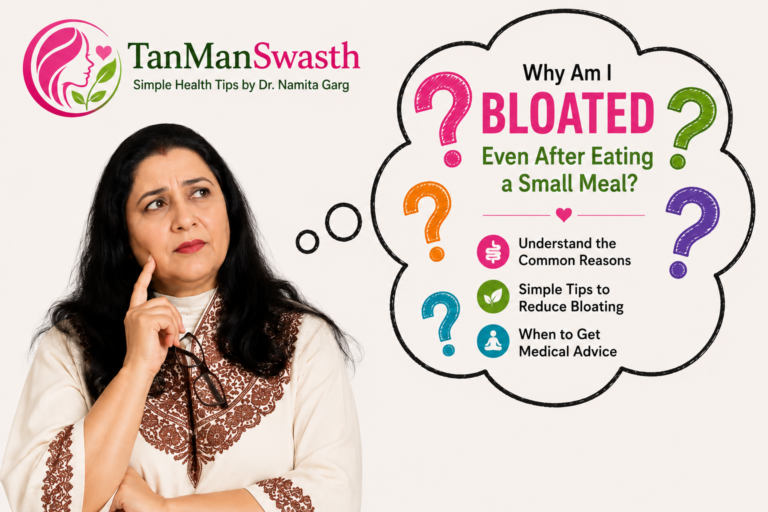
Why Am I Bloated Even After Eating a Small Meal?
Do you eat a small meal but still feel as if your stomach is full, tight or swollen?
You may wake up feeling fine, eat breakfast, and then notice your stomach becoming uncomfortable or enlarged.
By evening, your clothes may even feel tighter.
And then come the questions:
Is it gas?
Is it constipation?
Am I eating the wrong foods?
Why does this keep happening?
Bloating is common, but persistent or recurrent bloating shouldn’t simply be dismissed as “gas.”
Let’s look at some common reasons.
1. Constipation May Be Playing a Role
This is an important connection.
When bowel movements become less frequent or stools become hard and difficult to pass, some people also experience bloating and abdominal discomfort.
खुद से पूछें:
- Are you going less often than usual?
- Are your stools hard or dry?
- Do you strain?
- Do you feel that your bowel hasn’t completely emptied?
If yes, constipation may be part of the picture.
2. You’re Eating Too Quickly
When you eat quickly, you may swallow more air.
That swallowed air can contribute to gas symptoms such as belching and bloating.
Try slowing down.
Put the spoon down between a few bites.
Chew properly.
And notice whether your symptoms change.
3. Some Foods May Trigger More Gas
Certain carbohydrates aren’t completely digested in the small intestine.
When they reach the large intestine, bacteria break them down and produce gas.
For some people, particular foods may therefore cause more bloating.
But here’s an important point:
Don’t start eliminating ten different foods at once.
First identify whether there is actually a consistent pattern.
4. Fizzy Drinks Can Make Bloating Worse
Carbonated drinks add gas to your digestive system.
If you regularly have:
🥤 Soft drinks
🫧 Soda
🥤 Sparkling beverages
and frequently feel bloated afterwards, try reducing them and observe the difference.
5. Large Meals Aren’t Always Necessary for Bloating
You don’t have to eat a huge meal to feel bloated.
Some people feel uncomfortable even after relatively small meals.
If this happens repeatedly, look beyond simply saying:
“I ate too much.”
Your eating speed, food choices, constipation and other digestive factors may be more relevant.
6. Your Daily Routine Matters
Long periods of sitting and very little physical activity can contribute to digestive problems, while regular movement can help digestion and may help prevent or ease bloating.
A simple daily walk is a good place to start.
You don’t need an extreme workout.
7. Stress Can Affect Digestive Symptoms
Your brain and digestive system communicate constantly.
Stress can be associated with digestive symptoms in some people, including symptoms seen with functional gastrointestinal disorders.
So if your bloating becomes worse during stressful periods, don’t ignore that pattern.
🌿 What Can You Try?
Instead of immediately buying a “gas relief” product or starting a restrictive diet, try a simple approach:
✔ Eat slowly
Give yourself time to chew properly.
✔ Keep an eye on constipation
Don’t ignore hard stools or repeated difficulty passing stool.
✔ Drink adequate fluids
Unless you’ve been advised to restrict fluids for a medical reason.
✔ Move regularly
A daily walk can be a simple starting point.
✔ Notice food patterns
Keep a short record of what you eat and when bloating occurs.
✔ Reduce fizzy drinks
Especially if you notice they trigger symptoms.
🚨 When Should You Get Medical Advice?
Don’t assume persistent bloating is always harmless.
See a healthcare professional if you are regularly bloated or it does not improve, particularly if you also have symptoms such as unintentional weight loss, blood in the stool, persistent abdominal pain, or a significant change in bowel habits.
If you have severe sudden abdominal pain, vomiting, marked abdominal swelling, or cannot pass stool or gas, seek urgent medical attention.
❤️ TanManSwasth Takeaway
Bloating is a symptom—not a diagnosis.
It can be related to something as simple as swallowed air, certain foods or constipation, but persistent symptoms deserve proper attention.
So instead of asking:
“What medicine should I take for gas?”
start by asking:
“Why am I getting bloated in the first place?”
That’s the question worth answering.
TanManSwasth — Simple Health Tips by Dr. Namita Garg