
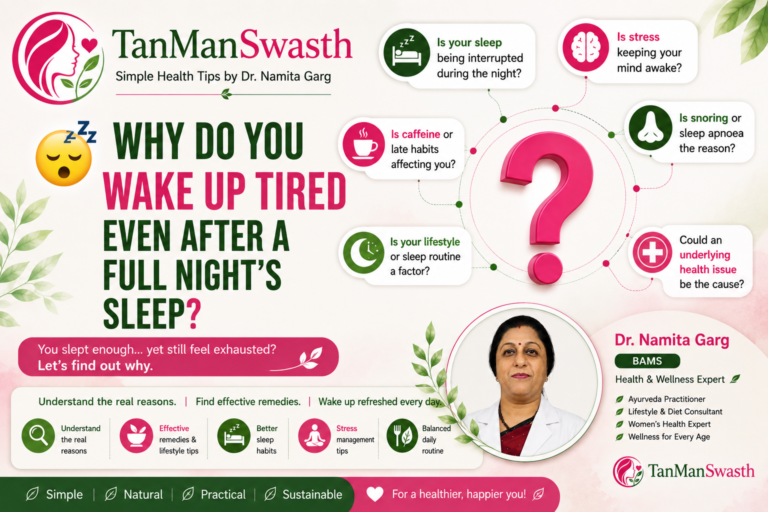
Why do you wake up tired after sleeping for 7–8 hours? If you regularly wake up tired after sleeping through the night, the problem may not simply be the number of hours you sleep. Sleep quality, stress, snoring, caffeine, lifestyle habits and certain health conditions can all leave you feeling unrefreshed.
Getting enough hours of sleep does not always mean getting enough restorative, good-quality sleep. Tiredness can result from disrupted sleep, stress, lifestyle habits, medications, or an underlying health condition.
The good news is that many causes can be improved once you identify what is affecting your sleep.
💤 Sleep Duration Is Not the Whole Story
Most adults generally need around 7–9 hours of sleep, but the amount of sleep is only one part of healthy sleep.
You can spend eight hours in bed and still have poor-quality sleep if you:
- Wake repeatedly during the night
- Have difficulty falling asleep
- Wake too early
- Snore heavily
- Have interrupted breathing during sleep
- Have an uncomfortable or unsuitable sleep environment
- Have stress or anxiety affecting your sleep
Insomnia, for example, can leave a person feeling tired even after spending adequate time in bed.
🔎 Common Reasons You Wake Up Tired
1. Your Sleep Is Being Interrupted
You may not remember every brief awakening during the night.
Noise, room temperature, discomfort, pain, stress, alcohol, caffeine and an irregular sleep schedule can all interfere with sleep quality.
Even if you don’t fully wake up, repeated disturbances can leave you feeling unrefreshed the next morning.
What can help?
Try to:
- Keep your bedroom quiet and comfortable.
- Maintain a regular bedtime and wake-up time.
- Avoid caffeine late in the day.
- Avoid heavy meals close to bedtime.
- Keep your evening routine calm and consistent.
😴 2. Snoring May Be More Than Just Noise
Regular loud snoring deserves attention, particularly if it is accompanied by:
- Gasping or choking during sleep
- Breathing that appears to stop and restart
- Frequent night-time awakenings
- Morning headaches
- Dry mouth on waking
- Excessive daytime sleepiness
These can be symptoms of sleep apnoea, a condition in which breathing repeatedly stops and starts during sleep.
Some people with sleep apnoea don’t realise that their breathing is being interrupted because they remain asleep or don’t remember the episodes.
What should you do?
If someone sleeping beside you notices loud snoring, pauses in breathing or gasping, discuss these symptoms with a healthcare professional. A sleep study may be recommended when appropriate.
📱 3. Your Evening Routine May Be Affecting Your Sleep
Your body needs a transition from the day’s activity to sleep.
A busy mind, work stress, excessive screen use, irregular bedtime, or stimulating activities late at night can make it harder to achieve good-quality sleep.
Try this simple evening routine:
1 hour before bed:
- Reduce unnecessary screen use.
- Finish work and mentally demanding tasks.
- Keep lights softer.
- Avoid stimulating conversations or activities.
- Prepare your bedroom for sleep.
- Follow the same bedtime routine most nights.
You don’t need a complicated “sleep hack.” Consistency is often more useful than constantly trying new tricks.
☕ 4. Caffeine May Be Staying With You Longer Than You Think
Coffee, tea, energy drinks and some other caffeinated beverages can interfere with sleep, particularly when consumed later in the day.
If you wake tired despite getting enough sleep, consider reviewing how much caffeine you consume and what time you consume it.
A simple experiment is to move your last caffeinated drink earlier and observe whether your sleep improves.
🍷 5. Alcohol Can Affect Sleep Quality
Alcohol may make some people feel sleepy initially, but that doesn’t necessarily mean it produces good-quality sleep.
If you regularly wake tired, consider whether alcohol in the evening is contributing to disturbed sleep.
🧠 6. Stress and an Overactive Mind
Sometimes the problem isn’t the bedroom—it’s the thoughts you take to bed.
Stress, anxiety and emotional difficulties can interfere with falling asleep or staying asleep.
You may notice:
“My body is tired, but my mind won’t switch off.”
What may help?
Before bed, try:
- Writing down tomorrow’s tasks
- Practising slow breathing
- Reading something relaxing
- Taking a warm bath or shower
- Keeping a consistent bedtime
- Avoiding work-related discussions immediately before sleep
If anxiety or low mood is persistent, don’t simply blame yourself for having “poor sleep.” Mental health can affect sleep, and sleep problems can affect mental health.
🍽️ 7. Your Eating Habits Can Matter
A very heavy meal shortly before bedtime may make some people uncomfortable and interfere with sleep.
At the same time, going to bed extremely hungry may also make it harder to sleep.
Aim for a balanced eating pattern during the day and avoid making dinner excessively heavy or very late.
A simple dinner containing vegetables, an appropriate protein source and a suitable portion of carbohydrate can be a better approach than relying on very heavy or restrictive meals.
🏃 8. Too Little Physical Activity
Regular physical activity supports overall health and can contribute to better sleep.
If most of your day is spent sitting, try introducing more movement:
- Walking
- Household activity
- Stretching
- Cycling
- Strength exercises appropriate for your fitness level
You don’t necessarily need an intense workout. Regular movement matters.
🩺 9. Sometimes Tiredness Is a Medical Issue
Persistent tiredness shouldn’t always be blamed on lifestyle.
Fatigue can occur with several medical conditions, including:
- आयरन की कमी से होने वाला एनीमिया
- Vitamin B12 or folate deficiency
- Thyroid disorders
- मधुमेह
- Chronic kidney or liver problems
- Certain infections
- Depression and anxiety
- Sleep disorders such as sleep apnoea
For example, anaemia can cause tiredness, weakness and shortness of breath, while diabetes can cause fatigue along with symptoms such as increased thirst and frequent urination.
This does not mean that every person who wakes tired has a medical problem. It simply means persistent or unexplained fatigue deserves proper assessment.
🧪 What Might Your Doctor Check?
If tiredness is persistent or unexplained, your doctor will usually begin with your history and symptoms, rather than ordering every possible test.
Depending on your symptoms and examination, they may consider investigations for conditions such as:
- Anaemia
- थायरॉयड समस्याएं
- मधुमेह
- Vitamin deficiencies
- Other medical causes of fatigue
If symptoms suggest a sleep disorder, a sleep study may be appropriate.
The right tests depend on the individual, so it is better not to order a large collection of tests without medical guidance.
🌙 10 Simple Steps for Better Sleep
Try these consistently for a few weeks:
✅ Keep a regular sleep schedule
Go to bed and wake up at approximately the same time each day.
✅ Give yourself enough time to sleep
Most adults need around 7-9 घंटे, although individual needs vary.
✅ Make your bedroom comfortable
Keep it quiet, dark and at a comfortable temperature.
✅ Limit late caffeine
Especially if you notice that caffeine affects your sleep.
✅ Avoid very heavy late-night meals
✅ Exercise regularly
But choose exercise timing that works comfortably for your sleep.
✅ Create a relaxing bedtime routine
✅ Manage stress
Give your mind time to slow down before going to bed.
✅ Pay attention to snoring
Especially if there is gasping or interrupted breathing.
✅ Don’t ignore persistent fatigue
If lifestyle improvements don’t help, speak with a healthcare professional.
🚨 When Should You See a Doctor?
Make an appointment if your tiredness:
- Continues for several weeks
- Is getting worse
- Interferes with work or daily activities
- Is accompanied by unexplained weight changes
- Comes with persistent weakness or dizziness
- Is associated with loud snoring or breathing pauses
- Comes with excessive daytime sleepiness
Persistent fatigue can have many causes, and self-diagnosis can easily miss the real problem.
Seek urgent medical attention if severe fatigue occurs with symptoms such as chest pain, significant shortness of breath, fainting or unusual bleeding.
👩⚕️ Doctor’s Takeaway
“Don’t judge your sleep only by the number of hours you spend in bed.”
If you regularly wake feeling exhausted despite apparently getting enough sleep, look at the quality of your sleep, your daily habits and any accompanying symptoms.
Occasional tiredness is normal. But persistent, unexplained fatigue deserves attention—especially when it is affecting your daily life.
Your body may simply need a better sleep routine. Or it may be telling you that something needs to be checked.
Listen to it. Don’t ignore it. 🌿
यह लेख सामान्य स्वास्थ्य शिक्षा के उद्देश्य से लिखा गया है और यह व्यक्तिगत चिकित्सा सलाह, निदान या उपचार का विकल्प नहीं है।.