
परिचय
मधुमेह विश्व स्तर पर सबसे तेजी से बढ़ती स्वास्थ्य समस्याओं में से एक है। कई लोग महीनों या वर्षों तक मधुमेह से ग्रसित रहते हैं, लेकिन उन्हें इसका एहसास नहीं होता क्योंकि शुरुआती लक्षण अक्सर हल्के होते हैं और उन पर ध्यान देना आसान नहीं होता।.
इन चेतावनी संकेतों को जल्दी पहचान लेने से आपको चिकित्सा सलाह लेने, जल्द से जल्द उपचार शुरू करने और आंखों, गुर्दे, तंत्रिकाओं और हृदय को प्रभावित करने वाली जटिलताओं के जोखिम को कम करने में मदद मिल सकती है।.
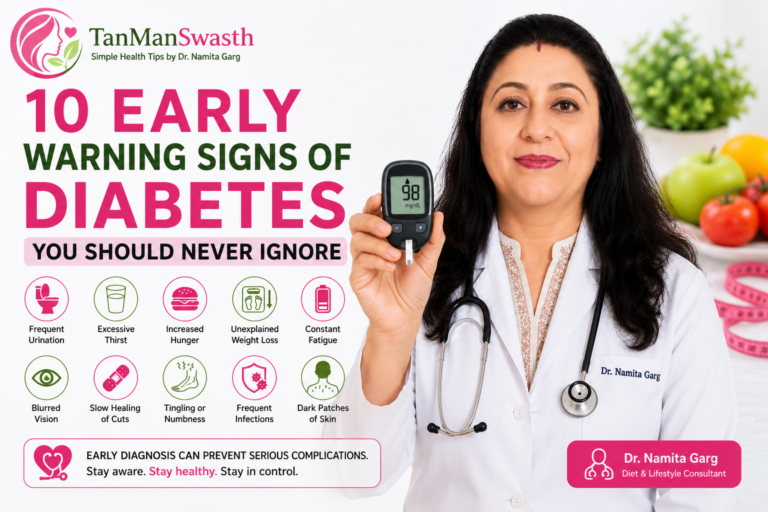
यहां दस सामान्य लक्षण दिए गए हैं जिन्हें आपको कभी भी नजरअंदाज नहीं करना चाहिए।.
1. बार-बार पेशाब आना
उच्च रक्त शर्करा के कारण गुर्दे को अतिरिक्त ग्लूकोज को शरीर से बाहर निकालने के लिए अधिक मेहनत करनी पड़ती है, जिससे बार-बार शौचालय जाना पड़ता है, खासकर रात में।.
2. अत्यधिक प्यास
बार-बार पेशाब करने से शरीर से अधिक पानी निकल जाने के कारण आपको दिन भर असामान्य रूप से प्यास लग सकती है।.
3. भूख में वृद्धि
खाना खाने के बाद भी, आपका शरीर ग्लूकोज का कुशलतापूर्वक उपयोग नहीं कर पाता है, जिससे आपको बार-बार भूख लगने लगती है।.
4. बिना कारण वजन कम होना
बिना कोशिश किए वजन कम होना मधुमेह का प्रारंभिक लक्षण हो सकता है क्योंकि जब ग्लूकोज का प्रभावी ढंग से उपयोग नहीं किया जा सकता है तो शरीर ऊर्जा के लिए वसा और मांसपेशियों का उपयोग करना शुरू कर देता है।.
5. लगातार थकान
जब आपके शरीर की कोशिकाएं ग्लूकोज का सही ढंग से उपयोग नहीं कर पाती हैं, तो आपको थकान, कमजोरी और ऊर्जा की कमी महसूस हो सकती है।.
6. धुंधली दृष्टि
रक्त में शर्करा का उच्च स्तर आंखों के लेंस के आकार को अस्थायी रूप से प्रभावित कर सकता है, जिससे धुंधली दृष्टि हो सकती है।.
7. घावों और चोटों का धीरे-धीरे ठीक होना
घाव, खरोंच और संक्रमण को ठीक होने में अधिक समय लग सकता है क्योंकि उच्च रक्त शर्करा परिसंचरण और शरीर की उपचार प्रक्रिया को प्रभावित कर सकती है।.
8. झुनझुनी या सुन्नपन
हाथों या पैरों में लगातार झुनझुनी, जलन या सुन्नपन मधुमेह के कारण होने वाली तंत्रिका क्षति का संकेत हो सकता है।.
9. बार-बार होने वाले संक्रमण
अनियंत्रित मधुमेह वाले लोगों को बार-बार त्वचा, मूत्र या फंगल संक्रमण हो सकता है।.
10. त्वचा पर काले धब्बे
गर्दन, बगल या कमर के आसपास के गहरे, मखमली धब्बे कभी-कभी इंसुलिन प्रतिरोध से जुड़े हो सकते हैं।.
आपको डॉक्टर से कब मिलना चाहिए?
यदि आपको इनमें से एक या अधिक लक्षण दिखाई दें, तो तुरंत डॉक्टर से परामर्श लें। साधारण रक्त परीक्षण जैसे कि खाली पेट रक्त शर्करा और HbA1c की जांच से मधुमेह या पूर्व-मधुमेह का निदान करने में मदद मिल सकती है।.
डॉक्टर की सलाह
मधुमेह से संबंधित जटिलताओं को रोकने के लिए शीघ्र निदान ही कुंजी है। स्वस्थ आहार, नियमित शारीरिक गतिविधि, पर्याप्त नींद, तनाव प्रबंधन और नियमित स्वास्थ्य जांच से रक्त शर्करा का स्तर स्वस्थ बनाए रखने में मदद मिल सकती है।.
How Can You Reduce Your Risk of Diabetes?
Simple lifestyle habits can support healthy blood sugar levels and overall health. Aim for regular physical activity, choose balanced meals with vegetables, whole grains and appropriate protein sources, limit excess sugary drinks and highly processed foods, maintain a healthy weight, sleep adequately, and attend recommended health check-ups. If you have risk factors for diabetes or are concerned about your blood sugar, discuss appropriate screening with your doctor.
निष्कर्ष
मधुमेह के शुरुआती लक्षणों को नज़रअंदाज़ करने से इलाज में देरी हो सकती है और गंभीर स्वास्थ्य समस्याओं का खतरा बढ़ सकता है। अपने शरीर के चेतावनी संकेतों पर ध्यान देना और समय पर चिकित्सा सलाह लेना आपके दीर्घकालिक स्वास्थ्य के लिए बहुत महत्वपूर्ण हो सकता है।.