
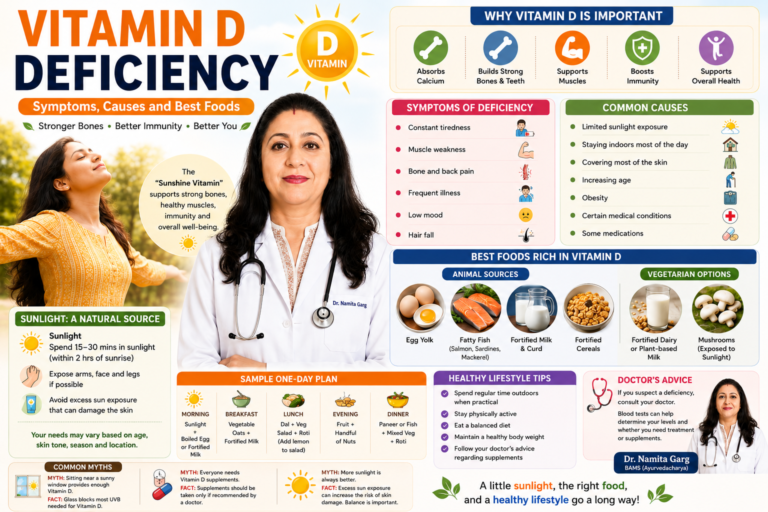
विटामिन डी को अक्सर कहा जाता है “धूप का विटामिन” क्योंकि जब त्वचा सूर्य की रोशनी के संपर्क में आती है तो हमारा शरीर इसका उत्पादन करता है। भारत जैसे धूप वाले देश में रहने के बावजूद, घर के अंदर रहने की जीवनशैली, प्रदूषण, सनस्क्रीन के उपयोग और सीमित धूप के संपर्क में आने के कारण विटामिन डी की कमी आश्चर्यजनक रूप से आम है।.
विटामिन डी हड्डियों, मांसपेशियों, रोग प्रतिरोधक क्षमता और संपूर्ण स्वास्थ्य के लिए आवश्यक है। विटामिन डी की कमी से हड्डियों की कमजोरी, मांसपेशियों में दर्द, थकान और बार-बार संक्रमण होने का खतरा बढ़ सकता है।.
अच्छी खबर यह है कि स्वस्थ खानपान, सुरक्षित धूप का सेवन और जरूरत पड़ने पर चिकित्सीय सलाह से विटामिन डी का स्वस्थ स्तर बनाए रखने में मदद मिल सकती है।.
विटामिन डी क्यों महत्वपूर्ण है?
विटामिन डी शरीर की मदद करता है:
- कैल्शियम को कुशलतापूर्वक अवशोषित करें
- हड्डियों को मजबूत बनाएं और उन्हें स्वस्थ बनाए रखें
- स्वस्थ मांसपेशियों को सहारा दें
- रोग प्रतिरोधक क्षमता में सुधार करें
- स्वस्थ दांतों को सहारा दें
- समग्र स्वास्थ्य बनाए रखें
विटामिन डी की कमी के सामान्य लक्षण
कुछ लोगों में कोई लक्षण नहीं दिखते। अन्य लोगों को निम्नलिखित लक्षण हो सकते हैं:
- लगातार थकान
- मांसपेशियों में कमजोरी
- हड्डी में दर्द
- पीठ दर्द
- बार-बार बीमार पड़ना
- हल्का माहौल
- बाल झड़ना (इसके कई कारण हो सकते हैं)
- बीमारी के बाद ठीक होने में समय लगता है
यदि ये लक्षण बने रहें, तो उचित जांच के लिए अपने डॉक्टर से परामर्श लें।.
सामान्य कारणों में
विटामिन डी की कमी निम्नलिखित कारणों से हो सकती है:
- सीमित धूप का संपर्क
- दिन का अधिकांश समय घर के अंदर रहना
- बाहर धूप में त्वचा के अधिकांश हिस्से को ढक कर रखना
- बढ़ती उम्र
- मोटापा
- कुछ पाचन संबंधी विकार
- कुछ दवाइयाँ
विटामिन डी से भरपूर सर्वोत्तम खाद्य पदार्थ
निम्नलिखित खाद्य पदार्थों को शामिल करें:
पशु स्रोत
- अंडे की जर्दी
- वसायुक्त मछली (सैल्मन, सार्डिन, मैकेरल)
- पाश्चराइज्ड दूध
- फोर्टिफाइड दही
- पौष्टिक नाश्ते के अनाज
शाकाहारी विकल्प
प्राकृतिक शाकाहारी भोजन के स्रोत सीमित हैं, लेकिन ये कुछ सहायक हो सकते हैं:
- फोर्टिफाइड डेयरी उत्पाद
- पोषक तत्वों से भरपूर वनस्पति-आधारित दूध
- सूरज की रोशनी में उगे मशरूम
सूर्य का प्रकाश: एक प्राकृतिक स्रोत
नियमित धूप से शरीर को विटामिन डी बनाने में मदद मिलती है।.
सामान्य सुझाव:
- जब भी संभव हो, कुछ समय बाहर बिताएं।.
- यदि उचित हो तो हाथ और चेहरा दिखाएं।.
- अत्यधिक धूप में निकलने से बचें, क्योंकि इससे त्वचा को नुकसान पहुंच सकता है।.
- त्वचा के प्रकार, मौसम और स्थान के आधार पर व्यक्तिगत आवश्यकताएं भिन्न-भिन्न होती हैं।.
नमूना दैनिक योजना
सुबह
- सुरक्षित धूप का सेवन (यदि संभव हो)
- उबले अंडे या पौष्टिक दूध
नाश्ता
- वनस्पति जई
- पाश्चराइज्ड दूध
दिन का खाना
- दल
- मौसमी सब्जियां
- सलाद
- साबुत गेहूं की रोटी
शाम
- फल
- मुट्ठी भर मेवे
रात का खाना
- पनीर या मछली
- मिश्रित सब्जियां
- रोटी
स्वस्थ जीवनशैली के सुझाव
- जब भी संभव हो, नियमित रूप से घर से बाहर समय बिताएं।.
- शारीरिक रूप से सक्रिय रहें।.
- संतुलित आहार लें।.
- स्वस्थ शरीर का वजन बनाए रखें।.
- यदि डॉक्टर ने आपको सप्लीमेंट लेने की सलाह दी है, तो उनका पालन करें।.
आम मिथक
मिथक: धूप वाली खिड़की के पास बैठने से पर्याप्त विटामिन डी मिल जाता है।.
तथ्य: कांच विटामिन डी के उत्पादन के लिए आवश्यक अधिकांश यूवीबी किरणों को अवरुद्ध कर देता है।.
भ्रम: हर किसी को विटामिन डी सप्लीमेंट की आवश्यकता होती है।.
तथ्य: पूरक आहार का सेवन केवल तभी करना चाहिए जब किसी स्वास्थ्य पेशेवर द्वारा इसकी सलाह दी गई हो।.
मिथक: अधिक धूप हमेशा बेहतर होती है।.
तथ्य: अत्यधिक धूप में रहने से त्वचा को नुकसान पहुंचने का खतरा बढ़ जाता है। संतुलन महत्वपूर्ण है।.
निष्कर्ष
विटामिन डी हड्डियों, मांसपेशियों और रोग प्रतिरोधक क्षमता के लिए आवश्यक है। संतुलित पोषण, पर्याप्त धूप, शारीरिक गतिविधि और चिकित्सकीय सलाह का संयोजन विटामिन डी के स्वस्थ स्तर को बनाए रखने में सहायक हो सकता है।.
यदि आपको किसी कमी का संदेह हो, तो अपने डॉक्टर से परामर्श लें। रक्त परीक्षण और विशेषज्ञ सलाह से यह निर्धारित किया जा सकता है कि उपचार या पूरक आहार आवश्यक है या नहीं।.
अक्सर पूछे जाने वाले प्रश्नों
किस फल में विटामिन डी पाया जाता है?
फल आम तौर पर विटामिन डी के महत्वपूर्ण स्रोत नहीं हैं.
क्या विटामिन डी की कमी से थकान हो सकती है?
जी हां। थकान एक संभावित लक्षण है, लेकिन कई अन्य स्थितियां भी थकावट का कारण बन सकती हैं।.
क्या सूर्य की रोशनी पर्याप्त है?
कुछ लोगों के लिए यह पर्याप्त हो सकता है, जबकि अन्य लोगों को व्यक्तिगत परिस्थितियों के आधार पर आहार में बदलाव या सप्लीमेंट की आवश्यकता हो सकती है।.
क्या मैं विटामिन डी की गोलियां खुद से ले सकता हूँ?
विटामिन डी सप्लीमेंट लेने से पहले अपने डॉक्टर से सलाह लेना सबसे अच्छा है।.