
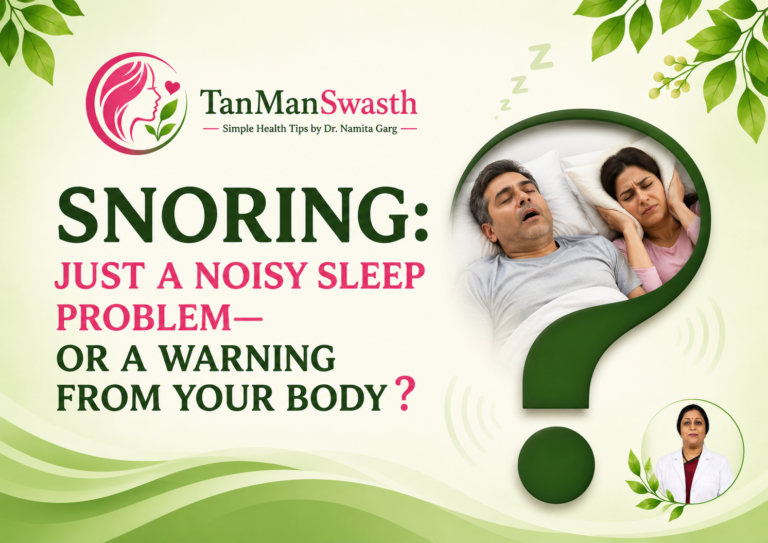
“You snore every night!”
If your partner has said this to you, you may have laughed it off.
Maybe you think:
“Everyone snores. What’s the big deal?”
Occasional snoring is very common and is usually not caused by anything serious.
But loud, frequent snoring—especially when it is accompanied by pauses in breathing, choking or gasping during sleep—can sometimes be a sign of obstructive sleep apnea (OSA).
And that is something worth taking seriously.
🔊 What Actually Causes Snoring?
When you sleep, the muscles in your throat, tongue and soft palate relax.
As you breathe, air passes through the relaxed tissues.
If the airway becomes narrower, those tissues can vibrate.
That vibration produces the familiar:
“KHHRRRR… KHHRRRR…” 😴
Snoring.
The more narrowed the airway becomes, the louder the vibration may be.
🤔 But Why Do Some People Snore More Than Others?
Several factors can increase the likelihood of snoring.
⚖️ Being overweight
Extra tissue around the upper airway can contribute to airway narrowing.
🛌 Sleeping on your back
Sleeping on your back can make the airway more likely to narrow.
🍷 Alcohol before bedtime
Alcohol can relax the throat muscles and make snoring worse.
🚬 Smoking
Smoking is associated with a higher risk of obstructive sleep apnea and can contribute to airway problems.
🤧 Nasal congestion
A blocked or congested nose can make breathing more difficult during sleep.
👃 The structure of your nose and throat
The natural anatomy of your airway can also influence snoring.
Age and family history can also affect the risk of sleep apnea.
🚨 Here Is Where Snoring Becomes More Important
Not everyone who snores has sleep apnea.
But imagine this:
You are sleeping.
You snore loudly.
Then suddenly…
Silence.
Your breathing has stopped or nearly stopped.
A few seconds later:
GASP! 😮
You start breathing again.
This pattern may repeat throughout the night.
That can happen with obstructive sleep apnea, where the upper airway becomes blocked during sleep.
And many people don’t realize it is happening because they are asleep.
Often, the person sleeping beside them notices it first.
⚠️ 7 Signs Your Snoring Should Not Be Ignored
If you snore, pay attention to these signs:
1️⃣ Your partner notices breathing pauses
They tell you:
“Sometimes you stop breathing while sleeping.”
That deserves medical evaluation.
2️⃣ You wake up choking or gasping 😮
Repeatedly waking with a choking or gasping sensation can be a warning sign of sleep apnea.
3️⃣ You are extremely sleepy during the day 🥱
You sleep for several hours but still feel exhausted.
You may even struggle to stay awake while watching television, working or driving.
Excessive daytime sleepiness is an important symptom.
4️⃣ You wake with headaches 🤕
Morning headaches can occur with sleep apnea.
5️⃣ Your mouth is very dry in the morning 💧
Waking with a dry mouth or sore throat can accompany obstructive sleep apnea.
6️⃣ You have difficulty concentrating 🧠
Poor-quality sleep can affect attention and concentration during the day.
7️⃣ Your snoring is extremely loud 🔊
If your snoring regularly disturbs your own sleep or your partner’s sleep, it is worth discussing with a healthcare professional.
❤️ Why Should You Care About Sleep Apnea?
This is not simply about disturbing your partner’s sleep.
Repeated episodes of obstructive sleep apnea can cause repeated drops in blood oxygen and disrupted sleep.
Untreated OSA is associated with problems including high blood pressure, heart disease, stroke and irregular heart rhythms.
It can also cause severe daytime sleepiness.
And that creates another important concern:
🚗 Falling asleep while driving.
Excessive daytime sleepiness associated with sleep apnea can increase the risk of motor-vehicle and workplace accidents.
🌿 Can You Reduce Snoring Naturally?
Sometimes simple lifestyle changes can help.
🛌 Sleep on your side
For some people, side sleeping can reduce snoring compared with sleeping on the back.
⚖️ Maintain a healthy weight
If you are overweight, losing weight may improve snoring and can improve obstructive sleep apnea symptoms in some people.
🍷 Avoid alcohol close to bedtime
Alcohol can make snoring worse by relaxing the throat muscles.
🚭 Don’t smoke
Stopping smoking is beneficial for overall health and may reduce sleep-apnea risk.
🤧 Address nasal congestion
If blocked nasal passages are contributing to your snoring, treating the underlying nasal problem may help.
🩺 When Should You See a Doctor?
Don’t wait if:
🚨 Your partner notices that you stop breathing.
🚨 You wake up choking or gasping.
🚨 You are excessively sleepy during the day.
🚨 Your snoring is extremely loud and persistent.
🚨 Your sleep is repeatedly disturbed.
🚨 Lifestyle changes aren’t helping.
These symptoms may warrant evaluation for sleep apnea.
🔬 How Is Sleep Apnea Diagnosed?
A doctor may first ask about your sleep, symptoms and medical history.
Your partner’s observations can be extremely useful because you may not know what happens while you are asleep.
If sleep apnea is suspected, you may be advised to undergo a sleep study.
Depending on the situation, this can sometimes be performed at home or in a sleep center.
A sleep study can monitor things such as breathing patterns, heart rate and blood oxygen while you sleep.
😴 What About Treatment?
Treatment depends on why you are snoring and whether sleep apnea is present.
For simple snoring, treatment may involve lifestyle changes, addressing nasal problems, or certain oral devices.
For obstructive sleep apnea, treatments can include:
CPAP
A CPAP machine uses gentle air pressure to help keep the airway open while you sleep.
Oral appliances
Certain mouthpieces can reposition the jaw or tongue to help keep the airway open.
Lifestyle changes
Weight management, changing sleep position and addressing other contributing factors may help.
Surgery
In selected cases, surgery may be considered when other approaches aren’t appropriate or effective.
🌙 The Question You Should Ask Tonight
Before going to bed, ask your partner:
“Do I just snore… or do I stop breathing too?”
That simple question could be more important than you think.
Because:
Snoring isn’t always dangerous.
But snoring + breathing pauses + gasping + daytime sleepiness should not simply be ignored.
❤️ Don’t just silence the snoring.
Find out why it is happening.
🌿 TanManSwasth
At TanManSwasth, we believe health information should be simple enough to understand—but responsible enough to trust.
Don’t diagnose yourself from a social-media post.
If your snoring is persistent or accompanied by warning signs, talk to a healthcare professional.
🌿 TanManSwasth — Simple Health Tips by Dr. Namita Garg
📚 References
- Mayo Clinic — Snoring: Symptoms and causes.
- Mayo Clinic — Obstructive sleep apnea: Symptoms and causes, updated December 2025.
- Mayo Clinic — Sleep apnea: Symptoms and causes.
- NHS — Snoring: causes, self-care and when to see a doctor.
- Mayo Clinic — Obstructive sleep apnea: Diagnosis and treatment, updated December 2025.
- National Heart, Lung, and Blood Institute (NIH) — Sleep Apnea: Causes and Risk Factors.
Medical disclaimer: This article is for general education and does not replace professional medical advice, diagnosis or treatment. If you or your partner notice repeated breathing pauses, choking/gasping during sleep, or severe daytime sleepiness, consult a healthcare professional.