
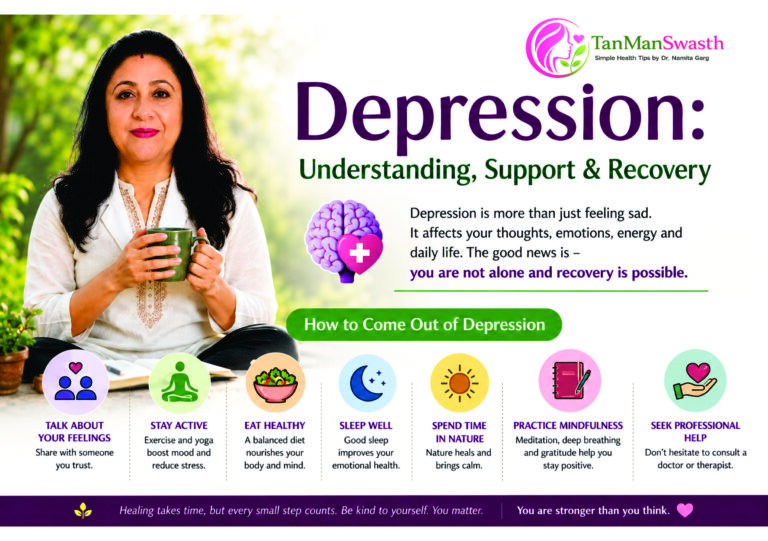
Depression: Everyone feels sad, disappointed, or low sometimes. These emotions are a normal part of life and usually improve within a few days. However, when sadness, hopelessness, or a loss of interest in daily activities lasts for two weeks or longer and begins to affect work, relationships, or daily life, it may be depression.
Depression is a common medical condition that affects how a person thinks, feels, and behaves. It is not a sign of weakness, laziness, or lack of willpower. Like diabetes or high blood pressure, depression is a health condition that can be treated with the right support.
What Is Depression?
Depression, also called Major Depressive Disorder (MDD), is a mental health condition characterized by persistent low mood and loss of interest or pleasure in activities that were once enjoyable. It can affect people of any age, gender, or background.
Depression influences:
Work and daily functioning
Emotions
Thinking
Energy levels
Sleep
Appetite
Physical health
Relationships
Common Symptoms of Depression
A person with depression may experience several of the following symptoms:
Emotional Symptoms
- Persistent sadness
- Feeling empty
- Hopelessness
- Irritability
- Frequent crying
- Feeling guilty or worthless
Mental Symptoms
- Difficulty concentrating
- Poor memory
- Negative thinking
- Trouble making decisions
- Loss of motivation
Physical Symptoms
- Constant tiredness
- Sleeping too much or too little
- Changes in appetite
- Weight gain or weight loss
- Body aches without a clear cause
- Headaches
Behavioural Symptoms
Neglecting personal care
Avoiding friends and family
Loss of interest in hobbies
Reduced work performance
What Causes Depression?
Depression usually develops due to a combination of factors rather than one single cause.
1. Biological Factors
- Family history
- Brain chemistry changes
- Hormonal changes
2. Psychological Factors
- Chronic stress
- Childhood trauma
- Low self-esteem
- Grief
3. Lifestyle Factors
- Poor sleep
- Lack of physical activity
- Alcohol or substance misuse
- Social isolation
4. Medical Conditions
Depression may occur alongside:
Parkinson’s disease
Diabetes
Thyroid disorders
Heart disease
Chronic pain
Risk Factors
Some people have a higher chance of developing depression.
Examples include:
- Loss of a loved one
- Divorce
- Financial stress
- Serious illness
- Loneliness
- Family history of depression
- Long-term stress
How Is Depression Diagnosed?
There is no blood test for depression.
A healthcare professional evaluates:
Other possible causes
Symptoms
Duration (usually at least two weeks)
Daily functioning
Medical history
How Can You Recover From Depression?
Recovery often involves a combination of approaches. Treatment should be individualized and guided by a qualified healthcare professional.
1. Seek Professional Help
Consult a qualified psychiatrist, psychologist, or mental health professional if symptoms are persistent or severe. Therapy, medication, or both may be recommended depending on the individual’s needs.
2. Stay Connected
Talk to:
- Family
- Friends
- Trusted relatives
Isolation often makes depression worse.
3. Exercise Regularly
Physical activity helps release endorphins and may improve mood.
Aim for:
- 30 minutes
- Five days a week
Walking is an excellent place to start.
4. Get Quality Sleep
Try to:
- Sleep 7–9 hours
- Maintain a regular bedtime
- Avoid screens before bed
5. Eat a Balanced Diet
Include:
- Fresh fruits
- Vegetables
- Whole grains
- Nuts and seeds
- Lentils and beans
- Adequate protein
Limit:
- Excess sugar
- Ultra-processed foods
- Excess alcohol
6. Practice Relaxation
Helpful techniques include:
- Deep breathing
- Meditation
- Yoga
- Mindfulness
- Prayer (if meaningful to you)
7. Break Big Tasks Into Small Steps
Rather than trying to do everything at once, focus on one small task at a time. Celebrate small achievements—they matter.
8. Spend Time in Nature
Even a short walk in a park or sitting in a garden may help reduce stress and improve mood for some people.
9. Avoid Alcohol and Recreational Drugs
These substances can worsen depression and interfere with treatment.
10. Be Patient
Recovery takes time. Improvement often happens gradually rather than overnight.
Can Ayurveda Help?
Some people find Ayurvedic lifestyle practices, yoga, meditation, and stress management supportive alongside standard medical care. However, depression should not be treated with herbal remedies alone, especially if symptoms are moderate or severe. Always discuss any supplements or Ayurvedic medicines with a qualified healthcare professional to avoid interactions with other treatments.
When Should You Seek Immediate Help?
Seek urgent medical attention if a person:
- Talks about wanting to die
- Has thoughts of self-harm or suicide
- Has made a suicide plan
- Cannot care for themselves
- Experiences severe confusion or hallucinations
These situations require immediate professional help or emergency services.
Myths About Depression
Myth: Depression is just sadness.
Fact: It is a medical condition that affects emotions, thinking, and physical health.
Myth: Strong people don’t get depressed.
Fact: Depression can affect anyone.
Myth: Positive thinking alone can cure depression.
Fact: Positive thinking may help some people cope, but many people also need therapy, medication, or other professional treatment.
Frequently Asked Questions
Can depression be cured?
Many people recover with appropriate treatment and support. Others may experience recurring episodes and benefit from ongoing care.
How long does recovery take?
Recovery varies from person to person. Some improve within weeks, while others may need longer-term treatment.
Can exercise replace medication?
Exercise can be an important part of recovery but should not replace prescribed treatment without consulting a healthcare professional.
Final Thoughts
Depression is a real and treatable health condition. Early recognition, professional care, healthy lifestyle habits, and support from loved ones can make a meaningful difference. If you or someone you know has symptoms that persist or worsen, don’t hesitate to seek help.