
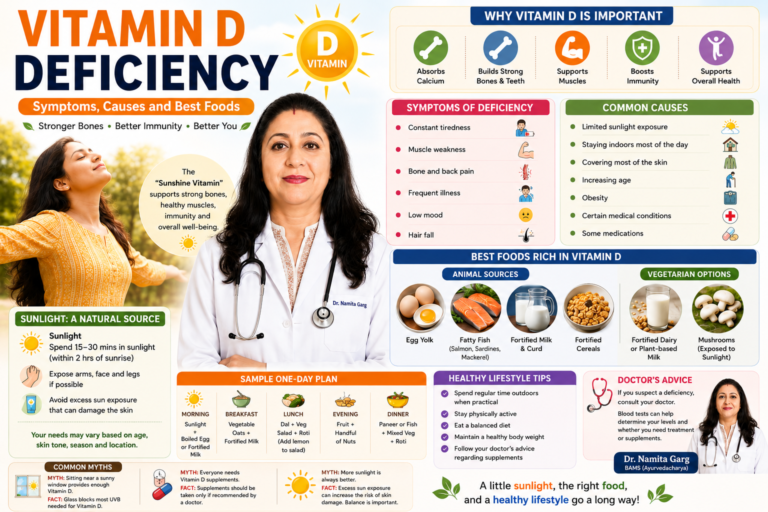
Vitamin D is often called the “sunshine vitamin” because our body produces it when the skin is exposed to sunlight. Despite living in a sunny country like India, Vitamin D deficiency is surprisingly common due to indoor lifestyles, pollution, sunscreen use, and limited sun exposure.
Vitamin D is essential for healthy bones, muscles, immunity, and overall well-being. Low Vitamin D levels may increase the risk of weak bones, muscle pain, fatigue, and frequent infections.
The good news is that healthy eating, safe sunlight exposure, and medical advice when needed can help maintain healthy Vitamin D levels.
Why is Vitamin D Important?
Vitamin D helps the body:
- Absorb calcium efficiently
- Build and maintain strong bones
- Support healthy muscles
- Improve immune function
- Support healthy teeth
- Maintain overall health
Common Symptoms of Vitamin D Deficiency
Some people have no symptoms. Others may experience:
- Constant tiredness
- Muscle weakness
- Bone pain
- Back pain
- Frequent illness
- Low mood
- Hair fall (may have multiple causes)
- Slow recovery after illness
If these symptoms continue, consult your doctor for proper evaluation.
Common Causes
Vitamin D deficiency may occur because of:
- Limited sunlight exposure
- Staying indoors most of the day
- Covering most of the skin outdoors
- Increasing age
- Obesity
- Certain digestive disorders
- Some medications
Best Foods Rich in Vitamin D
Include foods such as:
Animal Sources
- Egg yolk
- Fatty fish (salmon, sardines, mackerel)
- Fortified milk
- Fortified curd
- Fortified breakfast cereals
Vegetarian Options
Natural vegetarian food sources are limited, but these may help:
- Fortified dairy products
- Fortified plant-based milk
- Mushrooms exposed to sunlight
Sunlight: A Natural Source
Regular sunlight helps the body produce Vitamin D.
General tips:
- Spend some time outdoors when practical.
- Expose arms and face if appropriate.
- Avoid excessive sun exposure that could damage the skin.
- Individual needs vary depending on skin type, season, and location.
Sample Daily Plan
Morning
- Safe sunlight exposure (if possible)
- Boiled eggs or fortified milk
Breakfast
- Vegetable oats
- Fortified milk
Lunch
- Dal
- Seasonal vegetables
- Salad
- Whole wheat roti
Evening
- Fruit
- Handful of nuts
Dinner
- Paneer or fish
- Mixed vegetables
- Roti
Healthy Lifestyle Tips
- Spend regular time outdoors when practical.
- Stay physically active.
- Eat a balanced diet.
- Maintain a healthy body weight.
- Follow your doctor’s advice regarding supplements if prescribed.
Common Myths
Myth: Sitting near a sunny window provides enough Vitamin D.
Fact: Glass blocks most UVB rays needed for Vitamin D production.
Myth: Everyone needs Vitamin D supplements.
Fact: Supplements should be taken only if recommended by a healthcare professional.
Myth: More sunlight is always better.
Fact: Excessive sun exposure can increase the risk of skin damage. Balance is important.
Conclusion
Vitamin D is essential for healthy bones, muscles, and immunity. A combination of balanced nutrition, sensible sunlight exposure, physical activity, and medical guidance can help maintain healthy Vitamin D levels.
If you suspect a deficiency, consult your doctor. Blood tests and professional advice can determine whether treatment or supplementation is necessary.
Frequently Asked Questions
Which fruit contains Vitamin D?
Fruits are generally not significant sources of Vitamin D.
Can Vitamin D deficiency cause tiredness?
Yes. Fatigue is one possible symptom, but many other conditions can also cause tiredness.
Is sunlight enough?
For some people it may be sufficient, while others may require dietary changes or supplements depending on individual circumstances.
Can I take Vitamin D tablets on my own?
It is best to consult your doctor before taking Vitamin D supplements.