
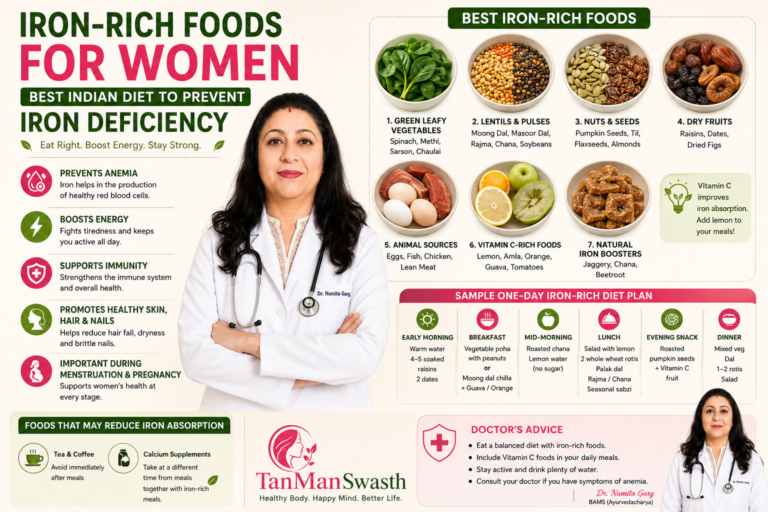
Iron-Rich Foods for Women: Iron deficiency is one of the most common nutritional problems among women, especially during the reproductive years. Heavy menstrual bleeding, pregnancy, breastfeeding, poor dietary intake, and certain medical conditions can increase the risk of low iron levels.
Iron is essential for making healthy red blood cells, carrying oxygen throughout the body, and maintaining energy. Without enough iron, women may develop iron deficiency anemia, leading to tiredness, weakness, and reduced immunity.
The good news is that many everyday Indian foods are naturally rich in iron and can help maintain healthy iron levels when included as part of a balanced diet.
Why Iron is Important for Women
Iron helps the body:
- Produce healthy red blood cells
- Carry oxygen to all body tissues
- Maintain energy levels
- Support brain function
- Improve immunity
- Promote healthy pregnancy
- Reduce fatigue and weakness
Women generally need more iron than men because of menstrual blood loss.
Common Symptoms of Iron Deficiency
You may experience:
- Constant tiredness
- Weakness
- Pale skin
- Dizziness
- Headaches
- Hair fall
- Shortness of breath
- Brittle nails
- Poor concentration
- Fast heartbeat
If these symptoms persist, consult your doctor. A simple blood test can help determine whether you have iron deficiency.
Best Iron-Rich Indian Foods
1. Green Leafy Vegetables
Excellent choices include:
- Spinach (Palak)
- Fenugreek leaves (Methi)
- Mustard greens (Sarson)
- Amaranth leaves (Chaulai)
Cook them as part of regular meals for better variety.
2. Lentils and Pulses
Rich plant-based sources of iron include:
- Moong Dal
- Masoor Dal
- Chana Dal
- Rajma
- Black Chana
- Soybeans
These foods also provide protein and fibre.
3. Nuts and Seeds
Healthy options include:
- Pumpkin seeds
- Sesame seeds (Til)
- Flaxseeds
- Almonds
- Cashews
Enjoy them in moderation as snacks or meal toppings.
4. Dry Fruits
Include:
- Raisins
- Dates
- Dried figs
These make convenient snacks but should be eaten in appropriate portions, especially if you have diabetes.
5. Animal Sources of Iron
If you eat non-vegetarian food, good sources include:
- Eggs
- Fish
- Chicken
- Lean meat
These contain iron that is generally absorbed more efficiently by the body.
Foods That Help Iron Absorption
Vitamin C improves the absorption of iron from plant foods.
Include foods like:
- Lemon
- Orange
- Amla
- Guava
- Tomatoes
- Bell peppers
A squeeze of lemon over dal or salad is a simple way to support iron absorption.
Foods That May Reduce Iron Absorption
Avoid consuming these immediately with iron-rich meals:
- Tea
- Coffee
- Large amounts of calcium supplements
Spacing them away from meals may help improve iron absorption. Follow your doctor’s advice if you take supplements.
Sample One-Day Iron-Rich Indian Diet
Early Morning
- Warm water
- 4–5 soaked raisins
- 2 dates (if suitable)
Breakfast
- Vegetable poha with peanuts
- OR Moong dal chilla
- Fresh guava or orange
Mid-Morning
- Handful of roasted chana
- Lemon water without sugar
Lunch
- Salad with lemon
- Two whole wheat rotis
- Palak dal
- Rajma or black chana
- Seasonal vegetables
Evening Snack
- Roasted pumpkin seeds
- Fruit rich in Vitamin C
Dinner
- Mixed vegetable curry
- Dal
- One or two rotis
- Soup
Healthy Lifestyle Tips
- Eat a balanced diet every day.
- Include one iron-rich food in each main meal.
- Add Vitamin C-rich foods to improve iron absorption.
- Stay physically active.
- Drink enough water.
- Have regular health check-ups if you are at risk of anemia.
Common Myths
Myth: Only non-vegetarians can get enough iron.
Fact: Many vegetarian foods contain iron and can be part of a healthy diet.
Myth: Spinach alone can cure anemia.
Fact: Spinach is nutritious, but treating anemia depends on the cause and may require medical evaluation and iron supplements.
Myth: Iron supplements should be taken without medical advice.
Fact: Iron supplements should only be taken after consulting a healthcare professional, as excess iron can also be harmful.
Conclusion
Iron plays a vital role in women’s health at every stage of life. A balanced Indian diet that includes leafy vegetables, pulses, nuts, seeds, whole grains, and Vitamin C-rich fruits can help support healthy iron levels.
If you experience symptoms of iron deficiency or suspect anemia, consult your doctor for proper diagnosis and treatment rather than relying only on diet.
Frequently Asked Questions
Which fruit is rich in iron?
While most fruits are not very high in iron, dried fruits such as raisins and dates contain some iron. Fruits like amla, guava, oranges, and lemons are valuable because their Vitamin C helps the body absorb iron more effectively.
Is jaggery a good source of iron?
Jaggery contains small amounts of iron, but it should not be relied upon as the primary treatment for iron deficiency or anemia.
Can women get enough iron from a vegetarian diet?
Yes. A well-planned vegetarian diet that includes pulses, legumes, leafy vegetables, nuts, seeds, and Vitamin C-rich foods can provide adequate iron for many women.
Who is at higher risk of iron deficiency?
Women with heavy menstrual bleeding, pregnant women, breastfeeding mothers, adolescents, and people with poor dietary intake may have a higher risk.