
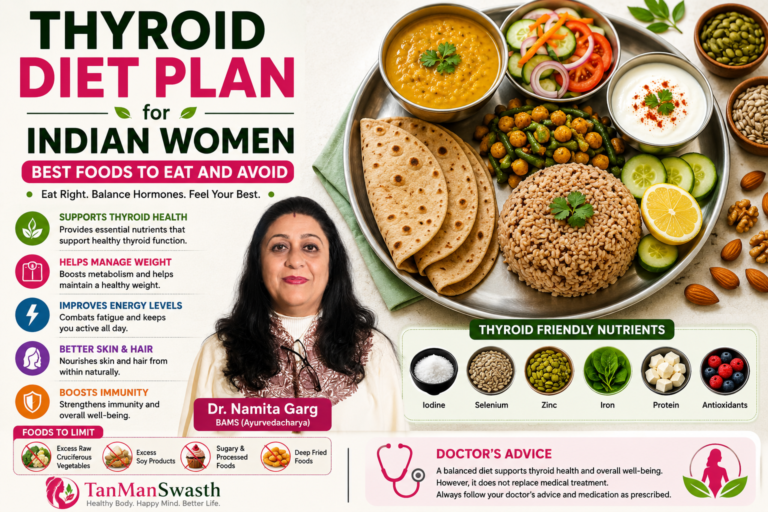
Thyroid disorders are becoming increasingly common among Indian women. A healthy thyroid helps regulate metabolism, energy levels, body temperature, hormones, and overall well-being. When the thyroid does not function properly, it can lead to weight gain, fatigue, hair fall, dry skin, mood changes, and menstrual irregularities.
Although diet alone cannot cure thyroid disease, choosing the right foods can support thyroid health and complement medical treatment.
What is the Thyroid Gland?
The thyroid is a small butterfly-shaped gland located in the front of the neck. It produces hormones that control many important body functions, including metabolism, heart rate, digestion, and body temperature.
The two most common thyroid disorders are:
- Hypothyroidism – The thyroid produces too little hormone.
- Hyperthyroidism – The thyroid produces too much hormone.
Hypothyroidism is more common in women.
Common Symptoms of Hypothyroidism
You may experience:
- Unexplained weight gain
- Constant tiredness
- Feeling cold easily
- Dry skin
- Hair fall
- Constipation
- Puffy face
- Slow heartbeat
- Depression or low mood
- Irregular menstrual cycles
If you notice these symptoms, consult your doctor for proper evaluation and thyroid function tests.
Can Diet Help?
Yes. A healthy diet supports overall thyroid function and helps improve energy, maintain a healthy weight, and reduce nutritional deficiencies. However, thyroid medicines should never be stopped without your doctor’s advice.
Best Foods for Thyroid Health
1. Protein-Rich Foods
Protein helps maintain muscle mass and supports metabolism.
Good choices include:
- Eggs
- Paneer
- Dal
- Rajma
- Chana
- Fish
- Chicken
- Greek yogurt or curd
2. Selenium-Rich Foods
Selenium supports healthy thyroid hormone production.
Include:
- Sunflower seeds
- Eggs
- Fish
- Whole grains
- Mushrooms
3. Zinc-Rich Foods
Zinc also plays a role in thyroid hormone production.
Good sources:
- Pumpkin seeds
- Chickpeas
- Cashews
- Lentils
4. Iodine (In the Right Amount)
Iodine is essential for thyroid hormone production.
Sources include:
- Iodized salt
- Dairy products
- Fish
- Eggs
Avoid taking iodine supplements unless recommended by your doctor.
5. Fruits and Vegetables
Eat a variety of colorful fruits and vegetables every day.
Healthy options include:
- Apple
- Orange
- Papaya
- Guava
- Spinach
- Carrots
- Tomatoes
- Cucumber
- Bottle gourd (Lauki)
Foods to Limit
Some foods may interfere with thyroid function if eaten in very large quantities, especially when raw.
Limit excessive amounts of:
- Raw cabbage
- Raw cauliflower
- Raw broccoli
- Raw soy products
- Highly processed foods
- Sugary drinks
- Excess sweets
- Deep-fried foods
These vegetables can still be enjoyed as part of a balanced diet, especially when cooked.
Sample One-Day Indian Thyroid Diet Plan
Early Morning
- Warm water
- 4–5 soaked almonds
Breakfast
- Oats poha with vegetables & peanuts
- OR Moong dal chilla
- Green tea (if suitable)
Mid-Morning
- One apple
- OR Guava
Lunch
- Salad
- Two small whole wheat rotis
- Dal
- Seasonal vegetable
- Curd
Evening Snack
- Roasted chana
- Lemon water without sugar
Dinner
- Mixed vegetable
- Dal or paneer
- One or two small rotis
- Soup
Lifestyle Tips
- Take thyroid medicine exactly as prescribed.
- Take medicine on an empty stomach unless your doctor advises otherwise.
- Wait before consuming tea, coffee, or calcium/iron supplements after your medicine, following your doctor’s instructions.
- Exercise regularly.
- Sleep 7–8 hours daily.
- Maintain a healthy weight.
- Have regular thyroid check-ups.
Common Myths
Myth: Thyroid disease always causes obesity.
Fact: Weight gain may occur with hypothyroidism, but many factors influence body weight.
Myth: People with thyroid disease should never eat cabbage or broccoli.
Fact: Cooked cruciferous vegetables can usually be eaten in moderation as part of a balanced diet.
Myth: Thyroid medicine can be stopped once symptoms improve.
Fact: Never stop or change thyroid medication without consulting your doctor.
Conclusion
Managing thyroid disease involves a combination of medical treatment, healthy eating, regular exercise, and routine follow-up with your healthcare provider. A balanced Indian diet rich in protein, fruits, vegetables, whole grains, and healthy fats can support overall health and complement your treatment plan.
Frequently Asked Questions
Which fruit is best for thyroid patients?
Apples, oranges, guava, papaya, and berries are nutritious choices that can be included in a balanced diet.
Can thyroid patients eat rice?
Yes. Rice can be eaten in appropriate portions as part of a balanced meal.
Is milk good for thyroid?
Milk can be part of a healthy diet for many people unless your doctor has advised otherwise or you have an intolerance.
Can thyroid problems be cured with diet?
Diet supports thyroid health but does not replace prescribed treatment. Follow your doctor’s advice regarding medicines and monitoring.