
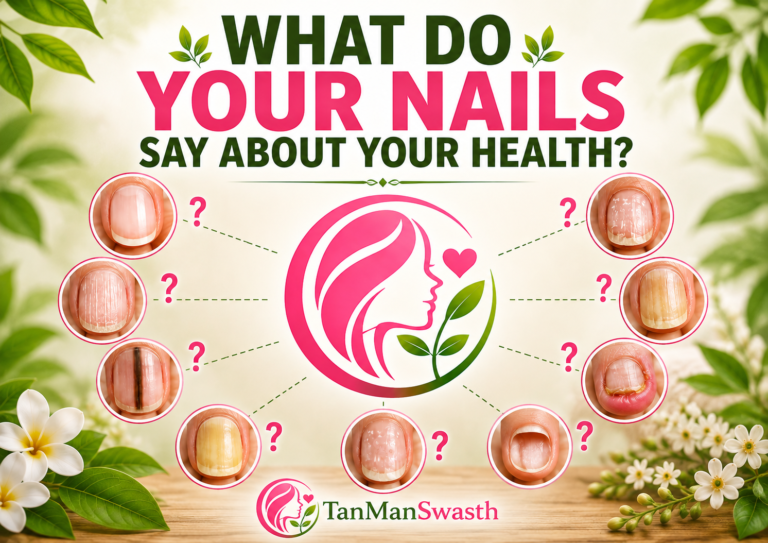
An Ayurvedic and Modern Health Perspective
Your nails are not just a part of your hands and feet. Changes in their colour, strength, shape, or texture can sometimes provide clues about your health.
However, it is important to remember:
You cannot diagnose a disease by looking at the nails alone.
Nail changes can also happen because of injury, frequent exposure to water or chemicals, infections, ageing, and many other causes. Therefore, long-lasting or rapidly changing nail problems should not be ignored.
🌿 What Are Nails Called in Ayurveda?
In Ayurveda, nails are called Nakha. Ayurvedic literature considers nails important while observing the condition of the body and relates them to Asthi Dhatu.
Therefore, from an Ayurvedic perspective, repeatedly breaking nails, excessive dryness, or long-standing nail problems should not always be treated as merely a cosmetic issue. Attention should also be given to the possible underlying cause.
1️⃣ Dry, Weak and Frequently Breaking Nails
If your nails:
- Break easily
- Split at the edges
- Look excessively dry
- Peel in layers
you should first protect them from excessive water and harsh chemicals.
🌿 What Can You Do?
Sesame Oil Nail Massage
Wash and dry your hands properly.
Then:
- Apply a small amount of sesame oil to your nails.
- Gently massage the nails and the surrounding skin.
This can be used as a simple supportive care routine, particularly for dryness.
Also Remember
✔️ Do not file your nails excessively.
✔️ Avoid frequent use of harsh nail polish removers.
✔️ Wear gloves while working with water and cleaning chemicals.
✔️ Avoid biting or pulling your nails.
If your nails remain weak for a long time, applying oil alone may not solve the problem. The underlying cause should be considered.
2️⃣ Yellow and Thick Nails 🟡
If your nails become yellow and are also:
- Becoming thicker
- Breaking or crumbling
- Developing material underneath
- Separating from the nail bed
this may sometimes be associated with a nail infection, including fungal infection.
🌿 What Should You Do?
✔️ Keep your hands and feet clean.
✔️ Dry them properly after washing.
✔️ Do not wear damp socks for long periods.
✔️ Do not share nail cutters.
✔️ Do not continuously cover a suspected infected nail with nail polish.
Important
Do not try every home remedy you find online. Yellow, thick, or worsening nails may need proper evaluation to identify the cause.
3️⃣ Pain, Swelling or Pus Around the Nail 🌿
If the skin around your nail has:
- Pain
- Redness
- Swelling
- Burning
- Pus
- A repeatedly recurring problem
it should not simply be treated as a cosmetic issue.
Ayurvedic literature describes a nail-related condition known as Kunakha. Modern discussions have compared some of its features with conditions involving inflammation or infection around the nail.
🌿 What Can You Do?
✔️ Keep the area clean.
✔️ Keep it dry.
✔️ Avoid repeatedly injuring the area.
✔️ Protect it from prolonged contact with dirty water and harsh chemicals.
⚠️ Important
If pain, swelling, or pus continues, do not self-medicate with strong medicines or Ayurvedic mineral preparations. Proper medical assessment is important.
4️⃣ Very Pale or Unusually White Nails
If your nails appear unusually pale and you also experience:
- Persistent tiredness
- Weakness
- Dizziness
- Breathlessness
it may be appropriate to have your health checked.
Modern medicine recognises that pale nails can sometimes be associated with conditions such as anaemia, but nails alone cannot confirm a diagnosis.
🌿 What Can You Do?
Include a balanced variety of foods such as:
🥬 Green leafy vegetables
🫘 Pulses and beans
🌾 Whole grains
🥜 Suitable nuts and seeds
🥚 Eggs, if included in your diet
However, do not start taking iron supplements without appropriate advice or testing.
5️⃣ Small Pits or Dents in the Nails
If your nails develop small pits or tiny dents, do not automatically assume that this is caused by a vitamin deficiency.
Nail pitting can sometimes be associated with certain skin or autoimmune conditions.
🌿 What Should You Do?
✔️ Avoid picking at your nails.
✔️ Do not aggressively clean underneath them with sharp objects.
✔️ If several nails are affected or the problem is increasing, have the cause evaluated.
6️⃣ Deep Horizontal Lines Across the Nails
Fine vertical lines running along the nail can often be normal.
However, deep lines running across the nail may sometimes appear when nail growth was temporarily interrupted.
Possible reasons can include:
- High fever
- Serious illness
- Injury
- Certain medicines
- Significant physical stress
🌿 What Should You Do?
Think about whether you experienced:
- A serious illness
- High fever
- A major injury
- A new medicine
during the previous months.
If the reason is unclear or the problem keeps returning, consider appropriate medical evaluation.
7️⃣ Nail Separating From the Nail Bed
If your nail starts lifting away from the skin underneath, several causes are possible, including:
- Injury
- Fungal infection
- Certain skin conditions
🌿 What Should You Do?
✔️ Do not pull the detached part of the nail.
✔️ Keep the nail short and clean.
✔️ Do not use sharp objects underneath the nail.
✔️ If the problem continues or worsens, find out the underlying cause.
8️⃣ Spoon-Shaped Nails 🥄
Some nails may become unusually thin and curve inward, giving them a spoon-like appearance.
This type of change should not simply be considered a cosmetic issue. It can sometimes be associated with underlying health conditions.
🌿 What Should You Do?
Instead of trying random home remedies, consider appropriate evaluation to understand the cause.
9️⃣ Nails Curving Downward With Enlarged Fingertips ⚠️
If your nails curve significantly downward and the tips of your fingers appear enlarged, this should not be ignored.
In modern medicine, this is known as clubbing. In some cases it can run in families, but it may also be associated with conditions affecting the lungs, heart, liver, or digestive system.
🌿 What Should You Do?
Do not rely on home remedies for a new change of this type. Appropriate medical evaluation is important.
🔟 A New Black or Dark Brown Line Under a Nail ⚠️
This is one of the most important nail changes to notice.
If one nail develops:
- A new black or brown streak
- A line that is becoming wider
- A changing or irregular colour
- Darkening of the surrounding skin
do not ignore it.
Not every dark line is serious, but in some cases it can be associated with melanoma, a serious type of skin cancer.
🚨 What Should You Do?
Do not try to treat this with home remedies. Seek appropriate medical evaluation.
🌿 Ayurvedic Care for Healthy Nails
Good nail care is not only about applying something to the surface of the nail. A balanced lifestyle and overall nourishment are also important.
1️⃣ Sesame Oil Care
For dry nails and dry surrounding skin:
- Take a few drops of sesame oil.
- Gently apply it to your nails and cuticles.
- Massage lightly, preferably as part of your regular care routine.
⚠️ Remember: This should not be considered a treatment for fungal or bacterial infections.
2️⃣ Protect Your Nails From Unnecessary Injury
Avoid:
❌ Biting your nails
❌ Pulling or tearing them
❌ Scraping them with sharp objects
❌ Excessively filing them until they become thin
3️⃣ Eat a Balanced and Nourishing Diet 🥗
Include a variety of:
- Pulses and beans
- Vegetables
- Fruits
- Suitable protein sources
- Nuts and seeds
There is no single “magic food” that will make everyone’s nails strong. Your overall nutritional status and general health are important.
❌ What Should You Avoid?
Do not:
❌ Assume every white spot means calcium deficiency.
❌ Start iron or other supplements without appropriate advice.
❌ Ignore a possible infection for months while only applying oils.
❌ Ignore pain or pus around the nail.
❌ Try to treat a new or changing black line with home remedies.
❌ Self-prescribe Ayurvedic Rasa, Bhasma, or mineral preparations after reading about them online.
⚠️ When Should You Take Nail Changes Seriously?
Appropriate medical evaluation is important if you notice:
🚨 A new or changing black line under a nail
🚨 Severe pain and swelling
🚨 Pus around the nail
🚨 Rapid separation of the nail
🚨 Sudden major changes in nail shape
🚨 Long-standing yellow, thick, and crumbling nails
🚨 Enlarged fingertips with significantly curved nails
🌿 Final Thoughts
Your nails can sometimes provide useful clues about your health, but they cannot diagnose a disease on their own.
The best approach is:
Notice the change → Understand the possible cause → Take proper care → Get appropriate evaluation when needed.
Ayurveda recognises Nakha (nails) as important in observing the condition of the body and discusses their relationship with Asthi Dhatu. Therefore, persistent or repeatedly occurring nail changes should not always be dismissed as a simple beauty concern.
📚 References
Ayurvedic literature and reviews discussing Nakha and Asthi Dhatu; classical descriptions related to Kunakha; and modern dermatology guidance on nail changes.
⚕️ Disclaimer
This article is for general health education only. Nail changes can have many different causes. Persistent, worsening, or unusual changes should be properly evaluated by a qualified healthcare professional.