
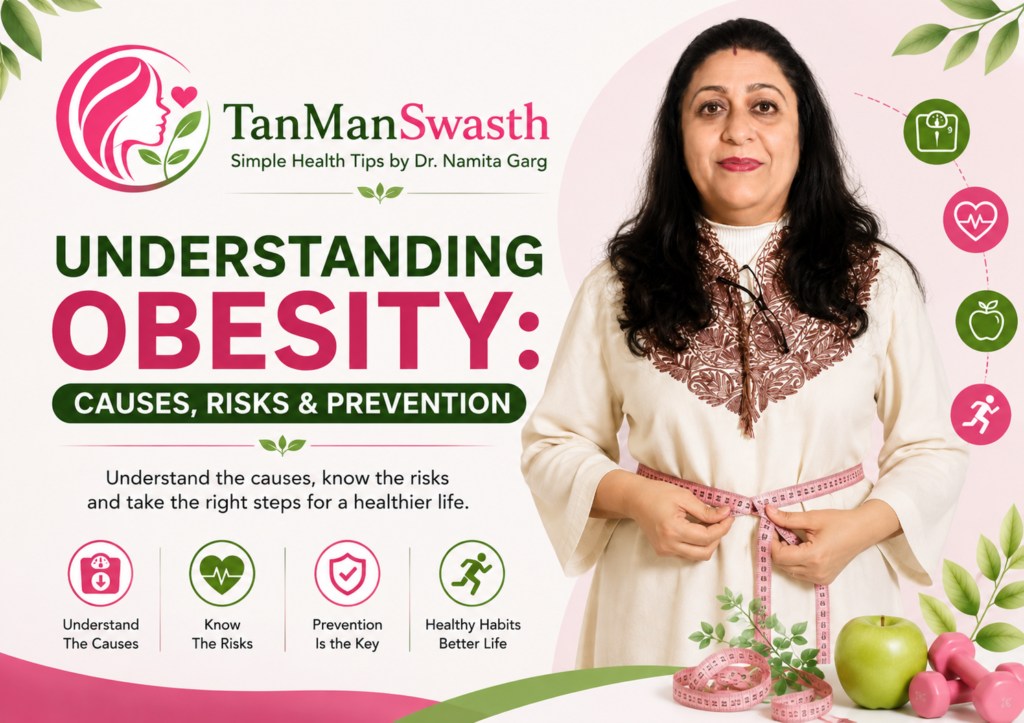
मोटापा सिर्फ अधिक वजन होना ही नहीं है। यह एक दीर्घकालिक स्वास्थ्य स्थिति जिसमें शरीर में अतिरिक्त वसा स्वास्थ्य को प्रभावित कर सकती है और कई बीमारियों का खतरा बढ़ा सकती है।.
मोटापा कई कारकों के एक साथ काम करने के कारण विकसित हो सकता है, जिनमें खान-पान की आदतें, शारीरिक गतिविधि, नींद, आनुवंशिकता, दवाएं, चिकित्सीय स्थितियां, तनाव और वह वातावरण शामिल हैं जिसमें हम रहते हैं।.
सबसे महत्वपूर्ण बात, मोटापा केवल इच्छाशक्ति की कमी नहीं है. यह एक जटिल स्थिति है, और वजन बढ़ने के पीछे के कारणों को समझना स्वस्थ विकल्पों की दिशा में पहला महत्वपूर्ण कदम है।.
1. मोटापा क्या है?
मोटापे का अर्थ है शरीर में अत्यधिक मात्रा में वसा का होना, जो स्वास्थ्य को प्रभावित कर सकता है।.
एक सामान्य रूप से इस्तेमाल किया जाने वाला उपाय है बॉडी मास इंडेक्स (बीएमआई).
वयस्कों के लिए:
| बीएमआई | वर्गीकरण |
|---|---|
| 18.5 से नीचे | वजन |
| 18.5–24.9 | स्वस्थ वजन |
| 25.0–29.9 | अधिक वजन |
| 30 या उससे अधिक | मोटापा |
बीएमआई की गणना निम्न सूत्र का उपयोग करके की जाती है:
बीएमआई = किलोग्राम में वजन ÷ मीटर² में ऊंचाई
उदाहरण के लिए, 80 किलोग्राम वजन और 1.70 मीटर लंबाई वाले व्यक्ति का बीएमआई लगभग 27.7 होगा।.
हालाँकि, बीएमआई है यह केवल एक स्क्रीनिंग उपाय है।. यह शरीर में वसा की मात्रा को सीधे तौर पर नहीं मापता और किसी व्यक्ति के स्वास्थ्य के बारे में पूरी जानकारी नहीं देता। वजन से संबंधित स्वास्थ्य जोखिमों का आकलन करते समय कमर की परिधि और अन्य स्वास्थ्य माप भी उपयोगी हो सकते हैं।.
याद करना: किसी व्यक्ति के स्वस्थ या अस्वस्थ होने का निर्णय केवल बीएमआई संख्या के आधार पर नहीं किया जाना चाहिए।.
2. मोटापे के क्या कारण हैं?
आमतौर पर मोटापे का कोई एक कारण नहीं है.
यह उन कारकों के संयोजन से विकसित होता है जो इस बात को प्रभावित कर सकते हैं कि शरीर कितनी ऊर्जा ग्रहण करता है, उपयोग करता है और संग्रहित करता है।.
सामान्य कारकों में शामिल हैं:
खाने के तरीके
ऊर्जा से भरपूर खाद्य पदार्थों और पेय पदार्थों का नियमित सेवन, विशेष रूप से जिनमें अतिरिक्त चीनी और अस्वास्थ्यकर वसा की मात्रा अधिक होती है, वजन बढ़ने में योगदान दे सकता है।.
शारीरिक निष्क्रियता
कम शारीरिक गतिविधि वाली जीवनशैली शरीर द्वारा उपयोग की जाने वाली ऊर्जा की मात्रा को कम कर देती है।.
आनुवंशिकी
जीन भूख, चयापचय, वसा भंडारण और शरीर द्वारा भोजन और शारीरिक गतिविधि पर प्रतिक्रिया करने के तरीके को प्रभावित कर सकते हैं।.
नींद
नींद की अनियमितता भूख, भोजन के चुनाव और वजन नियंत्रण को प्रभावित कर सकती है।.
तनाव और भावनात्मक खान-पान
दीर्घकालिक तनाव खानपान संबंधी व्यवहार को प्रभावित कर सकता है और स्वस्थ आदतों को बनाए रखना कठिन बना सकता है।.
दवाइयाँ और चिकित्सीय स्थितियाँ
कुछ दवाएं और कुछ चिकित्सीय स्थितियां वजन बढ़ने में योगदान कर सकती हैं।.
पर्यावरण
अत्यधिक प्रसंस्कृत और ऊर्जा से भरपूर खाद्य पदार्थों की उपलब्धता, उनकी वहनीयता और विपणन, साथ ही शारीरिक गतिविधि के सीमित अवसर, वजन को प्रभावित कर सकते हैं।.
3. मोटापा स्वास्थ्य के लिए चिंता का विषय क्यों है?
मोटापे से कई स्वास्थ्य समस्याओं का खतरा बढ़ सकता है।.
इसमे शामिल है:
- टाइप 2 मधुमेह
- उच्च रक्तचाप
- दिल की बीमारी
- आघात
- ऑस्टियोआर्थराइटिस और अन्य मस्कुलोस्केलेटल समस्याएं
- नींद से संबंधित सांस लेने की समस्याएं, जैसे कि ऑब्सट्रक्टिव स्लीप एपनिया।
- कुछ प्रकार के कैंसर
अधिक वजन बढ़ने के साथ-साथ कई स्वास्थ्य समस्याओं का खतरा भी बढ़ जाता है।.
लेकिन यहाँ एक महत्वपूर्ण बात है:
वजन स्वास्थ्य का सिर्फ एक हिस्सा है।.
एक ही बीएमआई वाले दो व्यक्तियों का स्वास्थ्य प्रोफाइल बहुत अलग हो सकता है। यही कारण है कि स्वास्थ्य जोखिम का आकलन करते समय एक स्वास्थ्य पेशेवर कमर की परिधि, रक्तचाप, रक्त शर्करा, कोलेस्ट्रॉल, चिकित्सीय इतिहास और अन्य कारकों पर विचार कर सकता है।.
4. मोटापा केवल इच्छाशक्ति का मामला नहीं है।
इस पर विशेष ध्यान देने की आवश्यकता है।.
यह कहना आसान है:
“"बस कम खाओ और ज्यादा व्यायाम करो।"”
लेकिन असल जिंदगी कहीं ज्यादा जटिल है।.
मोटापे को निम्नलिखित कारकों से प्रभावित किया जा सकता है: जीव विज्ञान, आनुवंशिकी, खान-पान की आदतें, नींद, तनाव, दवाइयां, चिकित्सीय स्थितियां और आसपास का वातावरण.
इसका यह मतलब नहीं है कि स्वस्थ आदतें महत्वहीन हैं। वे अत्यंत महत्वपूर्ण हैं।.
इसका मतलब यह है कि जिन लोगों को अपने वजन को लेकर परेशानी हो रही है, उन्हें दोषी नहीं ठहराया जाना चाहिए या उन्हें यह महसूस नहीं कराया जाना चाहिए कि वे पूरी तरह से "असफल" हो गए हैं।.
वजन को प्रभावित करने वाले कारकों को समझना और फिर उन पर काम करना एक बेहतर तरीका है। यथार्थवादी, टिकाऊ परिवर्तन.
5. क्या मोटापे को रोका जा सकता है?
कई मामलों में, स्वस्थ आदतों और सहायक वातावरण के माध्यम से अधिक वजन और मोटापे के जोखिम को कम किया जा सकता है।.
कुछ उपयोगी आदतें इस प्रकार हैं:
- अधिक सब्जियां, फल, दालें, साबुत अनाज और मेवे खाएं।
- मुक्त शर्करा से भरपूर खाद्य पदार्थों और पेय पदार्थों का सेवन सीमित करें।
- नियमित रूप से शारीरिक रूप से सक्रिय रहना
- लंबे समय तक बैठने की स्थिति को कम करना
- पर्याप्त और अच्छी गुणवत्ता वाली नींद लेना
- प्रबंधन तनाव
- लंबे समय तक स्वस्थ खानपान और शारीरिक गतिविधि की आदतों को बनाए रखना
डब्ल्यूएचओ इस बात पर भी जोर देता है कि मोटापे की रोकथाम यह केवल एक व्यक्ति की जिम्मेदारी नहीं है. स्वस्थ भोजन की उपलब्धता और वहनीयता, शारीरिक गतिविधि के अवसर और व्यापक वातावरण, ये सभी लोगों के विकल्पों को प्रभावित करते हैं।.
6. मोटापे से जुड़ी स्वास्थ्य समस्याएं
मोटापा शरीर के कई हिस्सों को प्रभावित कर सकता है। इसका खतरा हर किसी के लिए एक जैसा नहीं होता, लेकिन शरीर में अतिरिक्त वसा होने से कई दीर्घकालिक बीमारियों का खतरा बढ़ जाता है।.
इसमे शामिल है:
टाइप 2 मधुमेह
शरीर में अतिरिक्त वसा होने से टाइप 2 मधुमेह होने का खतरा बढ़ सकता है। स्वस्थ वजन बनाए रखना, संतुलित आहार खाना और शारीरिक रूप से सक्रिय रहना इस खतरे को कम करने में सहायक हो सकता है।.
उच्च रक्तचाप और हृदय रोग
मोटापा उच्च रक्तचाप और हृदय संबंधी बीमारियों जैसे हृदय रोग और स्ट्रोक से जुड़ा हुआ है।.
जोड़ों की समस्याएं
अतिरिक्त वजन जोड़ों पर अतिरिक्त दबाव डाल सकता है। मोटापा मांसपेशियों और हड्डियों से संबंधित समस्याओं जैसे कि ऑस्टियोआर्थराइटिस से जुड़ा हुआ है।.
नींद अश्वसन
मोटापे से ग्रस्त लोगों में ऑब्सट्रक्टिव स्लीप एपनिया का खतरा बढ़ जाता है, यह एक ऐसी स्थिति है जिसमें नींद के दौरान सांस बार-बार रुकती और शुरू होती है।.
कुछ कैंसर
मोटापा कई प्रकार के कैंसर के बढ़ते खतरे से जुड़ा है, जिनमें स्तन, कोलोन, लीवर, किडनी और गर्भाशय के कुछ कैंसर शामिल हैं।.
महत्वपूर्ण संदेश यह है कि किसी व्यक्ति के बीएमआई का स्तर बहुत अधिक होने से पहले ही स्वास्थ्य समस्याओं का खतरा बढ़ सकता है।.
7. छोटे बदलाव भी बड़ा फर्क ला सकते हैं।
वजन कम करने के लिए जरूरी नहीं कि शुरुआत किसी अत्यधिक सख्त डाइट या जीवनशैली में अचानक बदलाव से ही हो।.
कई लोगों के लिए, छोटे और व्यावहारिक बदलावों से शुरुआत करना अधिक कारगर होता है।.
उदाहरण के लिए:
- अपने भोजन में अधिक सब्जियां शामिल करें।.
- साबुत अनाज का सेवन अधिक बार करें।.
- मीठे पेय पदार्थों का सेवन कम करें।.
- भोजन की मात्रा पर ध्यान दें।.
- नियमित शारीरिक गतिविधि को शामिल करें।.
- लंबे समय तक बैठने की आदत को कम करें।.
- नियमित रूप से सोने का समय निर्धारित करें।.
- अगर इससे आपको अपनी खाने की आदतों को समझने में मदद मिलती है, तो उन पर नज़र रखें।.
एक स्वस्थ आहार से प्राप्त होना चाहिए पर्याप्तता, संतुलन, संयम और विविधता. ऐसा कोई एक आहार नहीं है जो सभी के लिए उपयुक्त हो।.
दीर्घकालिक सोचें
लक्ष्य वजन में तुरंत बदलाव लाना नहीं होना चाहिए।.
बेहतर लक्ष्य ऐसी आदतें विकसित करना है जिन्हें आप महीनों और वर्षों तक जारी रख सकें।.
8. आपको डॉक्टर से कब बात करनी चाहिए?
यदि निम्नलिखित स्थितियां हों तो किसी स्वास्थ्य पेशेवर से बात करने पर विचार करें:
- आपका वजन लगातार बढ़ रहा है।.
- लगातार कोशिशों के बावजूद आपको वजन कम करने में कठिनाई हो रही है।.
- आपको उच्च रक्तचाप, उच्च रक्त शर्करा या असामान्य कोलेस्ट्रॉल है।.
- आप जोर से खर्राटे लेते हैं या दिन के दौरान असामान्य रूप से नींद महसूस करते हैं।.
- आपको जोड़ों में दर्द है जिससे आपकी दैनिक गतिविधियां प्रभावित हो रही हैं।.
- आप ऐसी दवाएं लेते हैं जिनसे आपके वजन पर असर पड़ सकता है।.
- आपको कोई अन्य स्वास्थ्य समस्या भी हो सकती है जो आपके वजन को प्रभावित कर रही हो।.
एक डॉक्टर आपकी जांच कर सकता है समग्र स्वास्थ्य, वजन के आधार पर ही स्वास्थ्य का आकलन करने के बजाय।.
आपकी स्थिति के आधार पर, वे बीएमआई, कमर की परिधि, रक्तचाप, रक्त शर्करा, कोलेस्ट्रॉल, चिकित्सा इतिहास, दवाओं और अन्य कारकों पर विचार कर सकते हैं।.
यदि वजन अचानक या बिना किसी स्पष्ट कारण के बढ़ रहा है, तो किसी स्वास्थ्य पेशेवर से इस बारे में चर्चा करना विशेष रूप से महत्वपूर्ण है।.
9. अक्सर पूछे जाने वाले प्रश्न
क्या मोटापा केवल अधिक खाने से ही होता है?
नहीं।.
खान-पान की आदतें और शारीरिक गतिविधि महत्वपूर्ण हैं, लेकिन मोटापा आनुवंशिकी, नींद, तनाव, दवाओं, चिकित्सीय स्थितियों, पर्यावरण और अन्य जैविक कारकों से भी प्रभावित हो सकता है।.
क्या बीएमआई यह बताने के लिए पर्याप्त है कि मैं स्वस्थ हूं या नहीं?
नहीं।.
बीएमआई एक उपयोगी स्क्रीनिंग माप है, लेकिन यह सीधे तौर पर शरीर में वसा की मात्रा नहीं मापता या स्वास्थ्य की पूरी जानकारी नहीं देता। स्वास्थ्य देखभाल पेशेवर अतिरिक्त मापों और स्वास्थ्य संबंधी जानकारी का उपयोग कर सकते हैं।.
क्या वजन घटाने के लिए मुझे सख्त आहार का पालन करना होगा?
आवश्यक रूप से नहीं।.
एक टिकाऊ खान-पान की शैली आमतौर पर अत्यधिक प्रतिबंधात्मक आहार की तुलना में अधिक उपयोगी होती है, जिसे बनाए रखना मुश्किल होता है। एक स्वस्थ आहार संतुलित, विविध और व्यक्ति की व्यक्तिगत आवश्यकताओं के अनुरूप होना चाहिए।.
क्या व्यायाम करना तब भी महत्वपूर्ण है जब मेरा वजन कम न हो?
हाँ।.
नियमित शारीरिक गतिविधि से वजन घटाने के अलावा भी कई महत्वपूर्ण स्वास्थ्य लाभ होते हैं, जिनमें हृदय स्वास्थ्य और समग्र फिटनेस के लाभ शामिल हैं।.
वयस्कों के लिए, डब्ल्यूएचओ कम से कम की सिफारिश करता है प्रति सप्ताह 150 मिनट की मध्यम तीव्रता वाली शारीरिक गतिविधि, अतिरिक्त गतिविधियों से और भी लाभ मिलने की संभावना है।.
क्या मुझे जल्दी वजन कम करने की कोशिश करनी चाहिए?
तेजी से वजन घटाने के तरीके हर किसी के लिए उपयुक्त नहीं होते हैं।.
एक स्वास्थ्य पेशेवर आपके स्वास्थ्य, दवाओं, उम्र और अन्य कारकों के आधार पर एक सुरक्षित और व्यावहारिक दृष्टिकोण निर्धारित करने में मदद कर सकता है।.
10. वजन प्रबंधन के लिए एक स्वस्थ दृष्टिकोण
मोटापे को समझना पहला कदम है।.
अगला कदम इस बात पर ध्यान केंद्रित करना है कि आप क्या कर रहे हैं। नियंत्रित कर सकते हैं.
पूछने के बजाय:
“मैं अपना वजन जल्द से जल्द कैसे कम कर सकता हूँ?”
यह पूछने का प्रयास करें:
“मैं जीवन भर किन स्वस्थ आदतों को अपना सकता हूँ?”
इसका मतलब यह हो सकता है कि आप अपने भोजन को अधिक संतुलित बनाएं, अधिक सक्रिय हों, बेहतर नींद लें, तनाव का प्रबंधन करें या बस अपनी खाने की आदतों के बारे में अधिक जागरूक हों।.
ऐसा कोई एक समाधान नहीं है जो सभी के लिए कारगर हो।.
यदि आप अपने वजन या स्वास्थ्य को लेकर चिंतित हैं, तो किसी योग्य स्वास्थ्य पेशेवर से बात करें जो आपको आपके लिए उपयुक्त दृष्टिकोण चुनने में मदद कर सकता है।.
याद करना
स्वस्थ वजन प्रबंधन पूर्णता के बारे में नहीं है। यह टिकाऊ विकल्प चुनने के बारे में है, एक-एक कदम करके।.
चिकित्सा नोट
यह लेख सामान्य स्वास्थ्य संबंधी जानकारी और शिक्षा के लिए है। यह व्यक्तिगत चिकित्सा सलाह, निदान या उपचार का विकल्प नहीं है। यदि आपको कोई स्वास्थ्य समस्या है, आप दवाएँ ले रहे हैं, गर्भवती हैं, या अपने वजन या लक्षणों के बारे में चिंतित हैं, तो अपने डॉक्टर या किसी अन्य योग्य स्वास्थ्य पेशेवर से परामर्श लें।.
सूत्रों का कहना है
- विश्व स्वास्थ्य संगठन — मोटापा और अधिक वजन
- विश्व स्वास्थ्य संगठन — मोटापा: अधिक वजन होने के स्वास्थ्य संबंधी परिणाम
- विश्व स्वास्थ्य संगठन — स्वस्थ आहार