
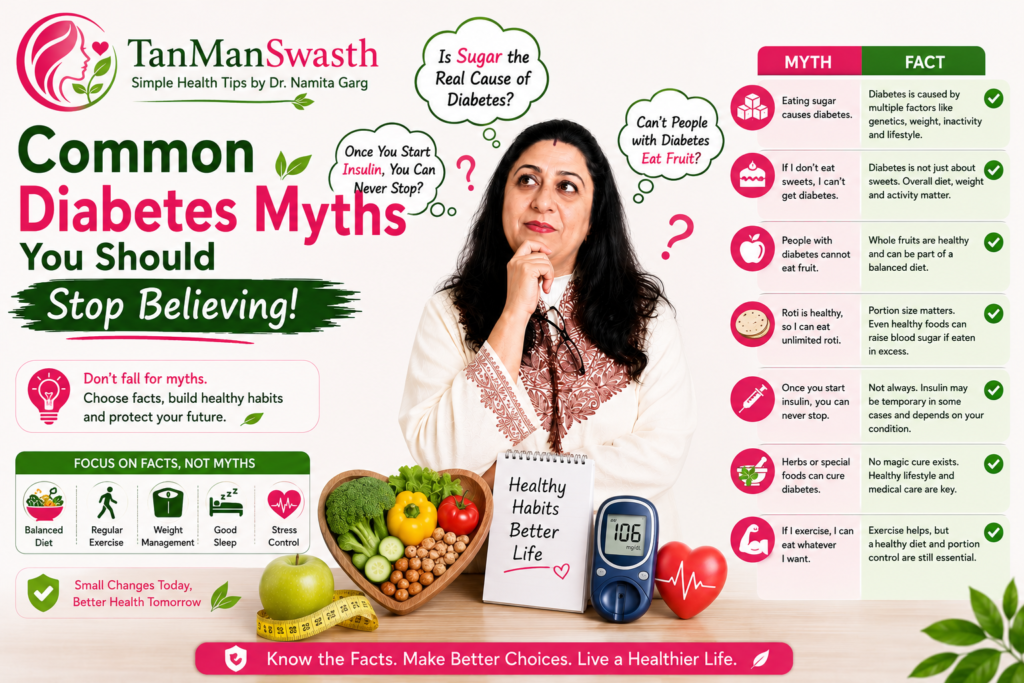
“"मधुमेह अधिक चीनी खाने से होता है।"”
“"अगर आप मीठा खाना बंद कर देंगे तो मधुमेह ठीक हो जाएगा।"”
“मधुमेह से पीड़ित लोग फल नहीं खा सकते।”
“रोटी पौष्टिक होती है, इसलिए आप जितनी चाहें उतनी खा सकते हैं।”
“एक बार इंसुलिन लेना शुरू कर दें, तो आप इसे कभी बंद नहीं कर सकते।”
ये मधुमेह से जुड़ी कुछ ऐसी धारणाएं हैं जिन्हें मैं बार-बार सुनता हूं।.
इन मिथकों के साथ समस्या केवल यह नहीं है कि वे गलत हैं।.
वे वास्तव में लोगों को निर्णय लेने के लिए प्रेरित कर सकते हैं। स्वास्थ्य संबंधी गलत निर्णय.
विशेषकर महिलाओं के लिए, मधुमेह का खतरा वजन, कमर की परिधि, शारीरिक गतिविधि, पारिवारिक इतिहास, पहले के गर्भकालीन मधुमेह, पीसीओएस और अन्य कारकों से प्रभावित हो सकता है - न कि केवल इस बात से कि आप कितनी मिठाई खाती हैं।.
तो चलिए अलग करते हैं मधुमेह से जुड़े मिथकों से अलग मधुमेह के तथ्य.
मिथक 1: "चीनी खाने से मधुमेह होता है"“
❌ बिलकुल नहीं।.
चीनी का सेवन सीधे तौर पर टाइप 1 या टाइप 2 मधुमेह का कारण नहीं बनता है।.
टाइप 1 मधुमेह एक स्वप्रतिरक्षित स्थिति है जिसमें प्रतिरक्षा प्रणाली अग्न्याशय की इंसुलिन-उत्पादक बीटा कोशिकाओं को नष्ट कर देती है।.
टाइप 2 मधुमेह कहीं अधिक जटिल है। यह इंसुलिन प्रतिरोध, आनुवंशिकता, अधिक वजन, शारीरिक निष्क्रियता और अन्य जोखिम कारकों सहित कई कारकों के संयोजन से विकसित होता है।.
हालांकि, मीठे खाद्य पदार्थों और मधुमेह के खतरे के बीच एक महत्वपूर्ण संबंध है।.
नियमित रूप से अधिक मात्रा में मीठे पेय पदार्थ और अत्यधिक प्रसंस्कृत, कैलोरी से भरपूर खाद्य पदार्थों का सेवन करने से अतिरिक्त कैलोरी का सेवन और वजन बढ़ सकता है। अतिरिक्त वजन, विशेष रूप से पेट की चर्बी, टाइप 2 मधुमेह के खतरे को बढ़ा सकती है।.
इसलिए बेहतर कथन यह है:
मधुमेह का एकमात्र कारण चीनी नहीं है, लेकिन चीनी युक्त और अत्यधिक प्रसंस्कृत खाद्य पदार्थों से भरपूर आहार मधुमेह के जोखिम को बढ़ा सकता है।.
मिथक 2: "अगर मैं मिठाई नहीं खाऊंगा, तो मुझे मधुमेह नहीं हो सकता"“
❌ गलत।.
यह शायद सबसे आम गलतफहमियों में से एक है।.
कोई व्यक्ति बहुत कम मात्रा में मिठाई खाकर भी टाइप 2 मधुमेह से पीड़ित हो सकता है।.
क्यों?
क्योंकि रक्त में ग्लूकोज का स्तर शरीर के समग्र चयापचय से प्रभावित होता है, न कि केवल खाने में रखी चीनी से।.
कार्बोहाइड्रेट युक्त खाद्य पदार्थ ग्लूकोज में टूट जाते हैं, जो रक्तप्रवाह में प्रवेश करता है।.
इसमें निम्नलिखित खाद्य पदार्थ शामिल हैं:
- चावल
- रोटी
- रोटी
- आलू
- बिस्कुट
- फल
- दालें
- मिठाइयाँ
- मीठा पानी
कार्बोहाइड्रेट की मात्रा और प्रकार, भाग का आकार, फाइबर, कुल कैलोरी सेवन और भोजन के बाकी हिस्से, ये सभी चीजें मायने रखती हैं।.
इसलिए मधुमेह की रोकथाम के बारे में संपूर्ण खान-पान की शैली, सिर्फ चाय से चीनी निकालना ही काफी नहीं है।.
मिथक 3: "मधुमेह से पीड़ित लोग चावल नहीं खा सकते"“
❌ जरूरी नहीं।.
चावल कार्बोहाइड्रेट से भरपूर भोजन है, इसलिए इसकी मात्रा मायने रखती है।.
लेकिन यह कहते हुए:
“"मधुमेह का मतलब है कभी चावल नहीं खाना।"”
यह अनावश्यक रूप से प्रतिबंधात्मक है।.
एक बेहतर दृष्टिकोण यह है कि निम्नलिखित बातों पर विचार किया जाए:
कितने चावल?
किस प्रकार का?
आप इसके साथ क्या खा रहे हैं?
इस भोजन में सब्जियों और प्रोटीन की मात्रा कितनी है?
कई लोगों के लिए, संतुलित भोजन में सब्जियों और प्रोटीन के साथ-साथ कार्बोहाइड्रेट स्रोत की एक नियंत्रित मात्रा शामिल हो सकती है।.
एडीए के 2026 के पोषण संबंधी दिशानिर्देश किसी एक "निषिद्ध" भोजन के बजाय समग्र खाद्य गुणवत्ता, कुल कैलोरी सेवन और व्यक्तिगत भोजन योजना पर जोर देते हैं।.
मिथक 4: "रोटी सेहतमंद होती है, इसलिए मैं असीमित मात्रा में रोटी खा सकता हूँ"“
❌ यह भी गलत है।.
यह चावल से जुड़े मिथक का बिल्कुल विपरीत संस्करण है।.
कोई भोजन पौष्टिक होने के बावजूद भी उसकी मात्रा को नियंत्रित करना आवश्यक हो सकता है।.
साबुत अनाज या अधिक फाइबर वाली रोटी स्वस्थ खानपान की पद्धति में शामिल हो सकती है।.
लेकिन खाना:
4-5 बड़ी रोटियाँ + आलू की करी + मिठाई
यह इससे बहुत अलग है:
1-2 उचित आकार की रोटियाँ + सब्जियाँ + प्रोटीन + सलाद
भोजन की समग्र गुणवत्ता मायने रखती है।.
वजन प्रबंधन और मधुमेह की रोकथाम के लिए:
स्वस्थ भोजन का मतलब असीमित भोजन नहीं है।.
खाने की मात्रा अभी भी मायने रखती है।.
मिथक 5: “मधुमेह के लिए फल हानिकारक होते हैं”
❌ नहीं।.
साबुत फल स्वस्थ खानपान का हिस्सा हो सकते हैं।.
फल पोषक तत्व और फाइबर प्रदान करते हैं, और मधुमेह के लिए वर्तमान पोषण संबंधी दिशानिर्देशों में साबुत फलों को उन खाद्य पदार्थों में शामिल किया गया है जो स्वस्थ आहार का हिस्सा हो सकते हैं।.
महत्वपूर्ण अंतर यह है:
पूरा फल ≠ फलों का रस
संतरा खाने के लिए चबाना पड़ता है और इससे फाइबर मिलता है।.
एक बड़ा गिलास संतरे का रस पीने से कई फलों के बराबर पोषक तत्वों का सेवन जल्दी से करना बहुत आसान हो जाता है।.
अधिकांश लोगों के लिए, साबुत फल रोजमर्रा के भोजन के लिए बेहतर विकल्प है।.
सवाल यह नहीं होना चाहिए:
“क्या मैं फल खा सकता हूँ?”
यह होना चाहिए:
“"कौन सा फल, कितनी मात्रा में, और यह मेरे समग्र आहार में कैसे फिट बैठता है?"”
मिथक 6: "मधुमेह का मतलब है कि आप फिर कभी मिठाई नहीं खा सकते"“
❌ जरूरी नहीं।.
मधुमेह होने का मतलब यह नहीं है कि आपके सभी पसंदीदा खाद्य पदार्थ हमेशा के लिए गायब हो जाने चाहिए।.
हालांकि, मिठाइयाँ चीनी और कैलोरी के केंद्रित स्रोत हैं, इसलिए इन्हें सावधानी से खाना चाहिए। कभी-कभार खाए जाने वाले खाद्य पदार्थ और उचित मात्रा में सेवन किए जाने चाहिए।.
मधुमेह से पीड़ित व्यक्ति अक्सर अपनी पसंद के खाद्य पदार्थों को व्यक्तिगत आहार योजना में शामिल कर सकता है, जिसमें मात्रा और सेवन की आवृत्ति पर ध्यान दिया जाता है।.
समस्या तब उत्पन्न होती है जब:
“"कभी-कभार एक छोटी सी मिठाई"”
बन जाता है:
“"हर भोजन के बाद कुछ मीठा।"”
एक बड़ा अंतर है।.
मिथक 7: "मधुमेह केवल अधिक वजन वाले लोगों की बीमारी है"“
❌ बिलकुल गलत।.
अधिक वजन होना या मोटापा होना टाइप 2 मधुमेह के खतरे को बढ़ाता है, लेकिन इसका मतलब यह नहीं है कि मधुमेह से पीड़ित हर व्यक्ति का वजन अधिक होता है।.
सामान्य शारीरिक वजन वाले कुछ लोगों को भी टाइप 2 मधुमेह हो सकता है।.
आनुवंशिकता, उम्र, पारिवारिक इतिहास, शारीरिक गतिविधि, पेट की चर्बी और अन्य कारक जोखिम को प्रभावित कर सकते हैं।.
यह उन महिलाओं के लिए विशेष रूप से महत्वपूर्ण है जो सोचती हैं:
“मैं दुबली-पतली हूँ, इसलिए मुझे मधुमेह नहीं हो सकता।”
आपके शरीर का वजन केवल पहेली का एक टुकड़ा.
मिथक 8: "अगर मेरा वजन सामान्य है, तो मेरी कमर का कोई महत्व नहीं है"“
❌ यह सही धारणा नहीं है।.
शरीर में वसा कहाँ जमा होती है, यह मायने रख सकता है।.
पेट या आंतरिक अंगों में अतिरिक्त वसा का होना इंसुलिन प्रतिरोध और टाइप 2 मधुमेह के बढ़ते जोखिम से जुड़ा हुआ है।.
इसलिए चयापचय संबंधी स्वास्थ्य का आकलन करते समय, मैं केवल वजन मापने वाली मशीन को देखने की सलाह नहीं देता।.
देखो:
वजन + कमर + रक्त शर्करा + HbA1c + जीवनशैली
एक साथ।.
इससे आपको कहीं अधिक उपयोगी जानकारी मिलती है।.
मिथक 9: "अगर मेरा फास्टिंग शुगर सामान्य है, तो मुझे चिंता करने की जरूरत नहीं है"“
❌ हमेशा नहीं।.
ग्लूकोज का एक माप एक तात्कालिक स्थिति को दर्शाता है।.
आपके रक्त में ग्लूकोज का स्तर दिन भर बदलता रहता है।.
आपका फास्टिंग ग्लूकोज लेवल सामान्य हो सकता है, जबकि HbA1c या ग्लूकोज टॉलरेंस टेस्ट जैसे अन्य माप किसी समस्या का संकेत दे सकते हैं।.
इसीलिए मधुमेह और पूर्व-मधुमेह का निदान केवल एक यादृच्छिक रीडिंग के बजाय उपयुक्त रक्त परीक्षणों के माध्यम से किया जाता है।.
यदि आपके परिवार में मधुमेह का इतिहास, कमर का बढ़ता घेरा, पहले गर्भावस्था के दौरान मधुमेह या प्रीडायबिटीज जैसे जोखिम कारक मौजूद हैं, तो अपने डॉक्टर से उचित जांच के बारे में चर्चा करें।.
मिथक 10: "प्रीडायबिटीज का मतलब यह है कि मुझे निश्चित रूप से डायबिटीज हो जाएगी"“
❌ नहीं।.
प्रीडायबिटीज एक चेतावनी का संकेत है—कोई गारंटी नहीं।.
इसका मतलब है कि आपके ग्लूकोज का स्तर सामान्य से अधिक है, लेकिन अभी तक मधुमेह की श्रेणी में नहीं आया है।.
यह वास्तव में एक महत्वपूर्ण अवसर है।.
जीवनशैली में बदलाव से टाइप 2 मधुमेह होने का खतरा कम हो सकता है।.
अधिक वजन या मोटापे से ग्रस्त उच्च जोखिम वाले लोगों के लिए, वर्तमान एडीए दिशानिर्देश लगभग इतना लक्ष्य रखने की सलाह देते हैं। 5–7% वजन घटाना जब उचित हो, तो स्वस्थ खानपान और शारीरिक गतिविधि के साथ-साथ।.
इसलिए यदि आपका HbA1c प्रीडायबिटीज रेंज में है, तो यह न कहें:
“"मधुमेह तो वैसे भी आने वाला है।"”
इसके बजाय यह कहें:
“मुझे समय से पहले ही चेतावनी मिल गई है। अब मैं क्या बदल सकता हूँ?”
मिथक 11: "एक बार मधुमेह हो जाने पर, आपको कार्बोहाइड्रेट खाना बंद कर देना चाहिए"“
❌ अधिकांश लोगों के लिए आवश्यक नहीं है।.
कार्बोहाइड्रेट कई पौष्टिक खाद्य पदार्थों में पाए जाते हैं।.
वे सम्मिलित करते हैं:
- फल
- फलियाँ
- दालें
- साबुत अनाज
- दूध और दुग्ध उत्पाद
- चावल
- रोटी
- आलू
- अन्य अनाज
बेहतर रणनीति यह है कि आप यह सीखें कि कार्बोहाइड्रेट आपके ग्लूकोज स्तर को कैसे प्रभावित करते हैं और अपनी व्यक्तिगत आवश्यकताओं के अनुरूप मात्रा और खाद्य संयोजन चुनें।.
एडीए के मौजूदा दिशानिर्देश कार्बोहाइड्रेट को पूरी तरह से खत्म करने के बजाय कम से कम संसाधित, पोषक तत्वों से भरपूर और उच्च फाइबर वाले कार्बोहाइड्रेट स्रोतों पर जोर देते हैं।.
कुछ लोगों के लिए कार्बोहाइड्रेट की मात्रा गिनना उपयोगी हो सकता है।.
कुछ अन्य लोगों के लिए, प्लेट-आधारित सरल दृष्टिकोण अधिक आसान हो सकता है।.
मधुमेह के रोगियों के लिए कोई एक ऐसा आहार नहीं है जो सभी के लिए पूरी तरह से कारगर हो।.
मिथक 12: “भूरी चीनी मधुमेह रोगियों के लिए सुरक्षित है”
❌ यह एक मिथक है।.
भूरी चीनी देखने में सफेद चीनी से अधिक स्वास्थ्यवर्धक लग सकती है, लेकिन यह फिर भी चीनी ही है।.
परिवर्तन:
सफेद चीनी → भूरी चीनी
यह मीठे आहार को मधुमेह रोगियों के अनुकूल आहार में परिवर्तित नहीं करता है।.
कई उत्पादों पर भी यही सिद्धांत लागू होता है जिन्हें इस प्रकार बेचा जाता है:
- प्राकृतिक चीनी
- जैविक चीनी
- कच्ची चीनी
- अपरिष्कृत चीनी
लेबल भले ही स्वास्थ्यवर्धक लगे, लेकिन मात्रा और कुल कार्बोहाइड्रेट सेवन अभी भी मायने रखता है।.
मिथक 13: "शहद सुरक्षित है क्योंकि यह प्राकृतिक है"“
❌ प्राकृतिक का मतलब ग्लूकोज-मुक्त नहीं है।.
शहद अभी भी चीनी और कार्बोहाइड्रेट का एक स्रोत है।.
शब्द “"प्राकृतिक"” इसका मतलब यह नहीं है कि कोई भोजन असीमित मात्रा में सेवन के लिए उपयुक्त है।.
गुड़ के मामले में भी यही बात लागू होती है।.
मिथक 14: “मधुमेह के लिए गुड़ चीनी से बेहतर है”
❌ उस तरह से नहीं जैसा कि बहुत से लोग मानते हैं।.
गुड़ को अक्सर परिष्कृत चीनी के एक स्वास्थ्यवर्धक विकल्प के रूप में प्रचारित किया जाता है।.
लेकिन अगर आपको मधुमेह है या आप चीनी का सेवन कम करने की कोशिश कर रहे हैं, तो चीनी की जगह गुड़ का इस्तेमाल करने का मतलब यह नहीं है कि आप असीमित मात्रा में इसका सेवन कर सकते हैं।.
दोनों शर्करा/कार्बोहाइड्रेट प्रदान करते हैं।.
अधिक उपयोगी प्रश्न यह है:
“"क्या मुझे इस अतिरिक्त मिठास की बिल्कुल भी जरूरत है?"”
यह प्रश्न इससे कहीं बेहतर है:
“मुझे कौन सी चीनी चुननी चाहिए?”
मिथक 15: "एक विशेष भोजन से मधुमेह का स्थायी इलाज संभव है"“
❌ इस दावे के प्रति बेहद सतर्क रहें।.
आपको सोशल मीडिया पर ऐसे पोस्ट दिख सकते हैं जिनमें ये वादा किया गया हो:
- करेला मधुमेह का इलाज करता है
- दालचीनी मधुमेह को ठीक करती है
- मेथी मधुमेह को ठीक करती है
- मोरिंगा मधुमेह का इलाज करता है
- एक विशेष हर्बल पाउडर मधुमेह को ठीक करता है
- एक विशेष पेय HbA1c के स्तर को स्थायी रूप से कम कर सकता है।
कुछ खाद्य पदार्थ पौष्टिक हो सकते हैं और स्वस्थ आहार में शामिल किए जा सकते हैं।.
लेकिन वहाँ है ऐसा कोई जादुई भोजन नहीं है जो साक्ष्य-आधारित मधुमेह देखभाल का विकल्प बन सके।.
एनआईडीडीके का कहना है कि इस बात का कोई स्पष्ट प्रमाण नहीं है कि विशिष्ट खाद्य पदार्थ, जड़ी-बूटी, मसाले या आहार पूरक उचित देखभाल के स्थान पर मधुमेह को नियंत्रित कर सकते हैं।.
इसलिए कृपया निर्धारित उपचार बंद न करें क्योंकि सोशल मीडिया पर किसी ने कहा है कि कोई विशेष पेय "प्राकृतिक इलाज" है।“
मिथक 16: "अगर मैं इंसुलिन लेना शुरू कर दूं, तो मुझे इसे जीवन भर लेना पड़ेगा"“
❌ जरूरी नहीं।.
यह मधुमेह के प्रकार और व्यक्तिगत स्थिति पर निर्भर करता है।.
टाइप 1 मधुमेह से पीड़ित लोगों को इंसुलिन की आवश्यकता होती है क्योंकि उनका शरीर बहुत कम या बिल्कुल भी इंसुलिन का उत्पादन नहीं करता है।.
टाइप 2 मधुमेह से पीड़ित लोगों को इंसुलिन की आवश्यकता हो भी सकती है और नहीं भी, यह इस बात पर निर्भर करता है कि उनकी स्थिति कैसे बढ़ती है और ग्लूकोज कितनी अच्छी तरह नियंत्रित है।.
कभी-कभी इंसुलिन की आवश्यकता अस्थायी रूप से होती है—उदाहरण के लिए कुछ बीमारियों, गर्भावस्था या अस्पताल में भर्ती होने के दौरान।.
अन्य स्थितियों में, यह दीर्घकालिक उपचार का हिस्सा बन सकता है।.
महत्वपूर्ण बात यह है:
इंसुलिन एक उपचार है, सजा नहीं।.
यदि आपका डॉक्टर इंसुलिन लेने की सलाह देता है, तो इस डर से इलाज में देरी न करें कि "एक बार शुरू करने के बाद, मैं इसे कभी रोक नहीं पाऊंगा।"“
मिथक 17: "मधुमेह की दवा लेने का मतलब है कि मुझे व्यायाम करने की आवश्यकता नहीं है"“
❌ बिलकुल नहीं।.
दवा और जीवनशैली एक दूसरे के प्रतिस्पर्धी नहीं हैं।.
वे अक्सर साथ मिलकर काम करते हैं।.
नियमित शारीरिक गतिविधि इंसुलिन संवेदनशीलता को बेहतर बनाने, वजन प्रबंधन में सहायता करने और समग्र हृदय स्वास्थ्य को सुधारने में मदद कर सकती है।.
एनआईडीडीके टाइप 2 मधुमेह के प्रबंधन और रोकथाम के एक महत्वपूर्ण भाग के रूप में शारीरिक गतिविधि की सिफारिश करता है।.
अपने इलाज को एक टीम के रूप में सोचें:
भोजन + व्यायाम + नींद + वजन प्रबंधन + आवश्यकता पड़ने पर दवा + चिकित्सकीय निगरानी
मिथक 18: "अगर मैं व्यायाम करता हूँ, तो मैं जो चाहूँ खा सकता हूँ"“
❌ दुर्भाग्यवश, नहीं।.
व्यायाम अत्यंत लाभदायक है।.
लेकिन इसका मतलब यह नहीं है कि हमें खाने की असीमित अनुमति मिल जाती है।.
उदाहरण के लिए, एक लंबी सैर से काफी मात्रा में ऊर्जा खर्च हो सकती है, लेकिन मिठाई सहित एक बड़े रेस्तरां में भोजन करने से आपकी अपेक्षा से कहीं अधिक ऊर्जा प्राप्त हो सकती है।.
इसका जवाब यह नहीं है कि भोजन के प्रभाव को खत्म करने के लिए और अधिक व्यायाम किया जाए।.
बेहतर तरीका यह है:
संतुलित आहार लें और नियमित रूप से व्यायाम करें।.
मिथक 19: “मधुमेह का नींद से कोई संबंध नहीं है”
❌ नींद महत्वपूर्ण है।.
मधुमेह की रोकथाम पर चर्चा करते समय अक्सर नींद को नजरअंदाज कर दिया जाता है।.
लेकिन स्वस्थ जीवनशैली का मतलब सिर्फ ये नहीं है:
आहार + व्यायाम।.
नींद, तनाव प्रबंधन, शारीरिक गतिविधि और खान-पान की आदतें, ये सभी किसी व्यक्ति के समग्र स्वास्थ्य और स्वस्थ आदतों को बनाए रखने की क्षमता में योगदान करते हैं।.
यदि आपको नियमित रूप से नींद ठीक से नहीं आती है, आप जोर से खर्राटे लेते हैं या दिन में अत्यधिक नींद महसूस करते हैं, तो इस बारे में अपने स्वास्थ्य देखभाल पेशेवर से चर्चा करें।.
मिथक 20: "अगर मैं ठीक महसूस कर रहा हूं, तो मेरा मधुमेह नियंत्रण में होना चाहिए"“
❌ यह खतरनाक हो सकता है।.
टाइप 2 मधुमेह धीरे-धीरे विकसित हो सकता है, और कुछ लोगों में इसके बहुत कम लक्षण होते हैं।.
किसी व्यक्ति में रक्त शर्करा का स्तर बढ़ा हुआ हो सकता है, भले ही उसे स्पष्ट रूप से अस्वस्थता महसूस न हो।.
इसीलिए:
“"मुझे ठीक लग रहा है"”
यह इसके समान नहीं है:
“मेरा ब्लड ग्लूकोज लेवल नियंत्रित है।”
आपके स्वास्थ्य का आकलन उचित मापदंडों और चिकित्सकीय निगरानी के माध्यम से किया जाना आवश्यक है।.
मिथक 21: “मधुमेह केवल वृद्ध लोगों की बीमारी है”
❌ नहीं।.
टाइप 2 मधुमेह उम्र के साथ अधिक आम हो जाता है, लेकिन युवा वयस्कों को भी यह हो सकता है।.
जोखिम कई कारकों से प्रभावित होता है, जैसे कि पारिवारिक इतिहास, शरीर का वजन, शारीरिक निष्क्रियता और अन्य चयापचय संबंधी कारक।.
इसलिए 30 या 40 वर्ष के व्यक्ति को स्वतः ही यह मान लेना उचित नहीं है:
“"मैं मधुमेह होने के लिए बहुत छोटा हूँ।"”
मिथक 22: "अगर आज मेरा HbA1c सामान्य है, तो मैं हमेशा के लिए सुरक्षित हूँ"“
❌ नहीं।.
HbA1c आपको पिछले कुछ महीनों में आपके ग्लूकोज स्तर के बारे में बताता है।.
यह आजीवन गारंटी नहीं है।.
आपके जोखिम में निम्नलिखित के अनुसार बदलाव आ सकता है:
- वजन में बदलाव
- कमर में बदलाव
- गतिविधि में परिवर्तन
- आहार में बदलाव
- उम्र बढ़ती है
- पारिवारिक या चिकित्सीय परिस्थितियों में परिवर्तन
स्वस्थ HbA1c स्तर अच्छी खबर है।.
लेकिन स्वस्थ आदतों को बनाए रखना अभी भी फायदेमंद है।.
मिथक 23: "मधुमेह का संबंध केवल रक्त शर्करा से है"“
❌ यह एक अपूर्ण दृश्य है।.
मधुमेह प्रबंधन केवल ग्लूकोज के बारे में नहीं है।.
मधुमेह की दीर्घकालिक देखभाल में निम्नलिखित बातों पर भी ध्यान देना शामिल है:
- रक्तचाप
- कोलेस्ट्रॉल
- गुर्दे का स्वास्थ्य
- नेत्र स्वास्थ्य
- पैरों का स्वास्थ्य
- हृदय स्वास्थ्य
- वज़न
- शारीरिक गतिविधि
- पोषण
एनआईडीडीके का कहना है कि मधुमेह का ठीक से प्रबंधन न करने से हृदय रोग, स्ट्रोक, गुर्दे की बीमारी, तंत्रिका क्षति और आंखों की समस्याओं का खतरा बढ़ सकता है।.
तो लक्ष्य केवल यह नहीं है:
“"मेरा शुगर लेवल कम करो।"”
बड़ा लक्ष्य यह है:
अपने पूरे शरीर की रक्षा करें।.
मधुमेह से जुड़ा सबसे बड़ा मिथक
एक धारणा है जिसे मैं विशेष रूप से बदलना चाहूंगा:
“"जब मेरा शुगर लेवल बढ़ जाएगा, तब मैं अपना ख्याल रखना शुरू कर दूंगी।"”
कृपया प्रतीक्षा न करें।.
यदि आपके परिवार में मधुमेह, पेट की चर्बी बढ़ना, प्रीडायबिटीज, पीसीओएस, पहले गर्भावस्था के दौरान मधुमेह होना या गतिहीन जीवनशैली का इतिहास है, तो रोकथाम आज से ही शुरू की जा सकती है।.
आपको निदान की प्रतीक्षा करने की आवश्यकता नहीं है।.
आपको किसी महंगे सप्लीमेंट की जरूरत नहीं है।.
आपको एक परिपूर्ण आहार की आवश्यकता नहीं है।.
आपको कार्बोहाइड्रेट का सेवन पूरी तरह से बंद करने की जरूरत नहीं है।.
आपको खुद को भूखा रखने की जरूरत नहीं है।.
बुनियादी बातों से शुरुआत करें।.
वास्तव में मधुमेह के जोखिम को कम करने में क्या मदद करता है?
इंटरनेट पर मिलने वाली जटिल सलाह को भूल जाइए।.
बुनियादी बातों पर ध्यान दें।.
कम से कम प्रसंस्कृत खाद्य पदार्थों का सेवन करें
अपने भोजन में सब्जियों, साबुत फलों, फलियों, प्रोटीन के उपयुक्त स्रोतों, साबुत अनाज, मेवों और बीजों को शामिल करें, जबकि मीठे पेय पदार्थ, मिठाइयों, परिष्कृत अनाज और अत्यधिक प्रसंस्कृत खाद्य पदार्थों को सीमित करें।.
नियंत्रण भाग
यहां तक कि पौष्टिक भोजन भी अतिरिक्त कैलोरी का स्रोत बन सकता है यदि उसकी मात्रा लगातार बहुत अधिक हो।.
नियमित रूप से हिलते-डुलते रहें
नियमित रूप से मध्यम स्तर की शारीरिक गतिविधि करने का लक्ष्य रखें, और यदि आपकी जीवनशैली वर्तमान में गतिहीन है तो धीरे-धीरे इसे बढ़ाएं।.
अतिरिक्त वजन को नियंत्रित करें
यदि आपका वजन अधिक है, तो थोड़ा सा वजन कम करने से भी मधुमेह का खतरा कम हो सकता है।.
अपने आंकड़ों को जानें
अपने जोखिम के आधार पर, अपने डॉक्टर से HbA1c और ग्लूकोज स्क्रीनिंग के बारे में चर्चा करें।.
अपनी कमर को नज़रअंदाज़ न करें
पेट की चर्बी का बढ़ना चयापचय संबंधी एक महत्वपूर्ण चेतावनी संकेत हो सकता है।.
ऑनलाइन मधुमेह संबंधी सलाह पढ़ने का एक सरल नियम
जब भी आपको कोई पोस्ट दिखे जिसमें लिखा हो:
“यह एक खाद्य पदार्थ मधुमेह को ठीक करता है।”
“कभी भी कार्बोहाइड्रेट न खाएं।”
“अपनी दवाइयां लेना बंद करें और इस प्राकृतिक उपचार का प्रयोग करें।”
“मधुमेह रोगियों को फलों से पूरी तरह परहेज करना चाहिए।”
“यह जड़ी बूटी मधुमेह को स्थायी रूप से ठीक कर देगी।”
रुकना।.
पूछना:
“सबूत क्या है?”
क्योंकि जब आपकी सेहत की बात आती है, तो वायरल व्हाट्सएप मैसेज कोई मेडिकल प्रिस्क्रिप्शन नहीं होता है।.
तनमानस्वस्थ डॉक्टर का निष्कर्ष
मधुमेह एक जटिल चयापचय संबंधी रोग है।.
इसे इस प्रकार संक्षिप्त नहीं किया जा सकता:
“आपने बहुत ज्यादा चीनी खा ली।”
और इसे ठीक नहीं किया जा सकता:
“"मीठा खाना बंद कर दो।"”
आपकी आनुवंशिकता, शारीरिक संरचना, शारीरिक गतिविधि, खानपान का तरीका, उम्र और अन्य स्वास्थ्य कारक सभी मायने रखते हैं।.
अच्छी खबर यह है कि कई महत्वपूर्ण जोखिम कारक बदला जा सकता है.
इसलिए हर भोजन से डरने के बजाय, संतुलित आहार बनाना सीखें।.
किसी चमत्कारी इलाज की तलाश करने के बजाय, स्थायी आदतें बनाएं।.
किसी एक मिठाई को लेकर अपराधबोध महसूस करने के बजाय, अपनी समग्र जीवनशैली पर ध्यान दें।.
और मधुमेह के गंभीर होने का इंतजार करने के बजाय, शुरुआती चेतावनी संकेतों का उपयोग करें जैसे कि... प्रीडायबिटीज, कमर की परिधि में वृद्धि या HbA1c का स्तर बढ़ना कार्रवाई करने के अवसर के रूप में।.
मधुमेह से जुड़े मिथकों को अपने स्वास्थ्य का फैसला न करने दें।.
साक्ष्य, अच्छी आदतें और उचित चिकित्सा मार्गदर्शन यह काम कर सकते हैं।.
महत्वपूर्ण चिकित्सीय सूचना
यह लेख सामान्य स्वास्थ्य शिक्षा के लिए है और व्यक्तिगत चिकित्सा सलाह, निदान या उपचार का विकल्प नहीं है। मधुमेह का प्रबंधन व्यक्तिगत रूप से किया जाना चाहिए। अपने स्वास्थ्य सेवा पेशेवर से परामर्श किए बिना निर्धारित मधुमेह की दवा या इंसुलिन को बंद न करें, कम न करें या बदलें।.