
आपकी हड्डियां देखने में ठोस और अपरिवर्तनीय लग सकती हैं, लेकिन वास्तव में वे जीवित ऊतक हैं।.
जीवन भर पुरानी हड्डियाँ लगातार टूटती रहती हैं और उनकी जगह नई हड्डियाँ बनती रहती हैं। जब हड्डियों के टूटने की गति हड्डियों के बनने की गति से अधिक हो जाती है, तो हड्डियाँ धीरे-धीरे कमजोर और नाजुक हो सकती हैं।.
इस स्थिति को कहा जाता है ऑस्टियोपोरोसिस.
मुश्किल बात यह है कि ऑस्टियोपोरोसिस को अक्सर कहा जाता है “मूक” बीमारी क्योंकि हड्डी के क्षीण होने से आमतौर पर फ्रैक्चर होने तक कोई स्पष्ट लक्षण दिखाई नहीं देते हैं।.
महिलाओं के लिए, रजोनिवृत्ति के आसपास और उसके बाद हड्डियों का स्वास्थ्य विशेष रूप से महत्वपूर्ण हो जाता है क्योंकि एस्ट्रोजन के स्तर में गिरावट हड्डियों के क्षरण को तेज कर सकती है।.
लेकिन अच्छी खबर यह है:
अपनी हड्डियों की देखभाल शुरू करने के लिए आपको रजोनिवृत्ति तक इंतजार करने की जरूरत नहीं है।.
जीवन के शुरुआती दौर में आप जो आदतें बनाते हैं, वे दशकों तक आपकी हड्डियों की रक्षा करने में मदद कर सकती हैं।.
ऑस्टियोपोरोसिस क्या है?
ऑस्टियोपोरोसिस का मतलब है कि हड्डियां कमजोर और अधिक नाजुक हो गई हैं, जिससे फ्रैक्चर का खतरा बढ़ जाता है।.
स्वस्थ हड्डी मजबूत होती है लेकिन थोड़ी लचीली भी होती है।.
ऑस्टियोपोरोसिस में हड्डियों की संरचना कम घनी और कमजोर हो जाती है।.
फ्रैक्चर शरीर के निम्नलिखित हिस्सों में हो सकते हैं:
- कूल्हा
- रीढ़ की हड्डी
- कलाई
- अन्य हड्डियाँ
किसी मामूली चोट या दुर्घटना के बाद होने वाला फ्रैक्चर कभी-कभी इस बात का पहला संकेत हो सकता है कि हड्डियों की मजबूती में समस्या आने लगी है।.
महिलाओं को अधिक खतरा क्यों है?
महिलाओं में आमतौर पर पुरुषों की तुलना में हड्डियों का अधिकतम घनत्व कम होता है, और रजोनिवृत्ति के दौरान होने वाले हार्मोनल परिवर्तन हड्डियों के क्षरण को तेज कर सकते हैं।.
हड्डियों के स्वास्थ्य को बनाए रखने में एस्ट्रोजन महत्वपूर्ण भूमिका निभाता है।.
रजोनिवृत्ति के बाद, एस्ट्रोजन का स्तर काफी गिर जाता है, और इससे हड्डियों के तेजी से क्षय की अवधि शुरू हो सकती है।.
इसीलिए रजोनिवृत्ति के आसपास के वर्ष समीक्षा करने का एक महत्वपूर्ण अवसर हैं:
पोषण + व्यायाम + विटामिन डी + मांसपेशियों की ताकत + गिरने से बचाव + अस्थि घनत्व
हड्डियों के स्वास्थ्य के बारे में सोचने के लिए बूढ़ा होना जरूरी नहीं है
एक आम गलती यह सोचना है:
“"ऑस्टियोपोरोसिस तो बूढ़े लोगों की समस्या है। मैं इसके बारे में बाद में सोचूंगा।"”
यह सबसे अच्छा तरीका नहीं है।.
हड्डियों का अधिकतम घनत्व बचपन, किशोरावस्था और प्रारंभिक वयस्कता के दौरान बनता है।.
उसके बाद, लक्ष्य हड्डियों की मजबूती को यथासंभव बनाए रखना होता है।.
इसलिए 20, 30 और 40 की उम्र में आप जो आदतें विकसित करते हैं, वे मायने रखती हैं।.
आप मूल रूप से अपना निर्माण कर रहे हैं अस्थि बैंक जल्दी निवेश करना और बाद में उस निवेश की रक्षा करना।.
एसीओजी इस बात पर जोर देता है कि हड्डियों के स्वास्थ्य की देखभाल शुरू करने में कभी देर नहीं होती।.
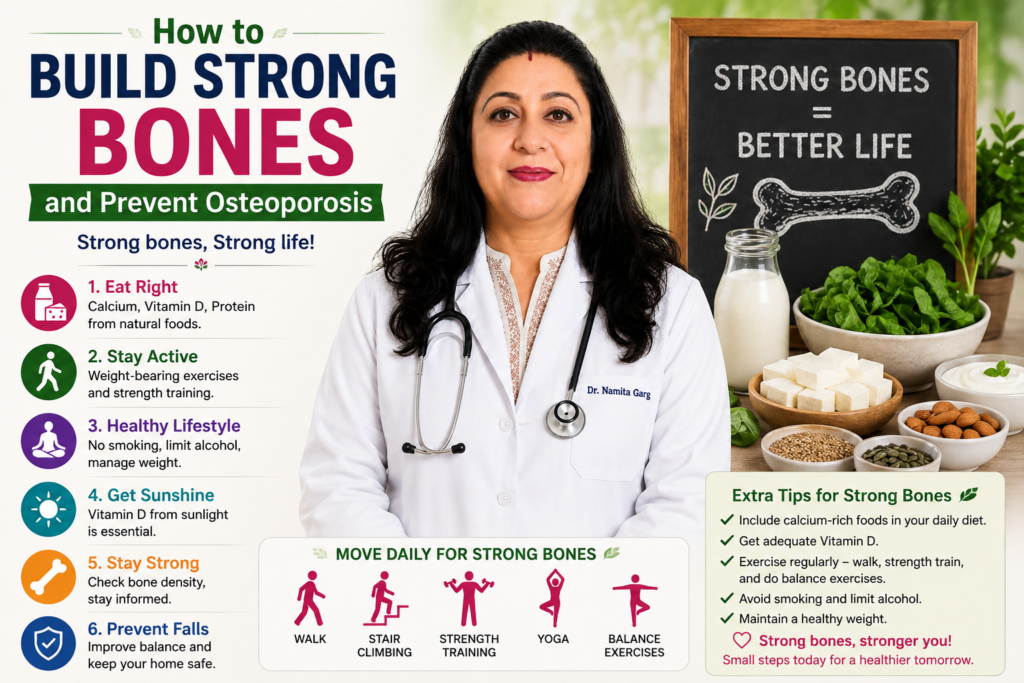
मजबूत हड्डियों के 6 स्तंभ
यदि आप अपनी हड्डियों की रक्षा करना चाहते हैं, तो इन छह क्षेत्रों पर ध्यान केंद्रित करें:
1. कैल्शियम युक्त पोषण
2. पर्याप्त विटामिन डी
3. भार वहन करने वाले व्यायाम
4. शक्ति प्रशिक्षण
5. स्वस्थ जीवनशैली की आदतें
6. उचित चिकित्सा जांच
आइए इनमें से प्रत्येक को देखें।.
1. कैल्शियम: हड्डियों का निर्माण करने वाला पदार्थ
हड्डियों को मजबूत बनाए रखने के लिए कैल्शियम एक आवश्यक खनिज है।.
आपका शरीर मांसपेशियों के संकुचन और तंत्रिका क्रिया सहित अन्य महत्वपूर्ण कार्यों के लिए भी कैल्शियम का उपयोग करता है।.
यदि आपके आहार में कैल्शियम की मात्रा अपर्याप्त है, तो आपके शरीर में रक्त में कैल्शियम के स्तर को बनाए रखने के लिए तंत्र मौजूद होते हैं, और समय के साथ हड्डियां भी प्रभावित होने वाले स्रोतों में से एक बन सकती हैं।.
इसीलिए जीवन भर पर्याप्त मात्रा में कैल्शियम का सेवन महत्वपूर्ण है।.
भारतीय महिलाएं भोजन से कैल्शियम कैसे प्राप्त कर सकती हैं?
आपको महंगे सप्लीमेंट्स की जरूरत नहीं है।.
कई रोजमर्रा के खाद्य पदार्थ कैल्शियम प्रदान कर सकते हैं।.
दूध से बने खाद्य पदार्थ
- दूध
- दही
- पनीर
- कुछ पनीर
पौधों के स्रोत
- तिल
- रागी
- टोफू
- सोया खाद्य पदार्थ
- हरी पत्तेदार सब्जियां
- ब्रोकोली
- बादाम
- कैल्शियम युक्त अन्य खाद्य पदार्थ
कुछ खाद्य पदार्थों और पेय पदार्थों में कैल्शियम भी मिलाया जाता है।.
महत्वपूर्ण बात यह है कि आपका कुल आहार सेवन, कोई जादुई भोजन नहीं।.
क्या हड्डियों को मजबूत रखने के लिए दूध जरूरी है?
नहीं।.
दूध कैल्शियम का एक सुविधाजनक स्रोत है, लेकिन यह एकमात्र स्रोत नहीं है।.
यदि आप दूध का सेवन नहीं करते हैं, तो आप अन्य खाद्य पदार्थों से कैल्शियम प्राप्त कर सकते हैं।.
उदाहरण के लिए:
दही + रागी + तिल + टोफू + पत्तेदार सब्जियां
ये सभी चीजें हड्डियों को मजबूत बनाने वाले आहार में योगदान कर सकती हैं।.
महत्वपूर्ण बात यह है कि आपको अपने संपूर्ण आहार से पर्याप्त कैल्शियम मिले।.
2. विटामिन डी: कैल्शियम का सहयोगी
कैल्शियम महत्वपूर्ण है, लेकिन आपके शरीर को कैल्शियम को अवशोषित करने में मदद करने के लिए विटामिन डी की भी आवश्यकता होती है।.
इसलिए विटामिन डी हड्डियों के स्वास्थ्य में महत्वपूर्ण भूमिका निभाता है।.
स्रोत निम्नलिखित हैं:
- सूर्य का प्रकाश
- पोषक तत्वों से भरपूर खाद्य पदार्थ
- अंडे
- वसायुक्त मछली
- विटामिन डी युक्त कुछ अन्य खाद्य पदार्थ
हालांकि, सूर्य के प्रकाश से आपको मिलने वाले विटामिन डी की मात्रा त्वचा के संपर्क में आने, दिन के समय, मौसम, स्थान और व्यक्तिगत परिस्थितियों जैसे कारकों के आधार पर भिन्न होती है।.
इसलिए यह न मान लें कि कुछ मिनट बाहर बिताने से ही सभी को पर्याप्त पोषण मिल जाता है।.
यदि किसी कमी का संदेह हो, तो आपका डॉक्टर परीक्षण और पूरक आहार लेने की सलाह दे सकता है।.
क्या आपको हर दिन विटामिन डी लेना चाहिए?
स्वचालित रूप से नहीं।.
विटामिन डी की खुराक आपके आहार सेवन, जोखिम कारकों, परीक्षण के समय रक्त में विटामिन डी के स्तर और चिकित्सकीय सलाह पर निर्भर होनी चाहिए।.
अधिक है हमेशा बेहतर नहीं.
चिकित्सकीय देखरेख के बिना उच्च मात्रा में सप्लीमेंट लेना हानिकारक हो सकता है।.
कैल्शियम सप्लीमेंट्स के मामले में भी यही सिद्धांत लागू होता है।.
एसीओजी का कहना है कि जिन लोगों को ऑस्टियोपोरोसिस, विटामिन डी की कमी या फ्रैक्चर का इतिहास नहीं है, उनके लिए सप्लीमेंट लेने के बजाय भोजन के माध्यम से कैल्शियम और विटामिन डी प्राप्त करना अक्सर बेहतर होता है।.
3. पैदल चलना अच्छा है—लेकिन यहीं न रुकें।
चलना एक बेहतरीन आदत है।.
यह हृदय संबंधी स्वास्थ्य में मदद करता है और यह एक भार वहन करने वाली गतिविधि है जो हड्डियों के स्वास्थ्य को बनाए रखने में सहायक हो सकती है।.
लेकिन अगर आपका लक्ष्य बढ़ती उम्र के साथ-साथ हड्डियों और मांसपेशियों को मजबूत बनाए रखना है, शक्ति प्रशिक्षण को भी उतना ही ध्यान देने की आवश्यकता है।.
हड्डी यांत्रिक भार के प्रति प्रतिक्रिया करती है।.
और मांसपेशियों को मजबूत बने रहने के लिए प्रतिरोध की आवश्यकता होती है।.
इसलिए एक संतुलित व्यायाम दिनचर्या में निम्नलिखित शामिल हो सकते हैं:
- तेज़ी से चलना
- सीढ़ियाँ चढ़ना
- नृत्य
- प्रतिरोध संघों
- हल्के वजन
- स्क्वाट या बैठने से खड़े होने के व्यायाम
- आपकी फिटनेस के स्तर के अनुसार अन्य शक्ति व्यायाम भी उपयुक्त हैं।
एसीओजी ऑस्टियोपोरोसिस की रोकथाम के महत्वपूर्ण घटकों के रूप में वजन उठाने वाले व्यायाम और शक्ति प्रशिक्षण की सिफारिश करता है।.
4. 40 वर्ष की आयु के बाद शक्ति प्रशिक्षण विशेष रूप से महत्वपूर्ण है।
कई महिलाएं कार्डियो पर बहुत अधिक ध्यान देती हैं।.
वे चलते हैं।.
वे घर के काम करते हैं।.
वे कभी-कभी योग करते हैं।.
ये सभी उपयोगी हो सकते हैं।.
लेकिन जैसे-जैसे हमारी उम्र बढ़ती है, मांसपेशियों को बनाए रखना और भी महत्वपूर्ण हो जाता है।.
मजबूत मांसपेशियां निम्नलिखित में सहायक होती हैं:
- अपनी हड्डियों को सहारा दें
- संतुलन में सुधार करें
- स्वतंत्रता बनाए रखें
- गिरने के जोखिम को कम करें
- स्वस्थ गतिविधि का समर्थन करें
- शारीरिक कार्यक्षमता बनाए रखें
इसलिए ऐसा मत सोचो:
“"वजन उठाना सिर्फ युवाओं के लिए है।"”
उचित रूप से निर्धारित प्रतिरोध व्यायाम मध्य आयु और उसके बाद भी अत्यंत लाभदायक हो सकता है।.
यदि आपको ऑस्टियोपोरोसिस, पहले कभी फ्रैक्चर हुआ हो या कोई गंभीर स्वास्थ्य समस्या हो, तो किसी स्वास्थ्य पेशेवर या योग्य फिजियोथेरेपिस्ट से सुरक्षित व्यायाम विकल्पों के बारे में सलाह लें।.
5. संतुलन प्रशिक्षण से हड्डियों के फ्रैक्चर को रोकने में मदद मिलती है
मजबूत हड्डियां जरूरी हैं।.
लेकिन गिरने से बचाव करना भी उतना ही महत्वपूर्ण है।.
गिरने से कमजोर हड्डियां गंभीर फ्रैक्चर में बदल सकती हैं।.
संतुलन और शारीरिक मुद्रा में सुधार करने वाली गतिविधियाँ—जैसे कि उपयुक्त योग, ताई ची और संतुलन व्यायाम—गिरने के जोखिम को कम करने में मदद कर सकती हैं।.
जैसे-जैसे हमारी उम्र बढ़ती है, यह और भी महत्वपूर्ण हो जाता है।.
हड्डियों के स्वास्थ्य को इस प्रकार समझें:
मजबूत हड्डियां + मजबूत मांसपेशियां + अच्छा संतुलन = बेहतर सुरक्षा।.
6. क्रैश डाइट का पालन न करें
यह उन महिलाओं के लिए विशेष रूप से महत्वपूर्ण है जो वजन कम करने की कोशिश कर रही हैं।.
अत्यधिक आहारबंदी से पर्याप्त मात्रा में पोषक तत्व प्राप्त करना मुश्किल हो सकता है:
- प्रोटीन
- कैल्शियम
- विटामिन डी
- अन्य आवश्यक पोषक तत्व
तेजी से या अत्यधिक वजन घटने से मांसपेशियों में भी कमी आ सकती है।.
इसलिए यदि आप वजन कम करने की कोशिश कर रहे हैं, तो यह न सोचें:
“मैं जितना कम खाऊंगा, उतना ही स्वस्थ हो जाऊंगा।”
बजाय:
पर्याप्त पोषक तत्व खाएं और साथ ही मात्रा का उचित प्रबंधन करें।.
वजन प्रबंधन से आपकी मांसपेशियों और हड्डियों की रक्षा होनी चाहिए, न कि उन्हें नुकसान पहुंचना चाहिए।.
हड्डियों के स्वास्थ्य के लिए प्रोटीन भी महत्वपूर्ण है।
जब लोग ऑस्टियोपोरोसिस के बारे में बात करते हैं, तो वे आमतौर पर कैल्शियम के बारे में बात करते हैं।.
लेकिन हड्डियां केवल कैल्शियम से ही नहीं बनी होती हैं।.
प्रोटीन अस्थि ऊतकों का भी एक महत्वपूर्ण घटक है, और पर्याप्त प्रोटीन का सेवन मांसपेशियों के स्वास्थ्य को बढ़ावा देता है।.
उपयुक्त प्रोटीन स्रोतों को शामिल करें, जैसे:
- अंडे
- दल
- फलियाँ
- चना
- सोया
- टोफू
- दही
- पनीर
- मछली
- मुर्गा
- अन्य उपयुक्त प्रोटीन युक्त खाद्य पदार्थ
आपकी प्रोटीन की सटीक आवश्यकता आपकी उम्र, शरीर के आकार, गतिविधि स्तर और स्वास्थ्य स्थितियों पर निर्भर करती है।.
रागी के बारे में क्या?
रागी एक लोकप्रिय भारतीय खाद्य पदार्थ है और यह आहार में कैल्शियम की मात्रा को बढ़ा सकता है।.
यह संतुलित खानपान की दिनचर्या का एक उपयोगी हिस्सा हो सकता है।.
लेकिन यह सोचने की गलती न करें:
“मैं रागी खाता हूँ, इसलिए मेरी हड्डियाँ सुरक्षित रहती हैं।”
हड्डियों का स्वास्थ्य इस पर निर्भर करता है पूरी तस्वीर:
कैल्शियम + विटामिन डी + प्रोटीन + व्यायाम + मांसपेशियों की मजबूती + स्वस्थ जीवनशैली + उचित चिकित्सा देखभाल।.
रागी एक उपयोगी खाद्य पदार्थ हो सकता है - यह ऑस्टियोपोरोसिस का इलाज नहीं है।.
तिल के बीजों के बारे में क्या?
तिल में कैल्शियम होता है और इसे संतुलित आहार में शामिल किया जा सकता है।.
आप इनका उपयोग इनमें कर सकते हैं:
- चटनी
- सलाद
- सब्जी के व्यंजन
- घर के बने स्नैक्स
- अन्य भोजन
लेकिन याद रखें कि बीजों में कैलोरी की मात्रा अधिक होती है।.
एक छोटी, संतुलित मात्रा ही काफी है।.
किसी भोजन को केवल इसलिए अधिक मात्रा में खाना जरूरी नहीं है क्योंकि वह "स्वस्थ" है।.
7. धूम्रपान बंद करें
धूम्रपान हड्डियों के स्वास्थ्य के लिए हानिकारक है और ऑस्टियोपोरोसिस और फ्रैक्चर के लिए एक महत्वपूर्ण परिवर्तनीय जोखिम कारक है।.
अगर आप धूम्रपान करते हैं, तो इसे छोड़ना आपके संपूर्ण स्वास्थ्य के लिए सबसे अच्छी चीजों में से एक है - न केवल आपकी हड्डियों के लिए।.
और परोक्ष धूम्रपान से बचना भी समझदारी भरा कदम है।.
8. अत्यधिक शराब का सेवन सीमित करें
अधिक मात्रा में शराब का सेवन हड्डियों के स्वास्थ्य पर नकारात्मक प्रभाव डाल सकता है और गिरने के जोखिम को बढ़ा सकता है।.
यदि आप शराब पीते हैं, तो चिकित्सकीय रूप से अनुशंसित सीमा के भीतर ही इसका सेवन करें।.
जो महिलाएं शराब नहीं पीती हैं, उनके लिए "हड्डियों को लाभ पहुंचाने वाले" गुणों के लिए शराब पीना शुरू करने का कोई स्वास्थ्य संबंधी कारण नहीं है।“
9. अत्यधिक मात्रा में कैफीन का सेवन करते समय सावधानी बरतें।
महिलाओं को कैफीन से पूरी तरह डरने की जरूरत नहीं है।.
एक सामान्य कप चाय या कॉफी पीने से आपकी हड्डियां नष्ट नहीं हो रही हैं।.
बड़ा मुद्दा यह है कि अत्यधिक सेवन, विशेषकर तब जब आहार में कैल्शियम की पहले से ही कमी हो।.
तो सोचने के बजाय:
“कॉफी हड्डियों के लिए हानिकारक है।”
सोचना:
“"क्या मुझे समग्र रूप से पर्याप्त पोषण मिल रहा है, और क्या मैं अत्यधिक मात्रा में कैफीन का सेवन कर रहा हूँ?"”
एसीओजी का कहना है कि कम अस्थि घनत्व वाली कुछ महिलाओं में कैफीन का सेवन सीमित करना उचित हो सकता है।.
10. रजोनिवृत्ति के वर्षों को नज़रअंदाज़ न करें
रजोनिवृत्ति हड्डियों के स्वास्थ्य के लिए विशेष रूप से महत्वपूर्ण समय है।.
एस्ट्रोजन का स्तर गिरने पर हड्डियों का क्षय तेजी से हो सकता है।.
इसका मतलब यह है कि रजोनिवृत्ति के करीब या उससे गुजर रही महिलाओं को निम्नलिखित बातों पर विशेष ध्यान देना चाहिए:
- कैल्शियम का सेवन
- विटामिन डी
- प्रोटीन
- व्यायाम
- मज़बूती की ट्रेनिंग
- शरीर का वजन
- धूम्रपान
- शराब
- गिरने से बचाव
एसीओजी का कहना है कि रजोनिवृत्ति के आसपास की अवधि हड्डियों के तेजी से क्षय होने से जुड़ी होती है।.
क्या हार्मोन थेरेपी से ऑस्टियोपोरोसिस को रोका जा सकता है?
हार्मोन थेरेपी हड्डियों के स्वास्थ्य को प्रभावित कर सकती है, लेकिन यह हर महिला के लिए उपयुक्त नहीं और इसे केवल इसलिए शुरू नहीं किया जाना चाहिए क्योंकि आप ऑस्टियोपोरोसिस को लेकर चिंतित हैं।.
यह निर्णय आपकी उम्र, रजोनिवृत्ति के लक्षणों, चिकित्सीय इतिहास, फ्रैक्चर के जोखिम और अन्य कारकों पर निर्भर करता है।.
यदि आप हार्मोन थेरेपी पर विचार कर रहे हैं, तो इसके संभावित लाभों और जोखिमों के बारे में अपने डॉक्टर से चर्चा करें।.
सोशल मीडिया पर मिली सलाह के आधार पर हार्मोन लेना शुरू न करें।.
ऑस्टियोपोरोसिस होने की संभावना किसे अधिक होती है?
यदि आपमें निम्नलिखित कारक मौजूद हैं तो आपका जोखिम अधिक हो सकता है:
- बड़ी उम्र
- रजोनिवृत्ति के बाद की स्थिति
- पिछला फ्रैक्चर
- ऑस्टियोपोरोसिस या कूल्हे के फ्रैक्चर का पारिवारिक इतिहास
- शरीर का कम वजन
- धूम्रपान
- अत्यधिक शराब का सेवन
- कैल्शियम या विटामिन डी का कम सेवन
- शारीरिक निष्क्रियता
- कुछ दवाइयाँ
- कुछ दीर्घकालिक चिकित्सा स्थितियां
- समय से पहले रजोनिवृत्ति या अंडाशय की कार्यक्षमता में कमी
एक जोखिम कारक होने का मतलब यह नहीं है कि आपको निश्चित रूप से ऑस्टियोपोरोसिस हो जाएगा।.
लेकिन इसका मतलब यह हो सकता है कि आपके डॉक्टर को आपके जोखिम का अधिक सावधानीपूर्वक आकलन करना चाहिए।.
अस्थि घनत्व परीक्षण क्या है?
A अस्थि खनिज घनत्व (बीएमडी) परीक्षण, डीएक्सए स्कैन का उपयोग करके आमतौर पर किया जाने वाला यह परीक्षण, हड्डी के घनत्व को मापता है।.
इससे निम्नलिखित की पहचान करने में मदद मिल सकती है:
- सामान्य अस्थि घनत्व
- हड्डियों का घनत्व कम होना (ऑस्टियोपेनिया)
- ऑस्टियोपोरोसिस
यह परीक्षण त्वरित है और इसमें बहुत कम मात्रा में विकिरण का उपयोग होता है।.
एसीओजी का कहना है कि 65 वर्ष और उससे अधिक आयु की सभी महिलाओं को बीएमडी परीक्षण करवाना चाहिए, जबकि कम उम्र की रजोनिवृत्ति के बाद की महिलाओं को तब परीक्षण करवाना चाहिए जब उनमें फ्रैक्चर का खतरा अधिक हो।.
आपके डॉक्टर आपके व्यक्तिगत जोखिम कारकों के आधार पर पहले ही परीक्षण कराने की सलाह दे सकते हैं।.
ऑस्टियोपेनिया का मतलब यह नहीं है कि आपको ऑस्टियोपोरोसिस भी हो जाएगा।
आप यह शब्द सुन सकते हैं ऑस्टियोपेनिया अस्थि घनत्व परीक्षण के बाद।.
ऑस्टियोपेनिया का अर्थ है हड्डियों का घनत्व सामान्य से कम होना, लेकिन इतना कम नहीं कि उसे ऑस्टियोपोरोसिस की परिभाषा में शामिल किया जा सके।.
यह एक चेतावनी है जिस पर ध्यान देना चाहिए—घबराहट का कारण नहीं।.
उचित व्यायाम, पर्याप्त कैल्शियम और विटामिन डी का सेवन, और धूम्रपान से परहेज जैसे जीवनशैली संबंधी उपाय महत्वपूर्ण हो सकते हैं। फ्रैक्चर के उच्च जोखिम वाले कुछ लोगों को दवा की भी आवश्यकता हो सकती है।.
क्या ऑस्टियोपोरोसिस को पूरी तरह से रोका जा सकता है?
कोई गारंटी नहीं है।.
कुछ जोखिम कारकों को बदला नहीं जा सकता।.
आपकी उम्र, आनुवंशिकता, पारिवारिक इतिहास और हार्मोनल परिवर्तन आपके नियंत्रण में नहीं हैं।.
लेकिन कई कारक हैं परिवर्तनीय।.
तुम कर सकते हो:
- संतुलित आहार लें
- पर्याप्त मात्रा में कैल्शियम प्राप्त करें
- पर्याप्त मात्रा में विटामिन डी बनाए रखें।
- पर्याप्त मात्रा में प्रोटीन का सेवन करें।
- नियमित रूप से व्यायाम करें
- अपनी मांसपेशियों को मजबूत करें
- धूम्रपान बंद करें
- अत्यधिक शराब का सेवन सीमित करें।
- शरीर की स्वस्थ संरचना बनाए रखें
- गिरने से बचाव करें
- उचित जांच करवाएं
इससे आपकी दीर्घकालिक हड्डियों के स्वास्थ्य में महत्वपूर्ण अंतर आ सकता है।.
फ्रैक्चर होने का इंतजार मत करो
ऑस्टियोपोरोसिस की सबसे बड़ी समस्याओं में से एक यह है कि आपको शायद पता ही न चले कि आपकी हड्डियां कमजोर हो रही हैं।.
आपको पूरी तरह से सामान्य महसूस हो सकता है।.
आप सामान्य रूप से चल सकते हैं।.
आपको दर्द नहीं हो सकता है।.
फिर एक दिन, एक मामूली सी चोट लगने से कलाई, रीढ़ की हड्डी या कूल्हे में फ्रैक्चर हो जाता है।.
इसीलिए रोकथाम महत्वपूर्ण है।.
अपनी हड्डियों से चेतावनी मिलने का इंतजार मत करो।.
एक सरल भारतीय अस्थि-स्वास्थ्य दिवस
आपको किसी जटिल आहार की आवश्यकता नहीं है।.
उदाहरण के लिए:
सुबह
प्रोटीन और कैल्शियम युक्त भोजन से युक्त संतुलित नाश्ता।.
सुबह के दौरान
पूरा फल।.
दिन का खाना
दाल या प्रोटीन का कोई अन्य स्रोत + सब्जियां + उपयुक्त साबुत अनाज कार्बोहाइड्रेट + दही।.
शाम
उचित मात्रा में मेवे या बीज।.
रात का खाना
सब्जियां + प्रोटीन + कार्बोहाइड्रेट की उचित मात्रा।.
पूरे दिन
पर्याप्त पानी और नियमित व्यायाम।.
खाने की सही मात्रा और उसका सेवन आपकी स्वास्थ्य संबंधी जरूरतों, खान-पान की पसंद और चिकित्सीय स्थितियों के अनुसार तय किया जाना चाहिए।.
आपकी दैनिक हड्डियों की जांच सूची
खुद से पूछें:
🥛 कैल्शियम
क्या मैं नियमित रूप से कैल्शियम युक्त खाद्य पदार्थ खा रहा हूँ?
☀️ विटामिन डी
क्या मुझे पर्याप्त मात्रा में विटामिन डी मिल रहा है?
🍳 प्रोटीन
क्या मैं मांसपेशियों को सहारा देने के लिए पर्याप्त प्रोटीन खा रहा हूँ?
🚶 व्यायाम
क्या मैं वजन उठाने वाली गतिविधि कर रहा हूँ?
💪 ताकत
क्या मैं अपनी मांसपेशियों को चुनौती दे रहा हूँ?
🧘 संतुलन
क्या मैं अपना संतुलन और गतिशीलता ठीक से बनाए रख पा रहा हूँ?
🚭 धूम्रपान
क्या मैं धूम्रपान करता हूँ?
🍷 शराब
क्या मैं अत्यधिक शराब पी रहा हूँ?
⚖️ वज़न
क्या मैं क्रैश डाइटिंग किए बिना अपने शरीर की स्वस्थ संरचना को बनाए रख पा रहा हूँ?
🩺 स्क्रीनिंग
क्या मुझमें ऐसे जोखिम कारक हैं जिनके लिए अस्थि घनत्व मूल्यांकन की आवश्यकता है?
यदि कई सवालों के जवाब आपको चिंतित करते हैं, तो एक सप्ताह में सब कुछ ठीक करने की कोशिश न करें।.
एक या दो बदलावों से शुरुआत करें और धीरे-धीरे आगे बढ़ें।.
तनमानस्वस्थ डॉक्टर का निष्कर्ष
मजबूत हड्डियां जीवन भर के परिश्रम से बनती हैं।.
आप 60 साल की उम्र तक इंतजार नहीं कर सकते और अचानक हड्डियों के स्वास्थ्य के प्रति गंभीर होने का फैसला नहीं कर सकते।.
इसकी नींव बहुत पहले ही रखी जाती है।.
अच्छा खाएं।.
पर्याप्त मात्रा में कैल्शियम और विटामिन डी प्राप्त करें।.
पर्याप्त मात्रा में प्रोटीन का सेवन करें।.
टहलना।.
शक्ति प्रशिक्षण।.
संतुलन पर काम करें।.
धूम्रपान न करें।.
अत्यधिक शराब का सेवन न करें।.
गिरने से खुद को बचाएं।.
और रजोनिवृत्ति के दौरान और उसके बाद हड्डियों के स्वास्थ्य पर विशेष ध्यान दें।.
सबसे महत्वपूर्ण बात, याद रखें:
ऑस्टियोपोरोसिस केवल "बुजुर्ग महिलाओं की बीमारी" नहीं है।“
आज आपकी हड्डियों का स्वास्थ्य कल आपकी आत्मनिर्भरता में एक निवेश है।.
मजबूत हड्डियां आपको बढ़ती उम्र में भी सक्रिय, गतिशील और स्वतंत्र रहने में मदद करती हैं।.
इसलिए किसी फ्रैक्चर के होने का इंतजार न करें, यही आपके लिए चेतावनी होगी।.
आज से ही अपनी हड्डियों को मजबूत बनाना शुरू करें।.
महत्वपूर्ण चिकित्सीय सूचना
यह लेख सामान्य स्वास्थ्य शिक्षा के लिए है और व्यक्तिगत चिकित्सा सलाह, निदान या उपचार का विकल्प नहीं है। आपकी कैल्शियम, विटामिन डी, व्यायाम और स्वास्थ्य जांच की आवश्यकताएं आपकी उम्र, चिकित्सा इतिहास, दवाओं और फ्रैक्चर के जोखिम पर निर्भर करती हैं। यदि आपको मामूली गिरने के बाद फ्रैक्चर हुआ है, ऑस्टियोपोरोसिस के महत्वपूर्ण जोखिम कारक हैं, रजोनिवृत्ति के बाद हड्डियों के स्वास्थ्य को लेकर चिंता है, या आप सप्लीमेंट या दवा लेने पर विचार कर रहे हैं, तो अपनी स्थिति के बारे में किसी योग्य स्वास्थ्य पेशेवर से परामर्श करें।.