
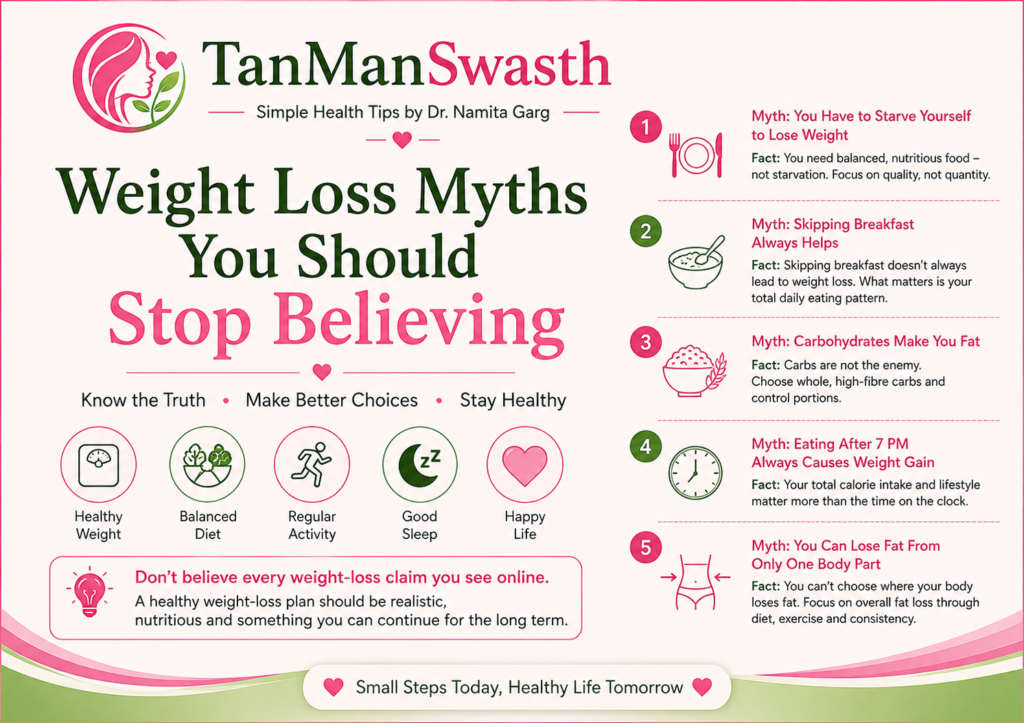
वजन घटाने को लेकर कई भ्रामक सलाहें मौजूद हैं।.
आपने शायद सुना होगा कि खाना न खाने से वजन कम करने में मदद मिलती है, कार्बोहाइड्रेट से हमेशा परहेज करना चाहिए, या कोई विशेष पेय शरीर की चर्बी को "पिघला" सकता है।.
इनमें से कुछ दावे विश्वसनीय लगते हैं—लेकिन जरूरी नहीं कि वे सच हों।.
अंतर को समझना वजन घटाने से जुड़े तथ्य और मिथक इससे आपको स्वास्थ्यवर्धक और अधिक टिकाऊ विकल्प चुनने में मदद मिल सकती है।.
1. मिथक: वजन घटाने के लिए आपको भूखा रहना पड़ता है
तथ्य: वजन घटाने के लिए आपको खुद को भूखा रखने की जरूरत नहीं है।.
बहुत कम खाना खाने से भूख, थकान और लंबे समय तक आहार का पालन करने में कठिनाई हो सकती है।.
एक टिकाऊ वजन प्रबंधन योजना में पर्याप्त पौष्टिक भोजन उपलब्ध होना चाहिए, साथ ही यह आपको अपने कुल कैलोरी सेवन को नियंत्रित करने में भी मदद करनी चाहिए।.
ध्यान केंद्रित करना:
- सब्जियां और सलाद
- पर्याप्त प्रोटीन
- साबुत अनाज और अन्य उच्च फाइबर वाले खाद्य पदार्थ
- फलों को उचित मात्रा में खाएं।
- सीमित मात्रा में स्वस्थ वसा
- पर्याप्त पानी
लक्ष्य जितना हो सके उतना कम खाना नहीं है। लक्ष्य बेहतर और नियमित रूप से खाना है।.
2. मिथक: नाश्ता न करने से हमेशा वजन कम होता है
तथ्य: नाश्ता न करने से अपने आप वजन कम नहीं हो जाता।.
कुछ लोग सुबह का नाश्ता करना पसंद करते हैं, जबकि अन्य लोग स्वाभाविक रूप से देर से पहला भोजन करना पसंद कर सकते हैं।.
आपके लिए इससे भी ज्यादा महत्वपूर्ण है समग्र खान-पान का तरीका, भोजन की गुणवत्ता और कुल ऊर्जा सेवन.
यदि नाश्ता न करने से आपको बाद में बहुत भूख लगती है और आप अधिक खाना खा लेते हैं, तो यह आपके लिए एक उपयोगी रणनीति नहीं हो सकती है।.
ऐसा खान-पान चुनें जिसे आप आराम से और लगातार बनाए रख सकें।.
3. मिथक: कार्बोहाइड्रेट से मोटापा बढ़ता है
तथ्य: वजन बढ़ने के लिए कार्बोहाइड्रेट स्वतः जिम्मेदार नहीं होते हैं।.
कार्बोहाइड्रेट युक्त खाद्य पदार्थों में निम्नलिखित शामिल हैं:
- चावल
- रोटी
- जई
- बाजरा
- फल
- आलू
- सेम और दालें
आहार का प्रकार, मात्रा और समग्र आहार पैटर्न मायने रखता है।.
अत्यधिक परिष्कृत खाद्य पदार्थ और शर्करायुक्त खाद्य पदार्थ अतिरिक्त कैलोरी का सेवन करना आसान बना सकते हैं, जबकि उच्च फाइबर वाले कार्बोहाइड्रेट युक्त खाद्य पदार्थ स्वस्थ आहार का हिस्सा हो सकते हैं।.
आपको कार्बोहाइड्रेट को पूरी तरह से खत्म करने की जरूरत नहीं है। आपको उन्हें सोच-समझकर चुनना होगा और उनकी मात्रा को नियंत्रित करना होगा।.
4. मिथक: शाम 7 बजे के बाद खाना खाने से हमेशा वजन बढ़ता है
तथ्य: ऐसा कोई सार्वभौमिक नियम नहीं है कि शाम 7 बजे के बाद खाने से अपने आप वजन बढ़ जाता है।.
किसी विशेष घड़ी के समय की तुलना में आपका समग्र भोजन सेवन और जीवनशैली अधिक महत्वपूर्ण हैं।.
हालांकि, देर रात बहुत अधिक भोजन करने से कुछ लोगों के लिए अपने कुल भोजन सेवन को नियंत्रित करना या आराम से सोना मुश्किल हो सकता है।.
घड़ी पर ही ध्यान केंद्रित करने के बजाय, इन बातों पर ध्यान दें:
- भाग का आकार
- खाद्य गुणवत्ता
- भूख और तृप्ति
- आपकी दैनिक खानपान की आदतें
- आपका सोने का समय
5. मिथक: आप शरीर के केवल एक हिस्से से ही चर्बी घटा सकते हैं
तथ्य: आप निश्चित रूप से यह नहीं चुन सकते कि आपके शरीर का वसा सबसे पहले किस हिस्से से कम होगा।.
पेट के व्यायाम जैसे व्यायाम आपके पेट की मांसपेशियों को मजबूत कर सकते हैं, लेकिन वे इस बात की गारंटी नहीं देते कि चर्बी विशेष रूप से आपके पेट से गायब हो जाएगी।.
जैसे-जैसे शरीर में कुल वसा कम होती है, आपका शरीर आनुवंशिकी, हार्मोन और व्यक्तिगत शारीरिक संरचना के आधार पर यह तय करता है कि वसा कहाँ से कम होगी।.
का संयोजन स्वस्थ खानपान, नियमित गतिविधि और निरंतरता शरीर के किसी एक हिस्से को लक्षित करने की कोशिश करने की तुलना में यह एक बेहतर तरीका है।.
महत्वपूर्ण संदेश
ऑनलाइन दिखने वाले हर वजन घटाने के दावे पर विश्वास न करें।.
वजन घटाने की एक स्वस्थ योजना व्यावहारिक, पौष्टिक और ऐसी होनी चाहिए जिसे आप लंबे समय तक जारी रख सकें।.
6. मिथक: डिटॉक्स ड्रिंक्स शरीर की चर्बी को पिघला देते हैं
तथ्य: ऐसा कोई विशेष पेय नहीं है जो अपने आप शरीर की चर्बी पिघला दे।.
नींबू पानी, डिटॉक्स ड्रिंक्स और इसी तरह के पेय पदार्थ एक स्वस्थ दिनचर्या का हिस्सा हो सकते हैं, लेकिन वे संतुलित आहार और नियमित शारीरिक गतिविधि का विकल्प नहीं हैं।.
आपके लिवर और किडनी पहले से ही शरीर से अपशिष्ट पदार्थों को निकालने में महत्वपूर्ण भूमिका निभाते हैं।.
“डिटॉक्स” उत्पादों पर निर्भर रहने के बजाय, इन बातों पर ध्यान दें:
- पर्याप्त पानी
- सब्जियाँ और फल
- फाइबर युक्त खाद्य पदार्थ
- पर्याप्त प्रोटीन
- नियमित शारीरिक गतिविधि
- अच्छी नींद
7. मिथक: कुछ खाद्य पदार्थ वसा को कम कर सकते हैं
तथ्य: कोई भी एक खाद्य पदार्थ जादुई रूप से शरीर की चर्बी को नहीं पिघला सकता।.
आपको ग्रीन टी, मिर्च, नींबू या कुछ मसालों जैसे खाद्य पदार्थों के बारे में दावे सुनने को मिल सकते हैं।.
कुछ खाद्य पदार्थों या पेय पदार्थों का चयापचय पर मामूली प्रभाव हो सकता है, लेकिन ये प्रभाव नगण्य होते हैं। यह समग्र स्वस्थ खानपान का विकल्प नहीं है।.
वजन प्रबंधन आपके समग्र आहार, गतिविधि, नींद और जीवनशैली पर निर्भर करता है।.
8. मिथक: पसीना आने का मतलब है कि आप अधिक वसा जला रहे हैं
तथ्य: पसीना आना मुख्य रूप से शरीर को अपना तापमान नियंत्रित करने में मदद करता है।.
भारी व्यायाम के तुरंत बाद आपका वजन थोड़ा कम हो सकता है क्योंकि पसीने के माध्यम से आपके शरीर से पानी निकल जाता है। लेकिन यह शरीर की चर्बी कम करने जैसा नहीं है.
व्यायाम के बाद शरीर से निकले तरल पदार्थों की भरपाई करना महत्वपूर्ण है।.
अपने पसीने की मात्रा के आधार पर अपनी प्रगति का आकलन न करें।.
9. मिथक: वजन घटाने के लिए सप्लीमेंट्स की आवश्यकता होती है
तथ्य: ज्यादातर लोगों को स्वस्थ वजन प्रबंधन के लिए वजन घटाने वाले सप्लीमेंट की जरूरत नहीं होती है।.
कई ऐसे उत्पाद जिन्हें "वसा कम करने वाले" या तेजी से वजन घटाने के समाधान के रूप में बेचा जाता है, उनके बारे में सीमित प्रमाण हो सकते हैं और वे सभी के लिए उपयुक्त नहीं हो सकते हैं।.
कुछ पदार्थ दवाओं के साथ परस्पर क्रिया कर सकते हैं या अवांछित प्रभाव पैदा कर सकते हैं।.
वजन घटाने वाले किसी भी सप्लीमेंट का सेवन करने से पहले, किसी योग्य स्वास्थ्य पेशेवर से परामर्श लें।.
भोजन, शारीरिक गतिविधि और टिकाऊ आदतें आधार बनी रहनी चाहिए।.
10. मिथक: जितनी जल्दी वजन कम होगा, उतना ही बेहतर होगा
तथ्य: तेज होना हमेशा बेहतर नहीं होता।.
अत्यधिक प्रतिबंधात्मक आहार का पालन करना मुश्किल हो सकता है और इससे आपकी पोषण संबंधी जरूरतों को पूरा करना और भी कठिन हो सकता है।.
वजन को दीर्घकालिक रूप से नियंत्रित करने के लिए क्रमिक और टिकाऊ दृष्टिकोण आम तौर पर अधिक व्यावहारिक होता है।.
हमारा ध्यान ऐसी आदतें विकसित करने पर होना चाहिए जिन्हें हम जारी रख सकें, न कि जल्द से जल्द परिणाम प्राप्त करने पर।.
11. मिथक: केवल व्यायाम करने से ही वजन कम हो जाएगा
तथ्य: व्यायाम स्वास्थ्य के लिए अत्यंत महत्वपूर्ण है, लेकिन वजन प्रबंधन में केवल व्यायाम से कहीं अधिक चीजें शामिल होती हैं।.
शारीरिक गतिविधि से निम्नलिखित में सुधार हो सकता है:
- स्वास्थ्य
- मांसपेशियों की ताकत
- हृदय स्वास्थ्य
- रक्त शर्करा नियंत्रण
- मनोदशा
- कुल मिलाकर अच्छी तरह जा रहा
लेकिन आप क्या खाते हैं, कितना खाते हैं, आपकी नींद, तनाव और जीवनशैली के अन्य कारक भी मायने रखते हैं।.
का संयोजन स्वस्थ खानपान और नियमित शारीरिक गतिविधि यह आमतौर पर एक बेहतर तरीका है।.
12. मिथक: आपको बहुत सख्त आहार का पालन करना होगा
तथ्य: स्वस्थ वजन प्रबंधन के लिए पूर्णता की आवश्यकता नहीं होती है।.
आप स्वस्थ खान-पान की दिनचर्या का पालन करते हुए भी कभी-कभी अपने पसंदीदा भोजन का आनंद ले सकते हैं।.
महत्वपूर्ण बात यह है कि आपका समग्र दिनचर्या, एक भोजन या एक दिन नहीं।.
ज्यादातर समय स्वस्थ विकल्प चुनने की कोशिश करें और सब कुछ या कुछ भी नहीं वाले दृष्टिकोण से बचें।.
स्वस्थ तरीके से वजन घटाने के तरीके
वजन घटाने के नवीनतम तरीकों का पीछा करने के बजाय, ऐसी सरल आदतें बनाएं जिन्हें आप बनाए रख सकें।.
संतुलित भोजन करें
अपने आहार में सब्जियां, प्रोटीन, फाइबर युक्त खाद्य पदार्थ और कार्बोहाइड्रेट तथा स्वस्थ वसा की उचित मात्रा शामिल करें।.
शारीरिक रूप से सक्रिय रहें
ऐसी गतिविधियाँ चुनें जिनका आप आनंद लेते हों और जिन्हें आप नियमित रूप से कर सकें, जैसे चलना, साइकिल चलाना, शक्ति व्यायाम या अन्य उपयुक्त गतिविधियाँ।.
अच्छे से सो
अपर्याप्त नींद भूख, ऊर्जा और दैनिक आदतों को प्रभावित कर सकती है।.
अपनी प्रगति पर समझदारी से नज़र रखें
केवल वजन मापने वाली मशीन पर ही ध्यान केंद्रित न करें।.
आप निम्नलिखित विकल्पों पर भी विचार कर सकते हैं:
- कमर का माप
- स्वास्थ्य
- उर्जा स्तर
- रक्तचाप
- रक्त शर्करा का स्तर, यदि आवश्यक हो
- आप कितनी नियमितता से स्वस्थ आदतों का पालन करते हैं
धैर्य रखें
स्वस्थ जीवनशैली में बदलाव आने में समय लगता है।.
अस्थायी आहार से अस्थायी परिणाम मिल सकते हैं।. दीर्घकालिक स्वास्थ्य के लिए स्थायी आदतें अधिक मूल्यवान होती हैं।.
आपको पेशेवर सलाह कब लेनी चाहिए?
यदि निम्नलिखित स्थितियां हों तो किसी स्वास्थ्य पेशेवर से बात करने पर विचार करें:
- आपके वजन में अप्रत्याशित रूप से बदलाव हो रहा है।.
- जीवनशैली में लगातार बदलाव करने के बावजूद आपको वजन कम करने में परेशानी हो रही है।.
- आपको मधुमेह, उच्च रक्तचाप या अन्य स्वास्थ्य समस्याएं हैं।.
- आप बहुत ही प्रतिबंधात्मक आहार अपनाने पर विचार कर रहे हैं।.
- आप वजन घटाने वाली दवाइयां या सप्लीमेंट लेने के बारे में सोच रहे हैं।.
- आपको भोजन या खान-पान से जुड़े अपने रिश्ते को लेकर चिंताएं हैं।.
सोशल मीडिया से मिलने वाली सामान्य सलाह का पालन करने की तुलना में एक व्यक्तिगत योजना कहीं अधिक सुरक्षित और उपयोगी हो सकती है।.
तल - रेखा
ऐसा कोई जादुई भोजन, पेय पदार्थ, व्यायाम या शॉर्टकट नहीं है जो वजन घटाने की गारंटी दे सके।.
स्वस्थ वजन प्रबंधन व्यावहारिक आदतों पर आधारित होता है जिन्हें आप बनाए रख सकते हैं।.
खुद को भूखा मत रखो।.
हर कार्बोहाइड्रेट से मत डरो।.
डिटॉक्स ड्रिंक्स पर निर्भर न रहें।.
त्वरित परिणामों के पीछे मत भागो।.
ऑनलाइन दिखने वाले हर वजन घटाने के दावे पर विश्वास न करें।.
बजाय:
अच्छा खाएं। नियमित रूप से व्यायाम करें। अच्छी नींद लें। नियमित रहें। खुद को समय दें।.
आज छोटे-छोटे कदम उठाएं, कल स्वस्थ जीवन जिएं।.
चिकित्सा संबंधी अस्वीकरण
यह लेख सामान्य स्वास्थ्य शिक्षा के लिए है और व्यक्तिगत चिकित्सा सलाह, निदान या उपचार का विकल्प नहीं है।.
यदि आपको कोई स्वास्थ्य समस्या है, आप दवाएं ले रहे हैं, गर्भवती हैं या अपने आहार या वजन प्रबंधन योजना में महत्वपूर्ण बदलाव करने पर विचार कर रहे हैं, तो किसी योग्य स्वास्थ्य देखभाल पेशेवर से परामर्श लें।.