
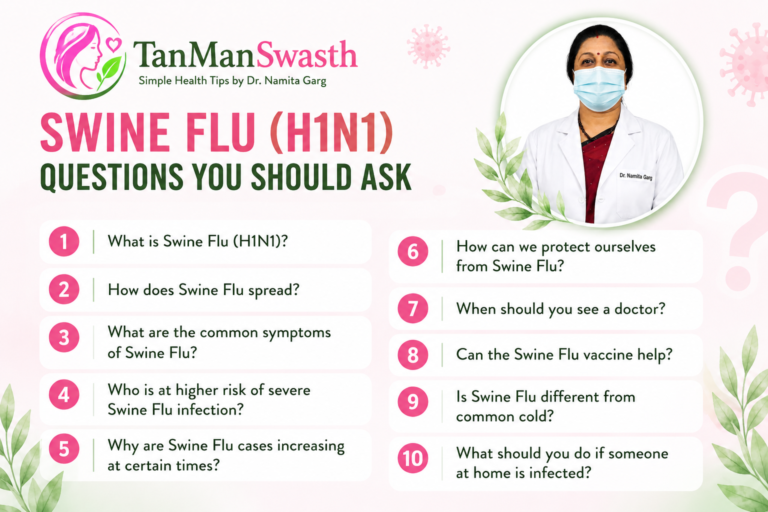
A Complete Guide to Symptoms, Causes, Prevention and Scientific Facts
Swine flu H1N1, commonly associated with the Influenza A (H1N1) virus, has again become a topic of concern when cases of seasonal influenza increase.
However, the first thing to understand is:
Not every fever and cough is swine flu, and not every H1N1 infection becomes serious.
H1N1 is now considered within the broader context of seasonal influenza. Most people recover, but influenza can cause serious illness and complications in some individuals.
The purpose of this article is to provide accurate information—not to create unnecessary fear.
What Is Swine Flu?
Swine flu is commonly associated with the Influenza A (H1N1) virus.
Influenza is a contagious respiratory illness that affects the nose, throat and sometimes the lungs. Its symptoms can range from mild to severe.
The name “swine flu” became widely known during the 2009 H1N1 pandemic. Today, H1N1 viruses are part of the broader group of influenza viruses that can circulate seasonally among humans.
Is H1N1 a New Virus?
No. H1N1 has been circulating among humans for years.
It is important to distinguish between an increase in seasonal influenza activity and the emergence of a completely new virus. An increase in cases does not automatically mean that a new pandemic or a new strain has appeared.
Therefore:
Stay informed ✔️
Take sensible precautions ✔️
Avoid unnecessary panic ✔️
How Does Swine Flu Spread?
H1N1 and other influenza viruses mainly spread through respiratory particles produced when an infected person:
- Coughs
- Sneezes
- Talks
- Breathes
People who are close to an infected person may breathe in these particles.
Transmission may also occur when contaminated hands touch the eyes, nose or mouth.
This is why respiratory hygiene and hand hygiene are important.
Why Can Influenza Spread More Easily in Crowded Places?
The risk of transmission can increase in places where many people spend time close together, particularly:
- Crowded indoor spaces
- Poorly ventilated rooms
- Schools
- Offices
- Public transport
- Hospitals and healthcare settings
Good ventilation and reducing unnecessary close contact when someone is ill can help reduce the risk of respiratory virus transmission.
How Long Does It Take for Symptoms to Appear?
The incubation period of influenza is usually around 2 days, although symptoms can generally appear approximately 1 to 4 days after exposure.
This means a person may not develop symptoms immediately after coming into contact with the virus.
Common Symptoms of Swine Flu
Influenza symptoms often begin suddenly.
Common symptoms include:
- Fever or feeling feverish
- Cough
- Sore throat
- Headache
- Muscle and body aches
- Fatigue and weakness
- Runny or blocked nose
Some people may also experience additional symptoms.
Important:
These symptoms are not unique to H1N1. Other respiratory viruses can produce similar symptoms.
Therefore:
Symptoms alone cannot confirm that a person has H1N1.
Testing and medical assessment may be required when appropriate.
How Is Swine Flu Different From the Common Cold?
The common cold and influenza can sometimes have similar symptoms, but influenza often causes a person to feel significantly more unwell.
Influenza symptoms may:
- Begin more suddenly
- Cause more severe body aches
- Cause significant fatigue
- Produce fever
- Lead to more serious complications in some people
However, symptoms can overlap, so self-diagnosis is not always reliable.
Why Does Influenza Become Serious in Some People?
Many healthy people recover from influenza without serious complications.
However, influenza can sometimes lead to complications such as:
- Pneumonia
- Severe breathing problems
- Worsening of existing chronic illnesses
- Serious complications requiring hospitalization
The risk is higher in certain vulnerable groups.
Who Is at Higher Risk of Serious Influenza?
Some people are more likely to develop severe illness or complications.
These include:
👶 Young Children
Young children, particularly very young children, can be more vulnerable to complications.
👴 Older Adults
Older adults, especially those aged 65 years and above, have a higher risk of serious influenza-related complications.
🤰 Pregnant Women
Pregnancy can increase the risk of serious illness from influenza.
❤️ People With Chronic Health Conditions
For example:
- Heart disease
- Chronic lung disease
- Asthma
- Diabetes
- Kidney disease
- Liver disease
- Certain metabolic disorders
🛡️ People With Weakened Immune Systems
People whose immune systems are weakened due to certain medical conditions or treatments may be at higher risk.
🏥 Healthcare Workers
Healthcare workers may have greater exposure to infected individuals.
Why Do Influenza Cases Increase at Certain Times?
Influenza activity can vary depending on:
- Weather
- Seasonal patterns
- Local climate
- Population movement
- Crowded indoor environments
In tropical countries, influenza viruses can circulate throughout the year, although activity may increase during certain periods.
An increase in influenza cases does not automatically mean a new pandemic is beginning.
Public health authorities continuously monitor circulating influenza viruses.
How Can You Protect Yourself From Swine Flu?
The good news is that several practical measures can help reduce the risk of infection and transmission.
1. Wash Your Hands Regularly 🧼
Wash your hands properly with soap and water, especially:
- Before eating
- After coughing or sneezing
- After returning from crowded places
When soap and water are not available, an appropriate hand sanitizer may be useful.
2. Avoid Touching Your Face With Unclean Hands
The virus can potentially enter the body through:
- Eyes
- Nose
- Mouth
Try to avoid frequently touching your face with unwashed hands.
3. Cover Your Mouth and Nose When You Cough or Sneeze 🤧
Use a tissue when possible.
Dispose of the tissue properly after use and clean your hands.
4. Stay Home When You Are Sick 🏠
If you have fever and respiratory symptoms, staying home when possible can help reduce the risk of spreading the infection to others.
This is especially important around:
- Older adults
- Young children
- Pregnant women
- People with weakened immunity
5. Improve Indoor Ventilation 🌬️
Good airflow can help reduce the concentration of respiratory particles indoors.
Where practical:
- Open windows
- Allow fresh air to circulate
- Avoid spending long periods in poorly ventilated crowded rooms
6. Avoid Unnecessary Close Contact With Sick People
Try to reduce unnecessary close contact with people who have significant respiratory symptoms.
High-risk individuals should be particularly careful.
😷 Use a face mask when you are in close contact with an infected person to help reduce the risk of respiratory virus transmission.
7. Get Enough Rest 😴
When you are ill, adequate rest helps support recovery.
Avoid unnecessary physical exertion when experiencing significant flu symptoms.
8. Stay Hydrated 💧
Fever and illness can increase the body’s fluid requirements.
Drink adequate fluids unless a doctor has advised you to restrict fluid intake because of another medical condition.
Can the Flu Vaccine Help?
Yes. Vaccination is one of the most effective ways to reduce the risk of influenza and its complications.
Influenza vaccines are updated periodically because influenza viruses can change over time.
Vaccination is particularly important for people at higher risk of severe disease.
Why Is Annual Flu Vaccination Recommended?
There are several reasons:
- Influenza viruses change over time.
- Vaccine formulations may be updated.
- Protection from vaccination can decrease over time.
For this reason, annual vaccination is recommended for many people, particularly those in high-risk groups.
Speak with a qualified healthcare professional about whether influenza vaccination is appropriate for you.
Can You Still Get Flu After Vaccination?
Yes, it is possible.
However, vaccination can still help reduce the risk of serious illness and complications.
No vaccine provides a 100% guarantee against infection, but vaccination remains an important public health tool.
What Should You Do If You Develop Flu-Like Symptoms?
Many people with uncomplicated influenza recover with:
- Adequate rest
- Sufficient fluids
- Appropriate treatment for symptoms when medically suitable
However, people in high-risk groups should be more cautious and seek medical advice when needed.
Do not ignore symptoms simply because they initially appear similar to a common cold.
Do Antibiotics Treat Swine Flu?
No.
Swine flu and influenza are caused by viruses.
Antibiotics are designed to treat bacterial infections, not viral infections.
Taking antibiotics unnecessarily can contribute to antibiotic resistance and may cause unwanted side effects.
Antibiotics should only be taken when prescribed by a qualified healthcare professional.
What Are Antiviral Medicines?
Specific antiviral medicines are available for influenza in appropriate cases.
They may be recommended by healthcare professionals, particularly for:
- People at high risk
- People with severe illness
- Hospitalized patients
When antiviral treatment is indicated, early treatment may be more beneficial.
Important:
Do not start antiviral medication on your own without medical advice.
Can Home Remedies Cure Swine Flu?
Rest, fluids and supportive care can help a person feel better during a mild illness.
However, it is important to be careful about exaggerated claims.
There is no scientific basis for claiming that a particular home remedy automatically kills or cures the H1N1 virus.
Be cautious about claims such as:
❌ “This herbal drink will definitely cure H1N1.”
❌ “This one food kills the swine flu virus.”
❌ “You do not need medical care if you use this home remedy.”
Home care should not replace appropriate medical evaluation when symptoms are severe or when a person belongs to a high-risk group.
What About Ayurvedic or Traditional Remedies?
Traditional wellness practices may focus on general lifestyle measures such as:
- Balanced nutrition
- Adequate sleep
- Hydration
- Healthy daily routines
However:
No traditional remedy should be presented as a proven cure for H1N1 unless strong, high-quality scientific evidence supports that claim.
People with suspected or confirmed influenza should not delay necessary medical care in favour of unproven treatments.
When Should You Seek Urgent Medical Attention? 🚨
Seek prompt medical help if flu-like illness is accompanied by serious or worsening symptoms.
Extra caution is important for people in high-risk groups.
Seek medical care promptly if there is:
- Difficulty breathing
- Severe or worsening shortness of breath
- Persistent or worsening symptoms
- Severe weakness or confusion
- Symptoms that improve and then suddenly become worse
Children, older adults and people with chronic medical conditions may require earlier medical assessment.
Does Everyone With Flu Symptoms Need an H1N1 Test?
No.
Not every person with a fever or cough automatically requires H1N1 testing.
The decision about testing depends on factors such as:
- Symptoms
- Severity of illness
- Risk factors
- Local medical guidelines
- Clinical assessment
A healthcare professional can determine whether testing is necessary.
Common Myths About Swine Flu
❌ “Swine Flu Only Spreads From Pigs”
The H1N1 viruses that circulate among humans spread primarily through respiratory transmission between people.
❌ “Every Flu Is H1N1”
No.
Several influenza viruses and other respiratory viruses can cause similar symptoms.
❌ “Antibiotics Will Cure the Flu”
No.
Antibiotics do not treat influenza viruses.
❌ “Only Older People Can Become Seriously Ill”
Older adults have a higher risk, but serious influenza can occasionally affect people of different ages.
❌ “Home Remedies Are Enough for Everyone”
Home care may help with mild symptoms, but serious illness and high-risk individuals may require medical evaluation.
The Most Important Message: Stay Alert, Not Afraid
Influenza is a contagious respiratory illness, but understanding how it spreads can help us take sensible precautions.
The most important steps include:
🧼 Good hand hygiene
🤧 Proper cough and sneeze etiquette
🌬️ Good ventilation
🏠 Staying home when sick
💉 Appropriate influenza vaccination
⚕️ Seeking medical care when symptoms are severe
Conclusion
Swine flu, commonly associated with H1N1 influenza, is a respiratory viral infection that can cause symptoms ranging from mild to severe.
Most people recover, but some individuals—including young children, older adults, pregnant women and people with certain chronic health conditions—may have a higher risk of complications.
The best approach is not fear.
It is accurate information, sensible prevention and timely medical care when necessary.
Stay informed. Follow good hygiene. Protect vulnerable people. And seek medical advice when symptoms become serious.
⚕️ Important Medical Disclaimer
This article is intended for general health awareness and educational purposes only. It does not replace professional medical advice, diagnosis or treatment.
If you have severe symptoms, difficulty breathing or concerns about your health, consult a qualified healthcare professional promptly.